Mathematics
NUMBERS
Reading settings
Text size
Line spacing
Colours
NUMBERS
In this chapter, students will learn about types of whole numbers and integers. They will explore even, odd, prime, and composite numbers, as well as understand integers and perform operations involving positive and negative numbers
Types of whole numbers (even, odd, prime and composite numbers)
Introduction to Numbers
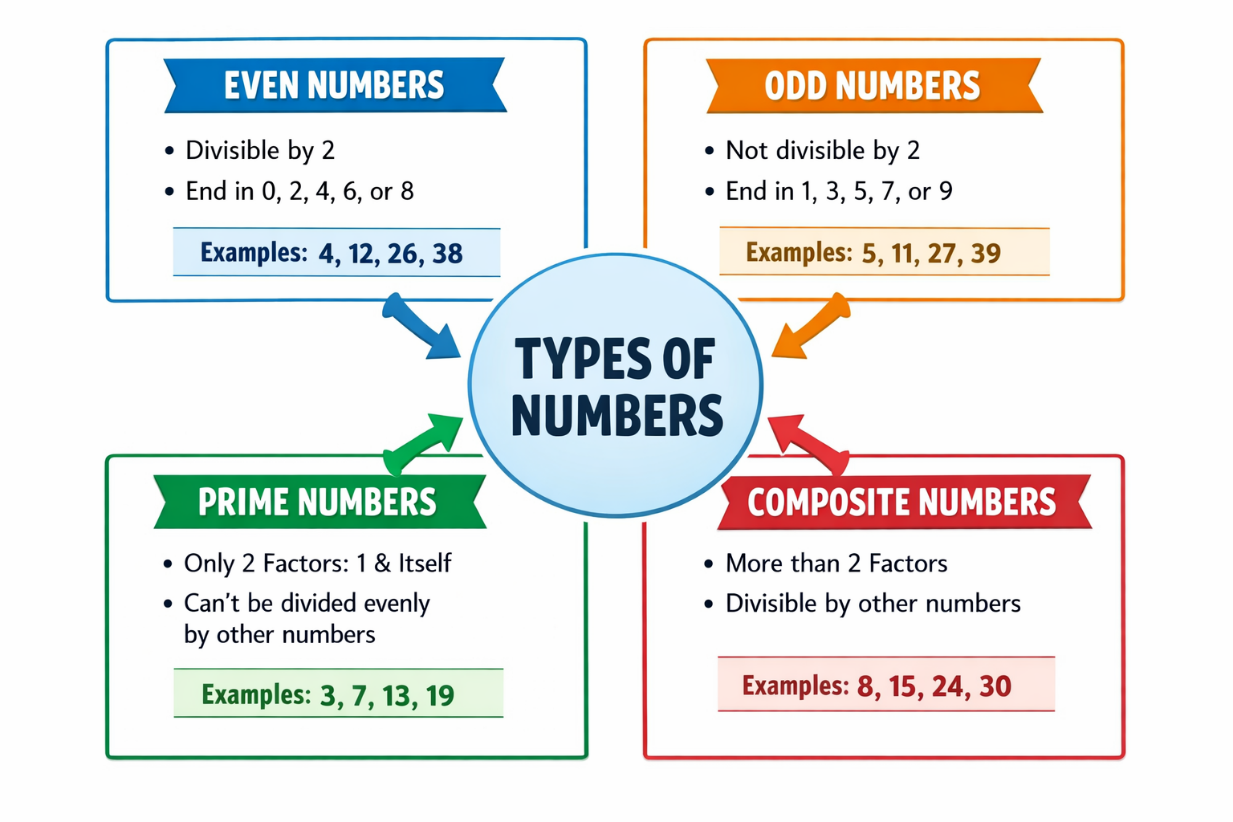
Numbers can be grouped into different types based on their properties.
Identify even number
Factors of even numbers and prime numbers
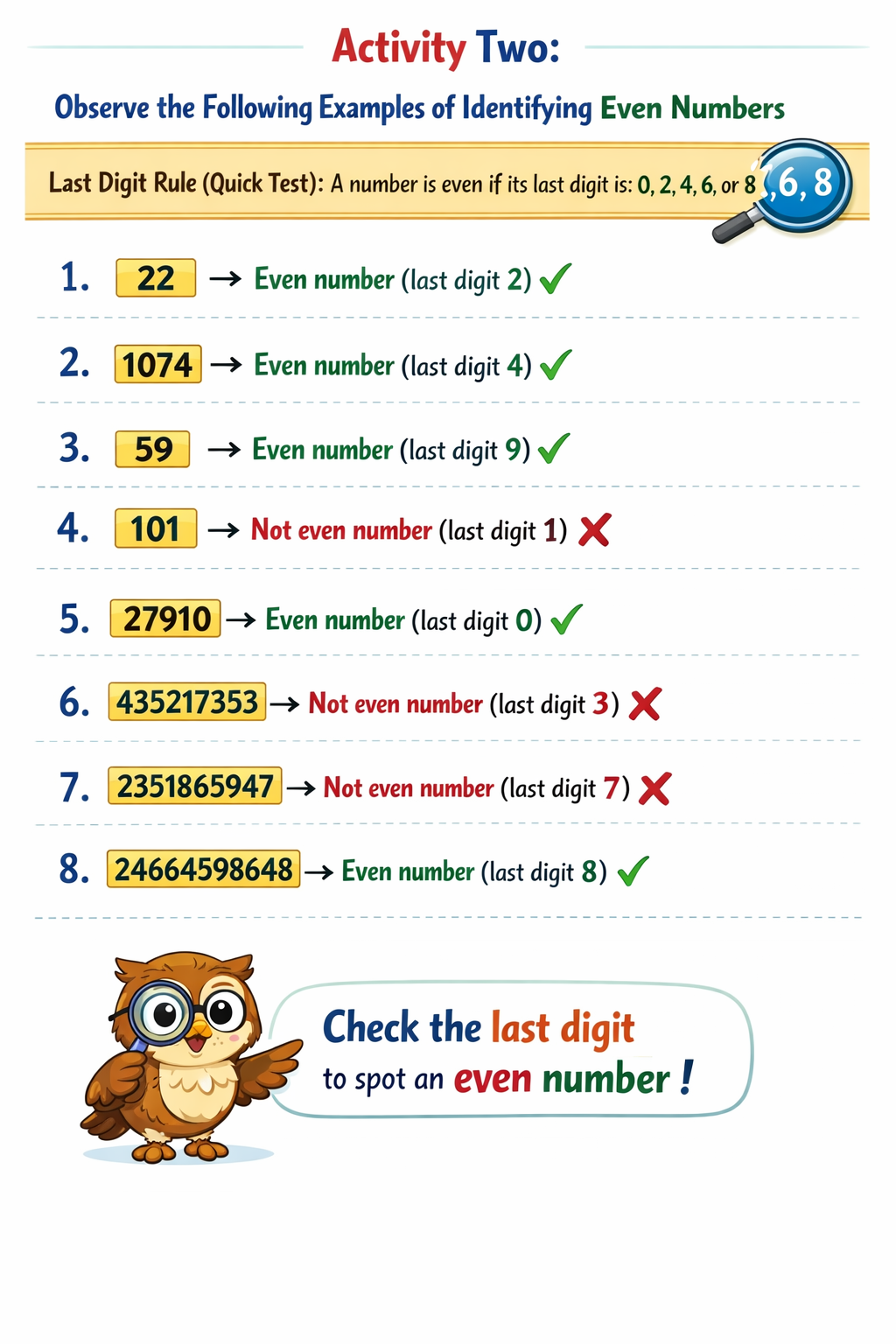
Even numbers are numbers that are divisible by 2 without a remainder. The last digit of these numbers should end up with 0, 2, 4, 6 or 8
Example 1
Worked Examples:
- 4 ÷ 2 = 2 → Even number
- 10 ÷ 2 = 5 → Even number
- 26 ÷ 2 = 13 → Even number
- 100 ÷ 2 = 50 → Even number
- 8 ÷ 2 = 4 → Even number
- 42 ÷ 2 = 21 → Even number
- 60 ÷ 2 = 30 → Even number
- 2 ÷ 2 = 1 → Even number
- 14 ÷ 2 = 7 → Even number
- 200 ÷ 2 = 100 → Even number
Exercise 1
From the following list of numbers, identify the even numbers and give reason12, 25, 38, 49, 64, 77, 88, 93, 120, 135, 21696546, 347907546
Exercise 2
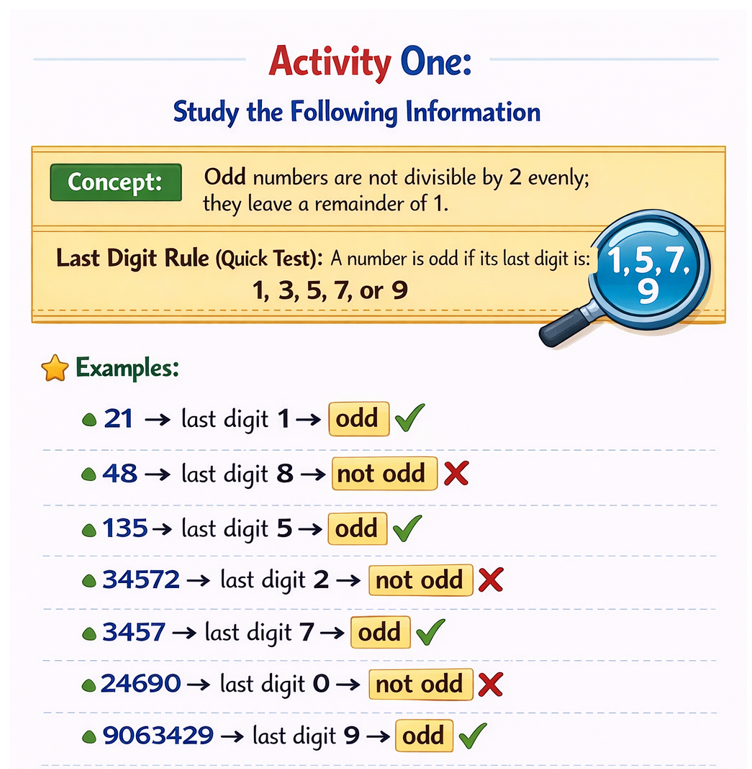
Identify odd numbers
Even and odd numbers explained.
Example 2
Examples one:
- 3 ÷ 2 = 1 remainder 1 → Odd
- 7 ÷ 2 = 3 remainder 1 → Odd
- 15 ÷ 2 = 7 remainder 1 → Odd
- 21 ÷ 2 = 10 remainder 1 → Odd
- 33 ÷ 2 = 16 remainder 1 → Odd
- 55 ÷ 2 = 27 remainder 1 → Odd
- 101 ÷ 2 = 50 remainder 1 → Odd
- 9 ÷ 2 = 4 remainder 1 → Odd
- 27 ÷ 2 = 13 remainder 1 → Odd
- 99 ÷ 2 = 49 remainder 1 → Odd
Exercise 3
: Identify the odd numbers from the following list: 11, 18, 23, 40, 57, 62, 75, 84, 91, 109, 45327, 320984, 65806, 67421
Exercise 4
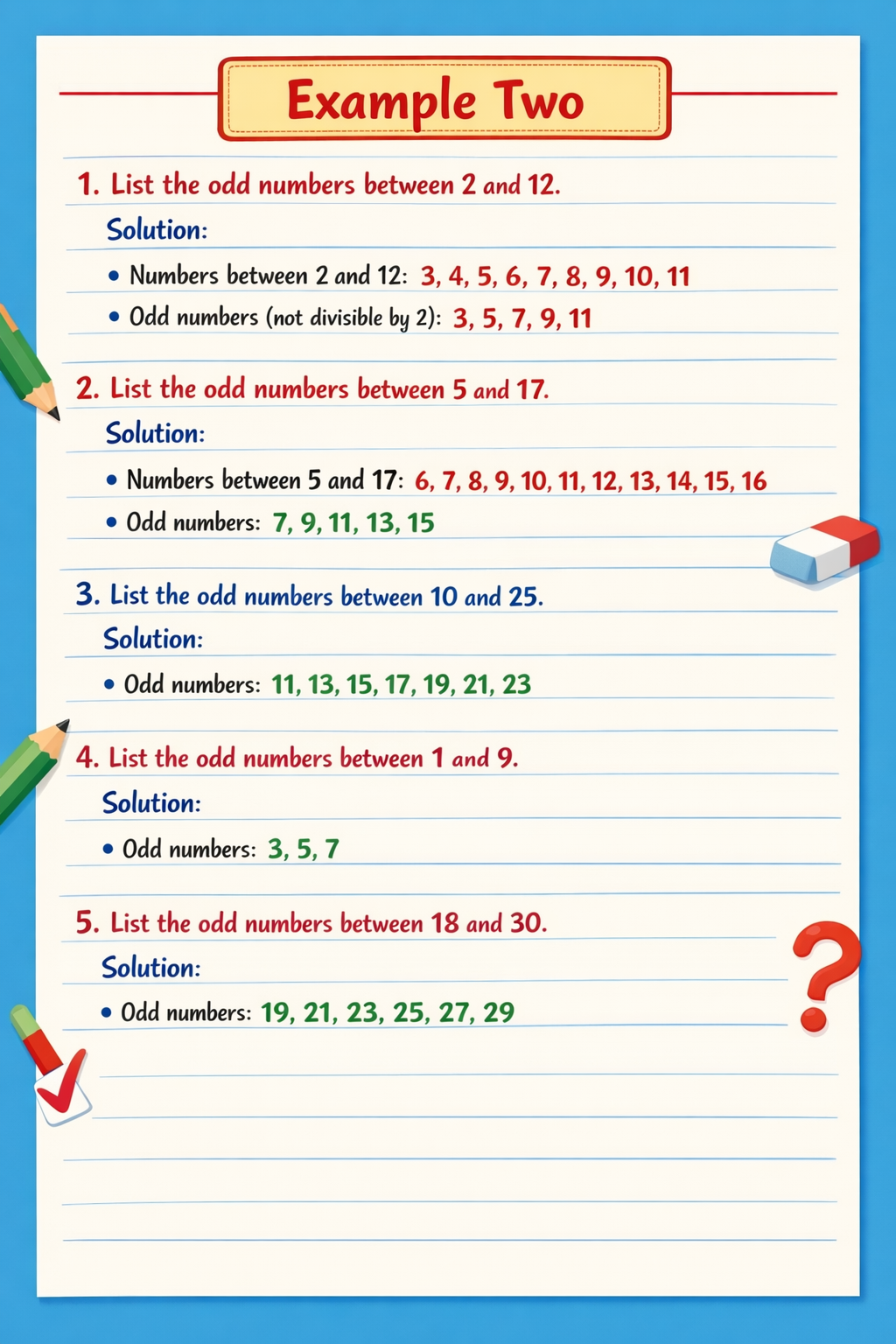
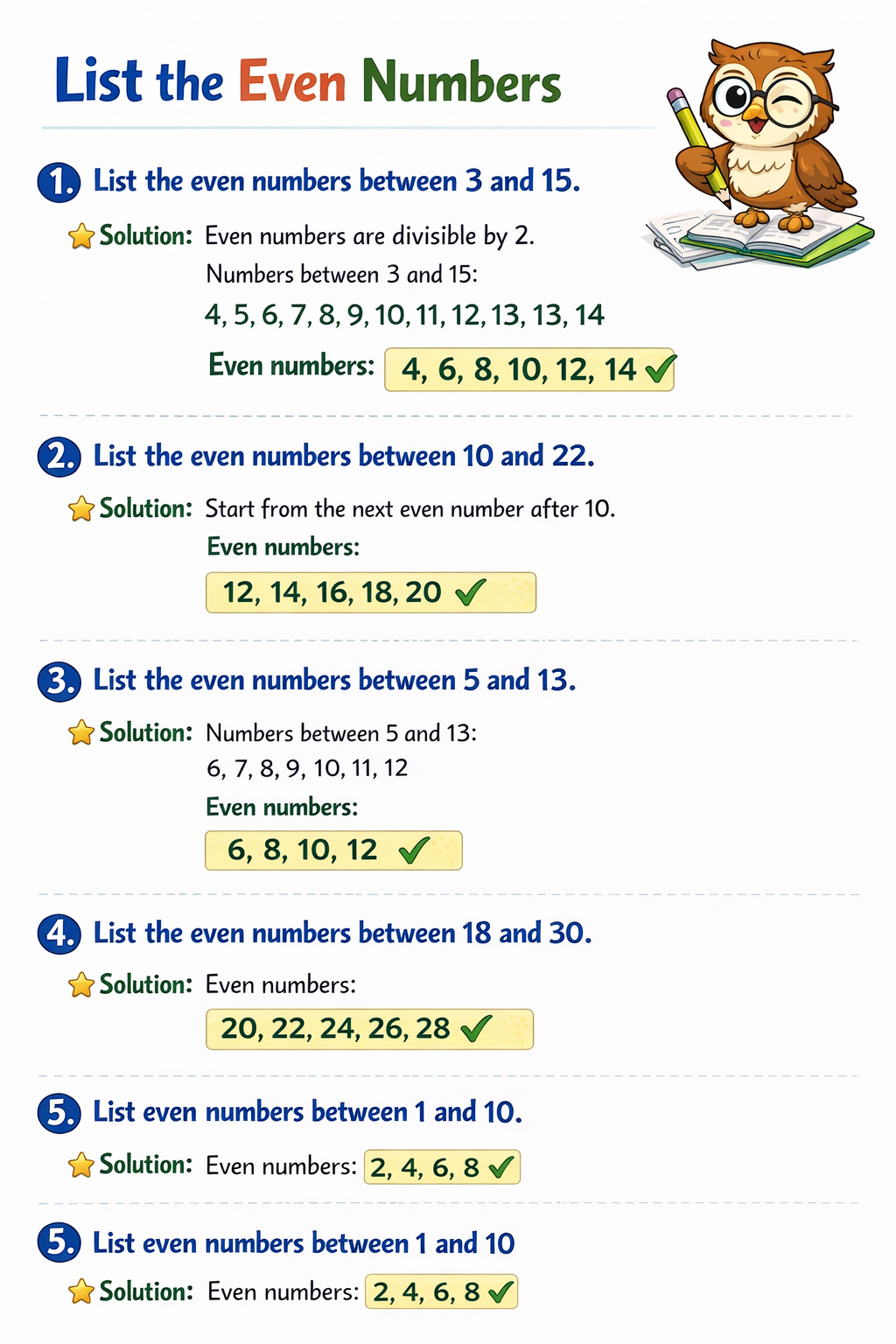
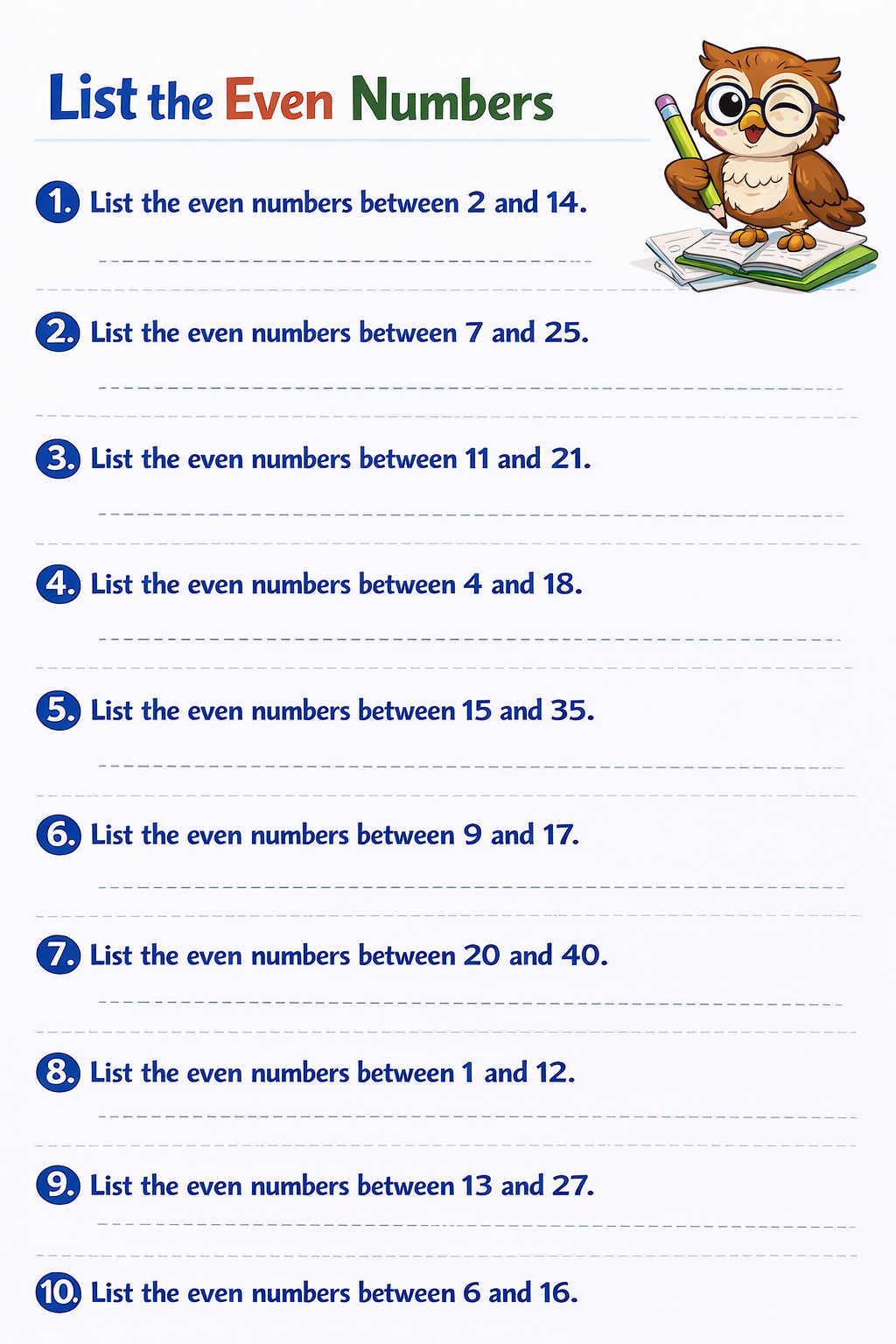
- List the odd numbers between 3 and 15.
- List the odd numbers between 8 and 22.
- List the odd numbers between 12 and 28.
- List the odd numbers between 6 and 18.
- List the odd numbers between 17 and 35.
- List the odd numbers between 1 and 14.
- List the odd numbers between 20 and 40.
- List the odd numbers between 9 and 21.
- List the odd numbers between 14 and 26.
- List the odd numbers between 5 and 19.
Identify prime numbers
Prime numbers explained.
Activity 1
Observe the following chart and find the factors of green highlighted numbers
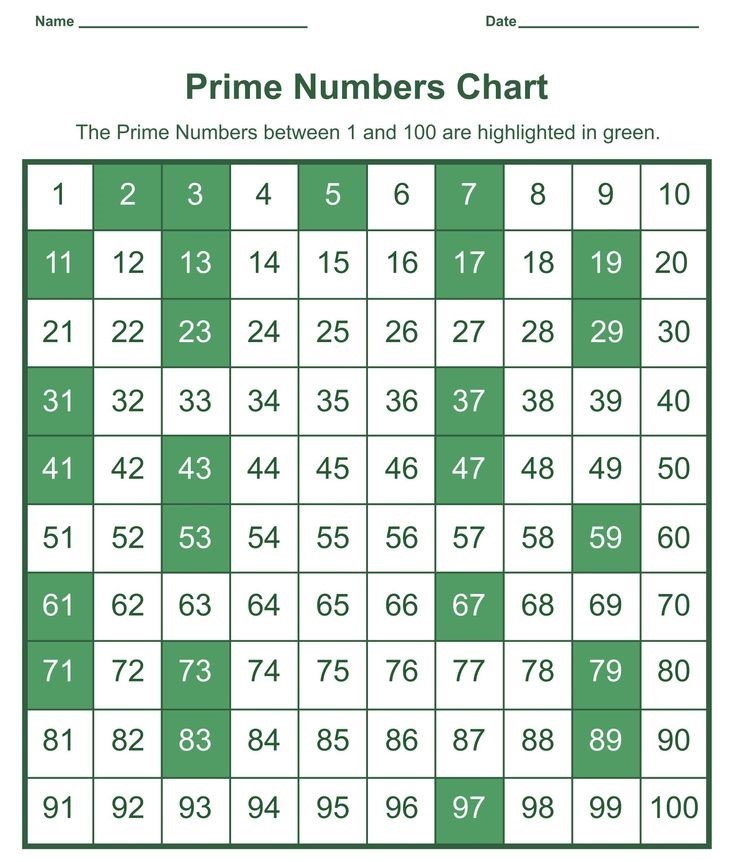
Prime numbers have only two factors: 1 and themselves. A number is prime if: vIt is greater than 1 vIt has exactly two factors 1 and the number itself vIt has only one factor pair vIt is not divisible by other whole numbers
Example 3
Example one:
- 2 → Factors: (1, 2) → Prime
- 3 → Factors: (1, 3 )→ Prime
- 5 → Factors: (1, 5) → Prime
- 7 → Factors: (1, 7) → Prime
- 11 → Factors: (1, 11) → Prime
- 13 → Factors: (1, 13) → Prime
- 17 → Factors: (1, 17) → Prime
- 19 → Factors: (1, 19) → Prime
- 23 → Factors: (1, 23) → Prime
Exercise 5
Identify prime numbers among the following and give the reason: 4, 6, 9, 17, 19, 21, 25, 31, 37, 40
Exercise 6
List the prime numbers between the following pairs of numbers
- 1 and 15.
- 10 and 30.
- 15 and 35.
- 5 and 20.
- 25 and 45.
- 40 and 60.
- 12 and 40.
- 50 and 80.
- 3 and 18.
- 60 and 100.
Identify composite numbers
Composite numbers explained.
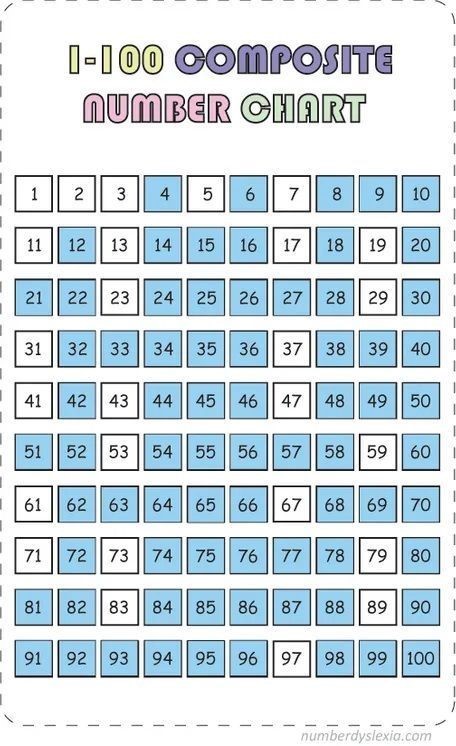
Composite numbers have more than two factors. A number is composite if it is divisible by any whole number other than 1 and itself.Those highlighted blue numbers in the chart below shows the composite numbers
Example 4
Worked Examples:
- 4 → Factors: (1, 2, 4) → Composite
- 6 → Factors: (1, 2, 3, 6) → Composite
- 8 → Factors: (1, 2, 4, 8) → Composite
- 9 → Factors: (1, 3, 9) → Composite
- 10 → Factors: (1, 2, 5, 10) → Composite
- 12 → Factors: (1, 2, 3, 4, 6, 12) → Composite
- 15 → Factors: (1, 3, 5, 15) → Composite
- 20 → Factors: (1, 2, 4, 5, 10, 20) → Composite
- 25 → Factors: (1, 5, 25) → Composite
- 30 → Factors: (1, 2, 3, 5, 6, 10, 15, 30) → Composite
Exercise 7
Identify composite numbers among: 2, 3, 4, 5, 6, 9, 12, 14, 18, 21, 38, 45, 89, 27, 39
Example 5
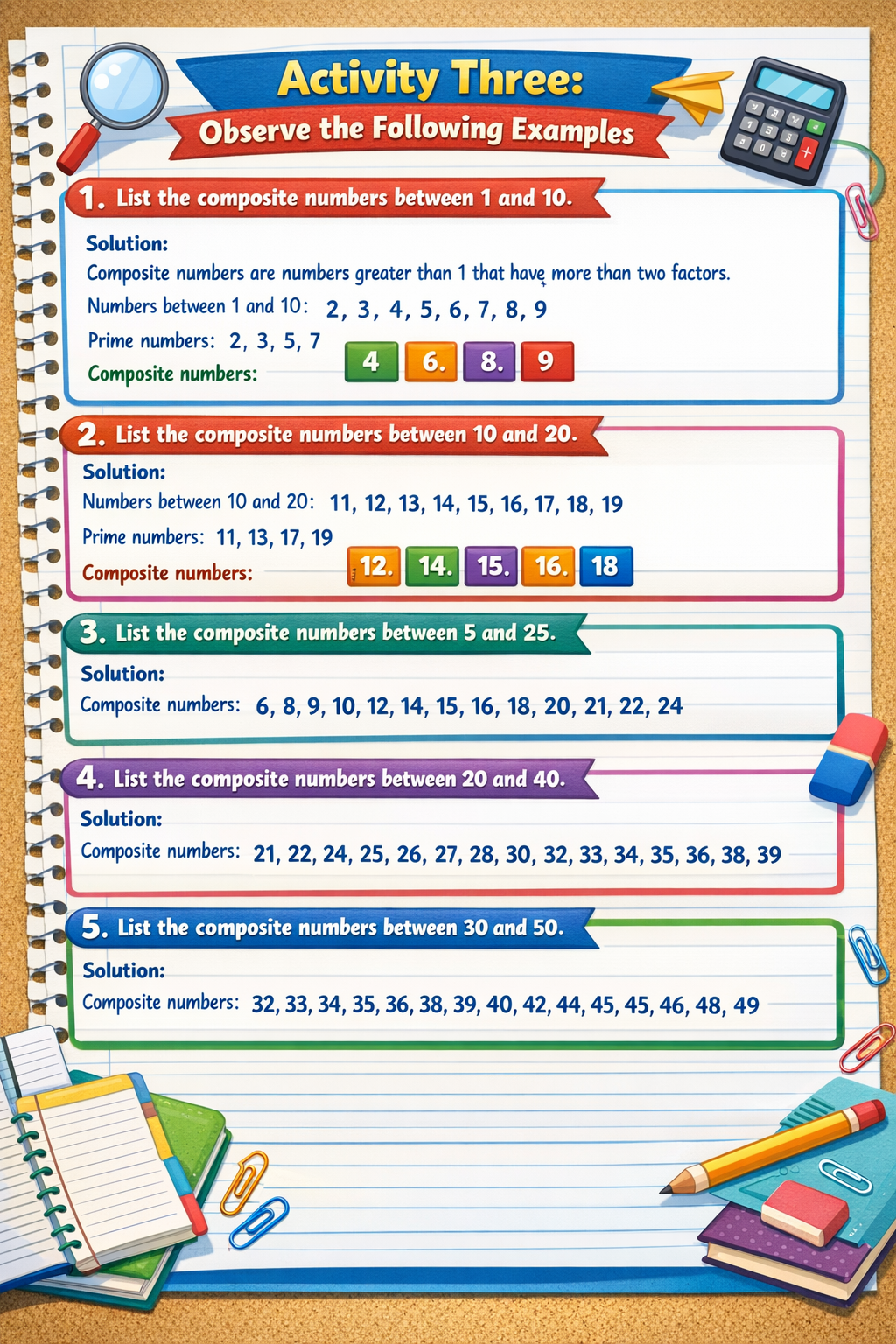
Exercise 8
List the composite numbers between two pairs of numbers
- 1 and 15.
- 10 and 30.
- 15 and 35.
- 5 and 20.
- 25 and 45.
- 40 and 60.
- 12 and 40.
- 50 and 80.
- 3 and 18.
- 60 and 100.
Correlate types of numbers
Activity 2
Study the following information, and then identify the relationship between different types of numbers
| Type | Definitions | Examples | Relatioships to others |
| Even numbers | Integers divisible by 2. | 2, 4, 6, 8, 10, 12 | Can be prime (only 2) or composite(e.g., 4, 6, 8). |
| Odd numbers | Integers not divisible by 2. | 1, 3,5 , 7, 9, 11, 13, 15 | Can be prime (e.g., 3, 5, 7) or composite(e.g., 9, 15). |
| Prime numbers | Natural numbers > 1 divisible only by 1 and itself. | 2, 3, 5, 7, 11, 13, 17, 19 | -2 is the only even prime. - All other primes are odd. |
| Composite numbers | Natural numbers > 1 with more than two factors. | 4, 6, 8, 10, 12, 14, 15, 16, 18 | Can be even (e.g., 4, 6, 8) or odd (e.g., 9, 15). |
Exercise 9
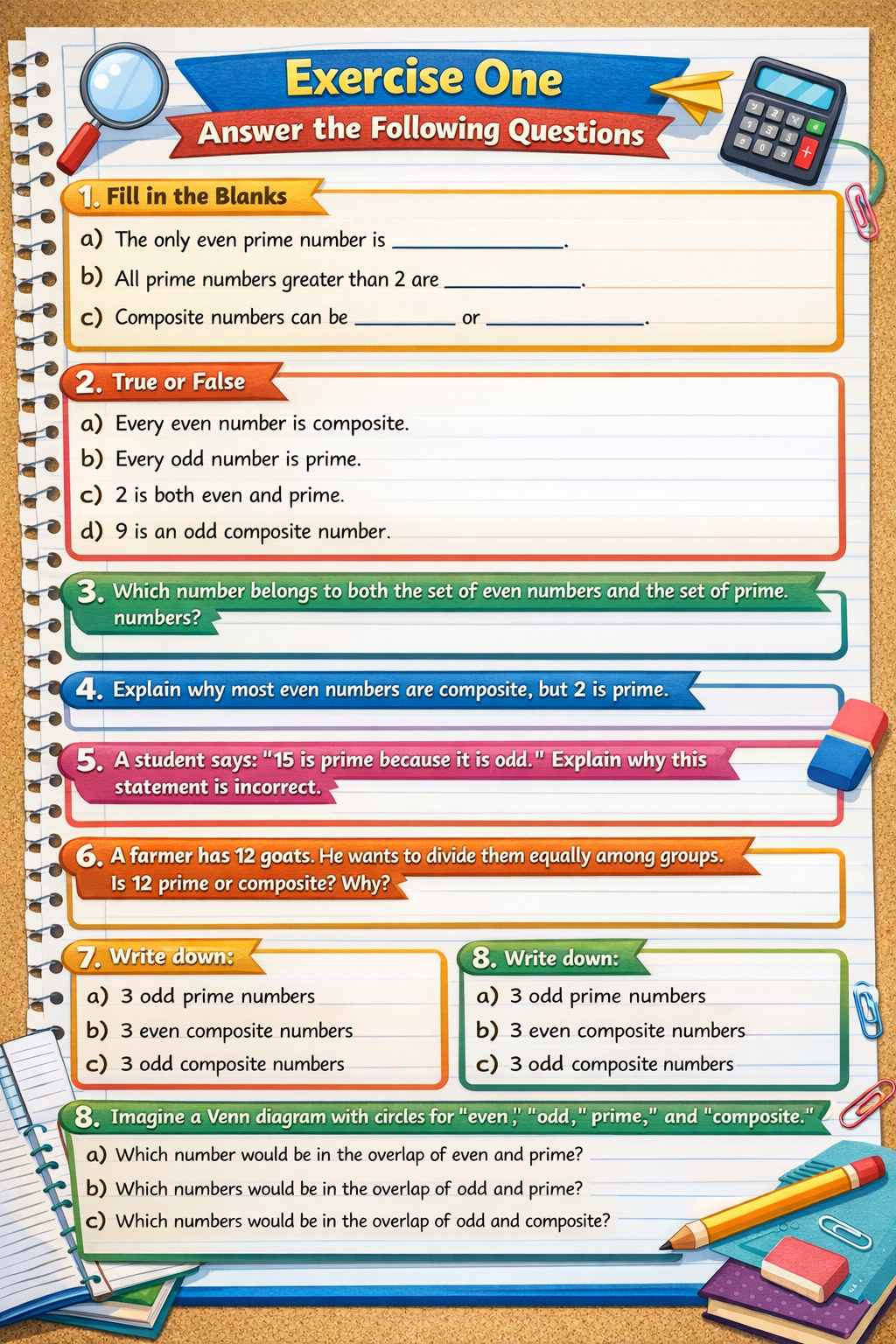
Integers
Explain the concept of integers
Integers
Integers are whole numbers that can be positive, negative, or zero. They do not include fractions or decimals.Types of integers:
- Positive integers: 1, 2, 3, 4, 5, 6, 7, 8, 9, 10, …
- Negative integers: -1, -2, -3, -4, -5, -6, -7, -8, -9, -10, …
- Zero 0
Add integers involving negative and positive sign
Example 6
Study careful the following examples
- 5 + 3 = 8
- -5 + 3 = -2
- 7 + (-4) = 3
- -6 + (-2) = -8
- 10 + (-10) = 0
- -3 + 9 = 6
- -8 + 5 = -3
- 12 + (-7) = 5
- -15 + 20 = 5
- -25 + (-5) = -30
Example 7
Do the following exercise
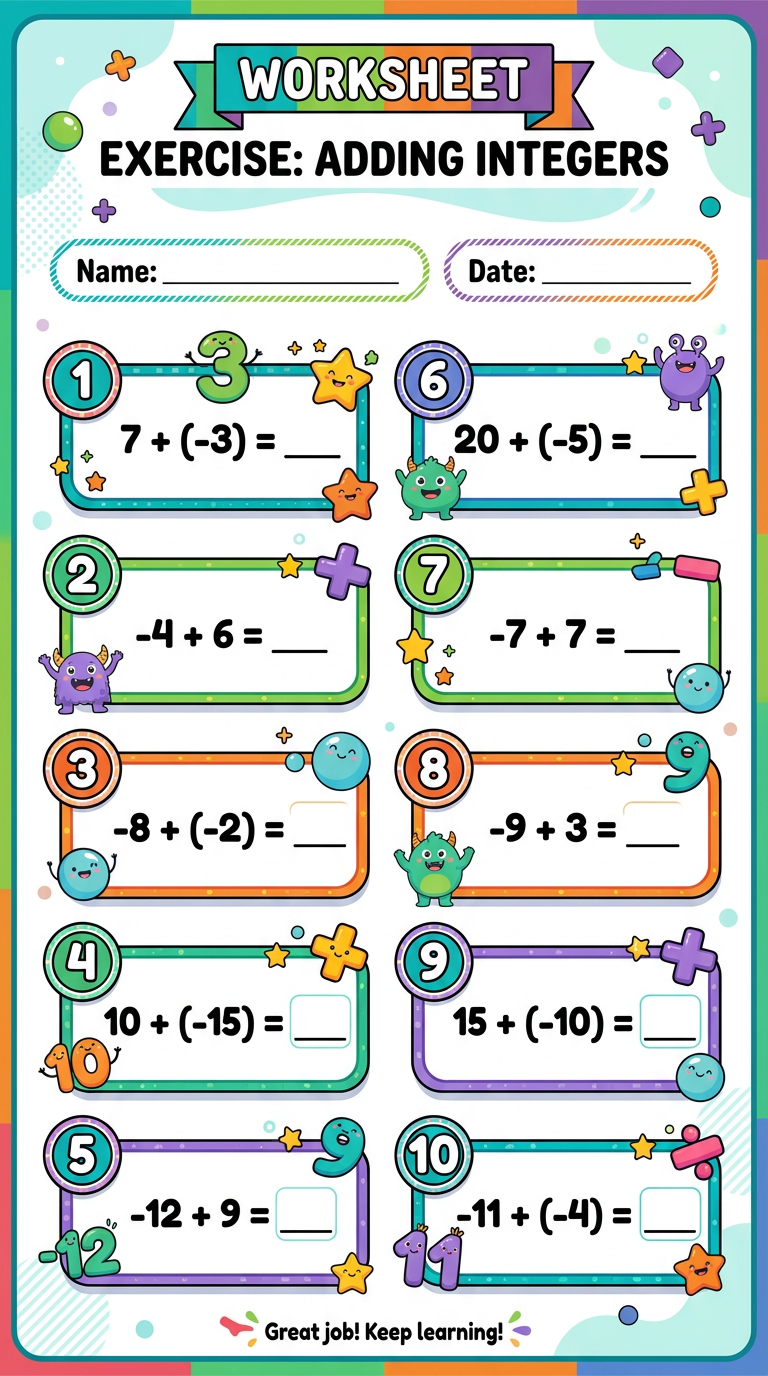
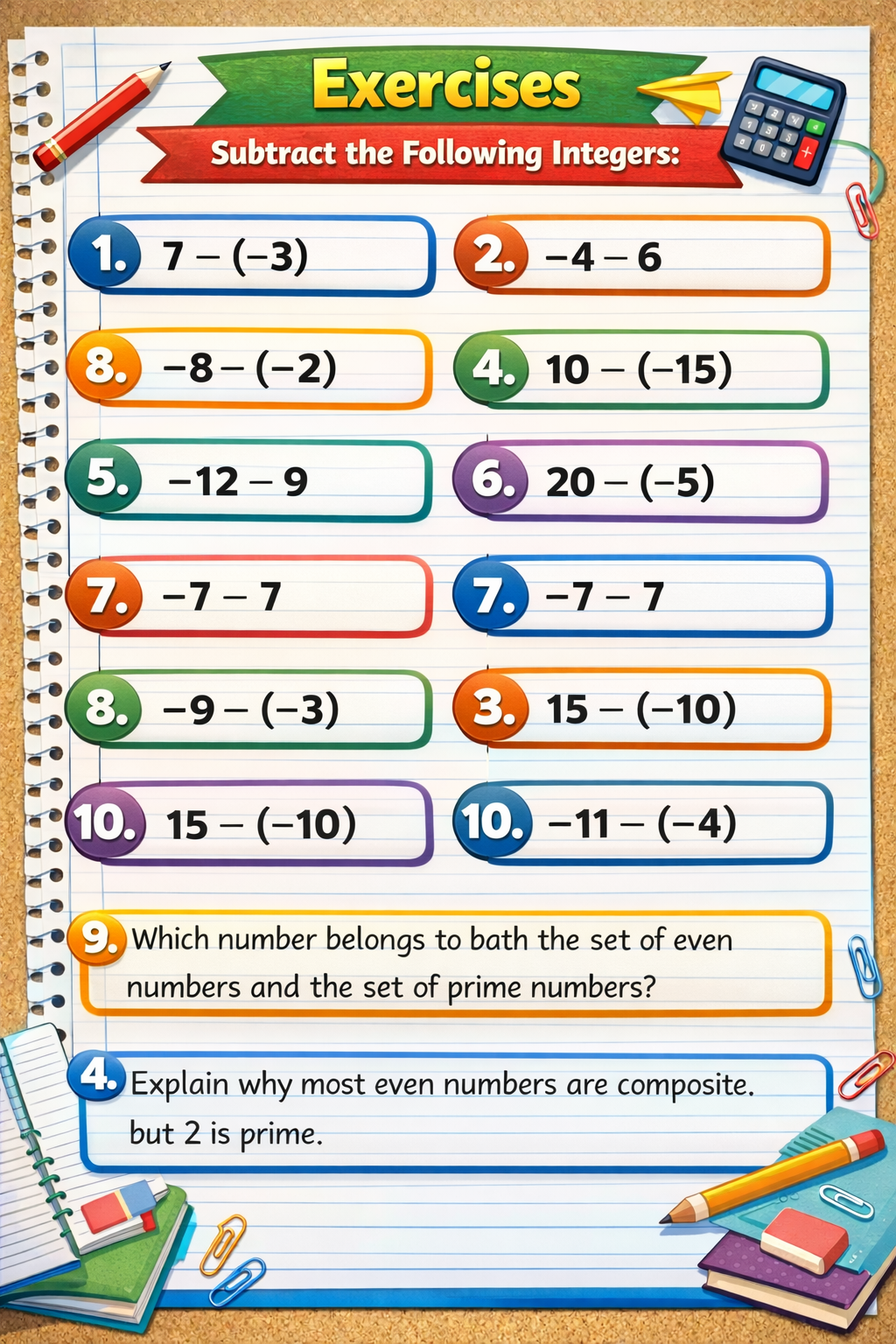
Subtract integers involving negative and positive signs
Example 8
Study the following examples
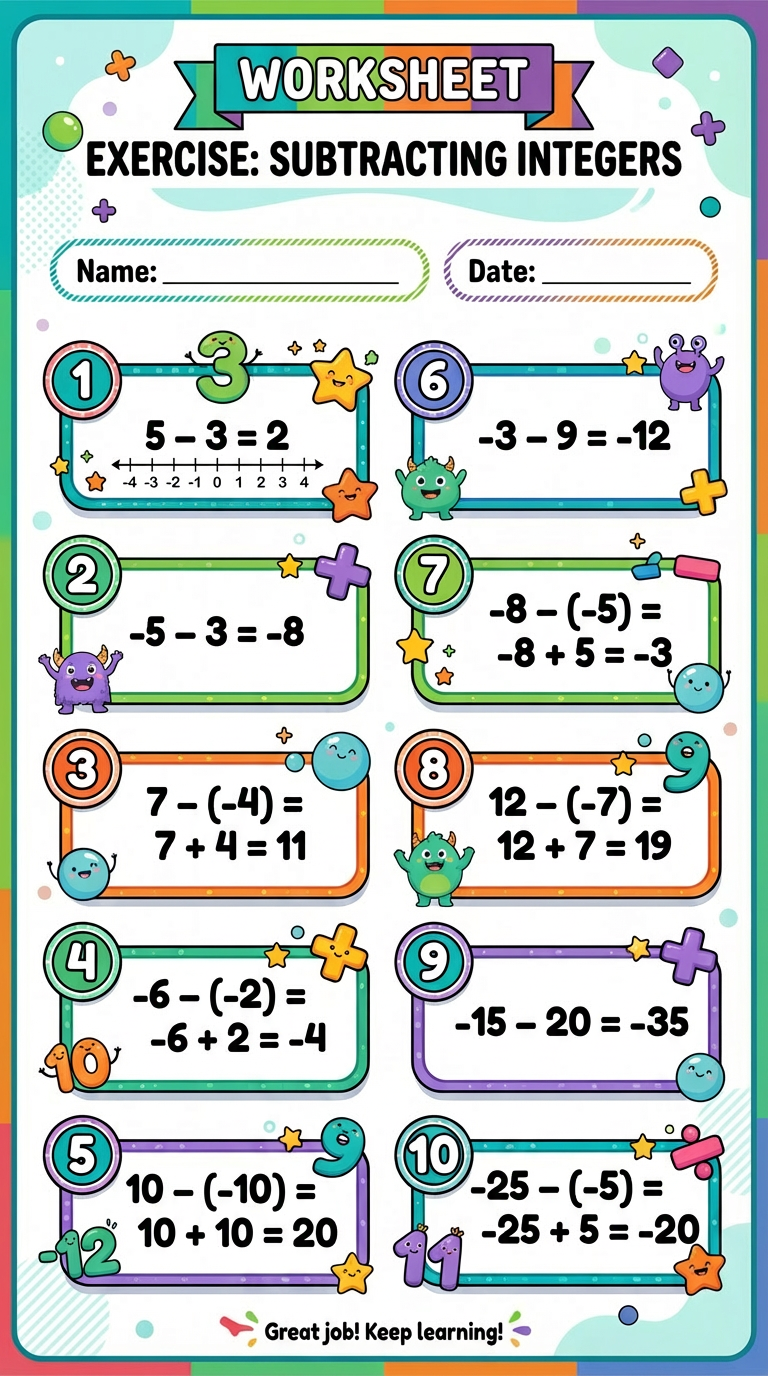
Do the following exerecise
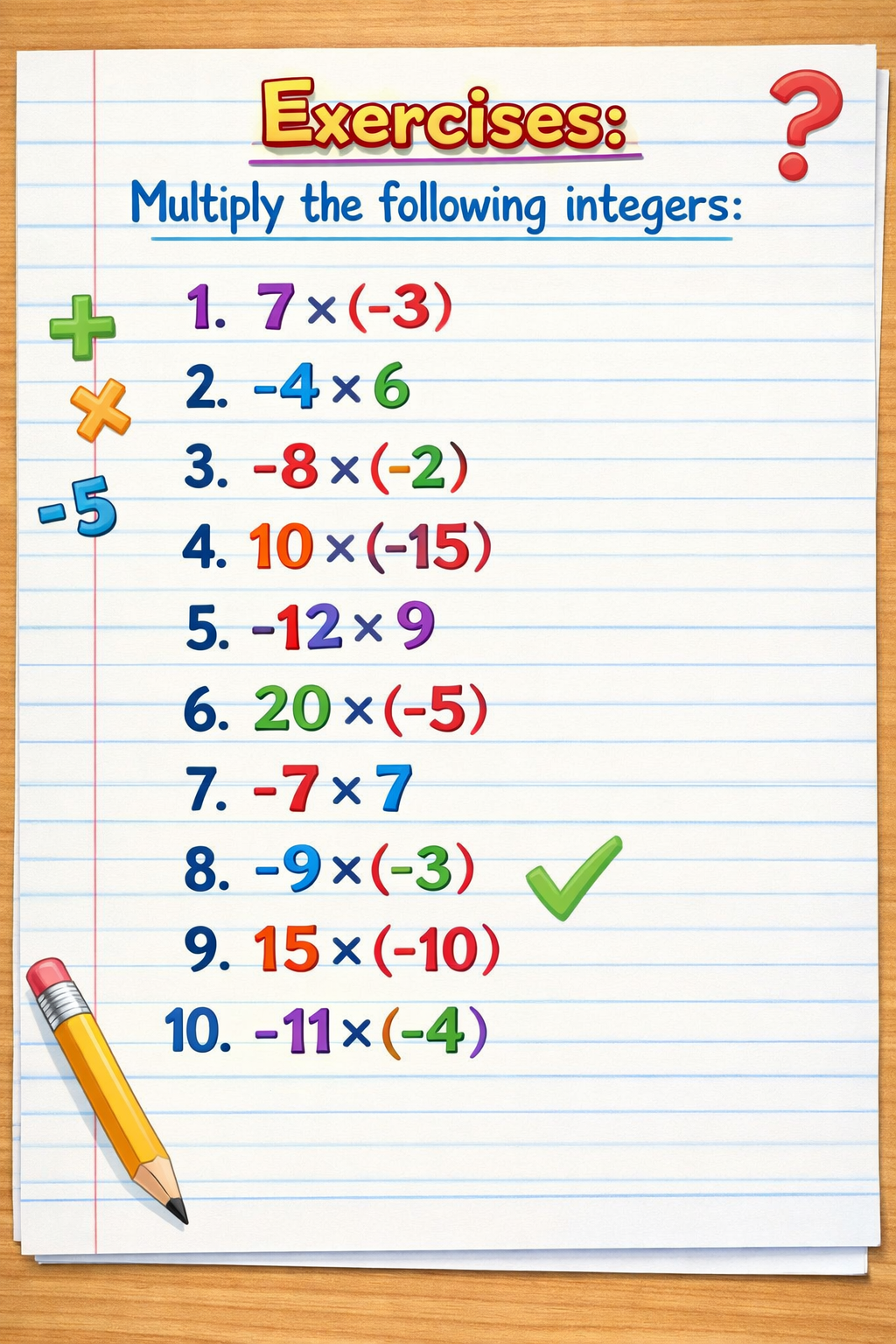
Multiply integers involving negative and positive signs
Study the following information of sign multiplication rule:
- Positive × Positive = Positive
- Negative × Negative = Positive
- Positive × Negative = Negative
- Negative Positive = Negative
Example 9
Study the following examples
- 5 × 3 = 15
- -5 × 3 = -15
- 7 × (-4) = -28
- -6 × (-2) = 12
- 10 × (-10) = -100
- -3 × 9 = - 27
- -8 × 5 = - 40
- 12 × (-7) = - 84
- -15 × 20 = - 300
- -25 × (-5) = 125.
Exercise 10
Divide integers involving negative and positive signs
Observe the following signs division rule
- Positive ÷ Positive = Positive
- Negative ÷ Negative = Positive
- Positive ÷ Negative = Negative
- Negative ÷ Positive = Negative
Example 10
Study the following examples
- 6 ÷ 3 = 2
- -6 ÷ 3 = -2
- 12 ÷ (-4) = -3
- -8 ÷ (-2) = 4
- 20 ÷ (-10) = -2
- -9 ÷ 3 = -3
- -15 ÷ 5 = -3
- 18 ÷ (-6) = -3
- -25 ÷ 5 = -5
- -30 ÷ (-10) = 3
Rules of Division of Integers
- (+ ÷ +) = +
- (- ÷ -) = +
- (+ ÷ -) = -
- (- ÷ +) = -
Exercise 11
Divide the following integers
- 24 ÷ (-6) =
- -35 ÷ 7 =
- -48 ÷ (-8) =
- 72 ÷ 9 =
- 63 ÷ (-9) =
- -56 ÷ (-8) =
- 90 ÷ (-10) =
- -81 ÷ 9 =
- -64 ÷ (-4) =
- 100 ÷ 20 =
Perform mixed operations in integers
Mixed operations on integers means solving mathematical expressions that contain two or more different operations together. Mixed operations obey the following order
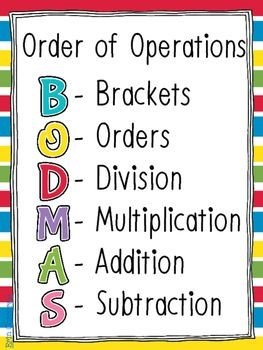
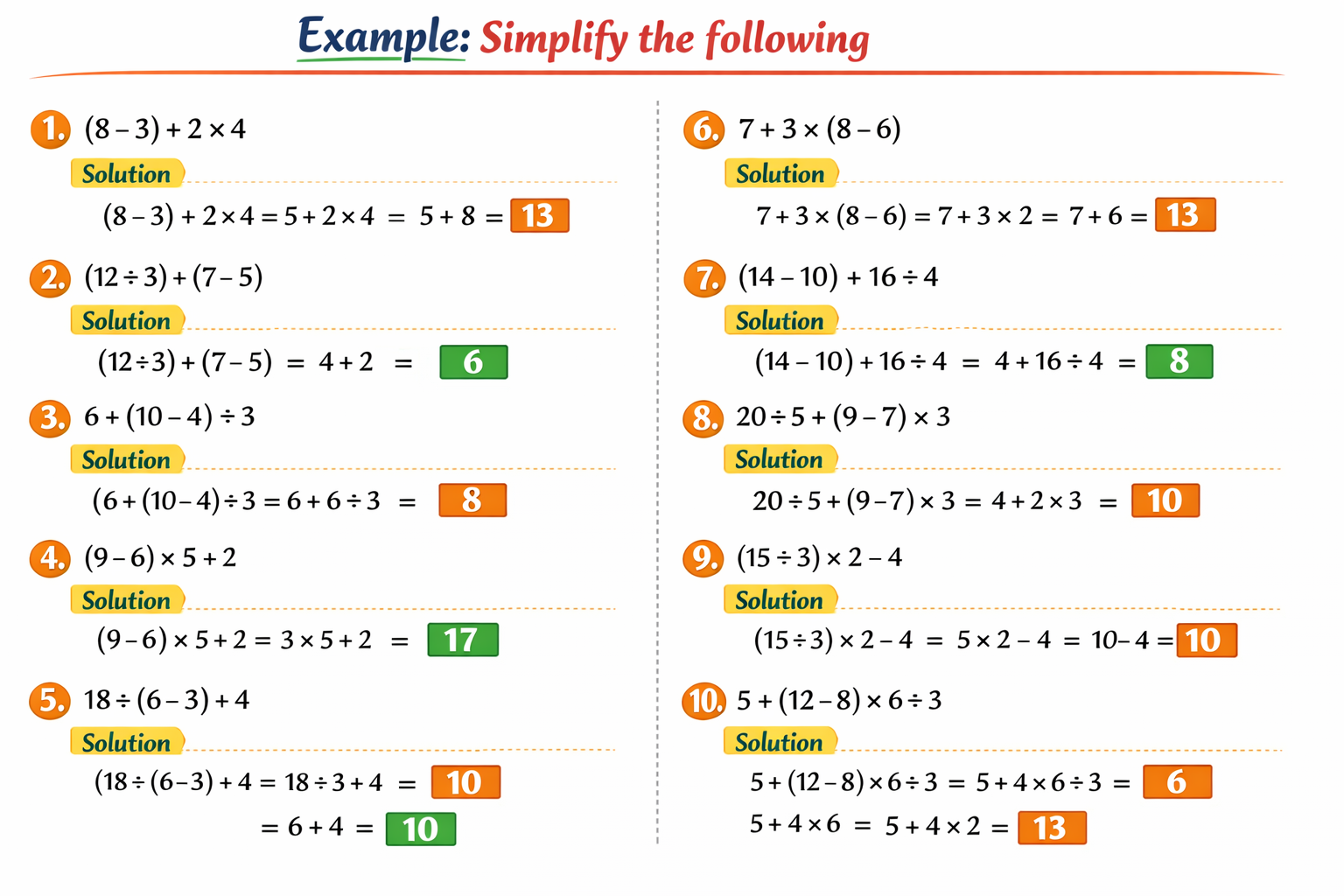
Example 11
Study the following examples
Exercise 12
Simplify the following
- (9 − 4) + 3 × 2
- 18 ÷ 3 + (6 − 2)
- 7 + (10 − 6) × 4
- (15 − 9) ÷ 3 + 5
- 6 + 8 ÷ (5 − 3)
- (12 ÷ 4) × 5 − 2
- 20 − 3 × (6 − 2)
- (14 − 8) + 16 ÷ 2
- 5 × (9 − 7) + 4
- 30 ÷ (10 − 5) + 3
Listening to this topic