English
LISTENING FOR UNDERSTANDING
Reading settings
Text size
Line spacing
Colours
LISTENING FOR UNDERSTANDING
Introduction:
Listening for Understanding means paying close attention when someone is speaking so that you can understand the message clearly. Good listeners look at the speaker, keep quiet, and think about what they hear. Listening helps children learn new ideas, respect others, and stay safe.
Expected Competency:
Through learning the topic Listening for Understanding and the subtopics Simple Oral Information on Situations and Comparing and Differentiating, the learner develops the ability to listen attentively to simple oral information about different situations and understand it accurately. The learner is able to describe what they have heard using simple language, compare different situations or pieces of information, and identify similarities and differences between them with relevant examples from everyday life. Additionally, the learner demonstrates understanding by answering questions correctly and applying the information heard in daily communication.
Simple oral information on child rights
Common tools
Kitchen and Utensils
Selling n buying
Where are you from
sorry
Introduction:
Through learning the subtopic Simple Oral Information on Child Rights, the learner develops the ability to listen attentively to oral information from stories, songs, teachers, and parents, and accurately identify different child rights. The learner can describe these rights using simple language and relevant examples from daily life, and explain the rights they should receive from parents and caregivers. Additionally, the learner demonstrates understanding by suggesting safe behaviors and appropriate actions that help prevent violence and promote respect for themselves and others.
Expected Competence:
In this lesson, the pupil will be guided to identify different child rights through listening and participating in discussions, stories, and simple examples from their everyday environment. Through these activities, the learner will begin to understand the importance of these rights and how they relate to their own lives as well as the lives of other children.
Identify child rights.
Introduction:
Child rights are the basic needs and freedoms that every child should enjoy so that they can grow, learn, and live safely. These rights help children feel protected, respected, and valued in their families, schools, and communities. When learners understand child rights, they learn how to respect themselves and others and know when to seek help if something is wrong.
Concept:
Child rights are basic needs and freedoms every child should have, such as education, safety, health, and love.
What You Will Learn in Brief.
- Meaning of child rights
- Types of child rights
- How to listen and understand oral information
Explanations.
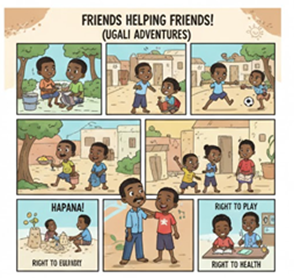
Children have rights that help them grow safely and happily. When listening to stories or instructions about rights, learners should pay attention to important words such as “protection,” “education,” and “health.” Listening carefully helps children know when their rights are respected or violated.
Example 1
Examples:
- Right to education.
- Right to health care.
- Right to protection.
- Right to play.
- Right to be heard.
Activity 1
Listening Circle.
Read Short Story about Child Rights.
Amina’s Happy School Day.
Amina is a Standard Five pupil who loves going to school. Every morning, she walks to school with her friends because she has the right to education. At school, her teacher makes sure all children are safe and respected, which shows their right to protection. During break time, Amina and her friends laugh and play football because children have the right to play. One day, Amina felt sick, and the teacher took her to the clinic. The nurse helped her because every child has the right to health care. Later in class, the teacher asked learners to share their ideas. Amina raised her hand and spoke confidently because she has the right to be heard. Amina went home happy, knowing her rights help her grow strong and safe.
Activity 2
Rapid Fire Questions: "Right or Not a Right?"
The teacher reads a statement, and students shout "RIGHT!" or "NOT A RIGHT!"
1. Teacher: "A child going to school to learn how to read."
- Students: RIGHT!
2. Teacher: "A child carrying heavy stones at a construction site all day."
- Students: NOT A RIGHT!
3. Teacher: "A child getting medicine when they have a fever."
- Students: RIGHT!
4. Teacher: "Someone shouting at or hitting a child."
- Students: NOT A RIGHT!
5. Teacher: "Having clean water and healthy food to eat."
- Students: RIGHT!
6. Teacher: "Being forced to work instead of playing with friends."
- Students: NOT A RIGHT!
Exercise 1
Exercises And Answers.
1. Name two child rights.
Answers: Education, protection.
2. Explain child rights in your own words.
Answers: Needs that help children grow safely.
3. Mention a right you use at school.
Answers: Right to education.
4. Why is listening important when learning about rights?
Answers: Helps understand information correctly.
5. Create a short sentence about a child right.
Answers: Every child has the right to learn.
Exercise 2
General Questions.
- What are child rights?
- Why should children listen carefully?
- Name three child rights.
- How can you respect others’ rights?
- Who protects child rights?
Answers.
- Basic needs and freedoms of children.
- To understand information clearly.
- Education, health, protection.
- By being kind and fair.
Conclusion.
Listening carefully helps children understand their rights and respect others. Knowing child rights builds confidence and safety.
Describe child rights aspects heard from different sources.
Introduction:
Children learn about their rights from many sources such as teachers, parents, books, radio, television, stories, and community leaders. These sources help learners understand how children should be treated with care, respect, and protection. By listening and sharing what they hear, pupils become more aware of their rights and responsibilities in daily life.
Expected Competency.
Children listen to stories, teachers, songs, and parents to learn about child rights. They can describe the rights they hear using simple words and examples.
Concept:
Describing child rights heard from stories, teachers, songs, and conversations.
What You Will Learn in Brief.
- Meaning of child rights
- How to listen and describe information
- Sources of information
Explanations:
Children hear about their rights from teachers, stories, songs, and radio programs. After listening, they can describe what they heard, such as the right to learn or play.
Examples.
- Right to education.
- Right to play.
- Right to protection.
- Right to health.
- Right to be heard.
Activity 3
Pair Talk Activity.
Learners describe child rights they heard from teachers, parents, stories, songs, or radio.
Teacher Instructions.
Pair Talk Guide.
Learner A asks:
- Where did you hear about child rights?
- What child right did you hear?
- Who told you about that right?
- Why is that right important?
Learner B answers (Sample Answers)
- I heard about child rights from my teacher.
- I heard about the right to education.
- My parents told me about the right to protection.
- It is important because children need to be safe.
Activity 4
Follow-up Task.
- Each pair should name one right they discussed.
- Students should draw the right they liked the most.
- Students should write one sentence about that right.
Exercise 3
Exercises and Answers.
1. Name one child right you heard.
A: Right to play.
2. What is a child right?
A: A need that helps children grow safely.
3. Tell a right you hear from your teacher.
A: Right to learn.
Exercise 4
General Questions.
- What are child rights?
- Where do children hear about rights?
- Why should we listen carefully?
- Name two child rights.
Answers.
- Needs and freedoms for children.
- Teachers, parents, stories, songs.
- To understand clearly.
- Education and play.
Conclusion.
Listening helps children understand and describe their rights confidently.
Explain his/her rights that he/she needs to get from his/her parents.
Introduction:
Every child has rights that parents or guardians should provide to help them grow safely and happily. These rights include love, care, education, food, shelter, protection, and guidance. When learners understand the rights they should receive from their parents, they learn to respect family roles and communicate their needs in a respectful way.
Concept.
What You Will Learn in Brief.
- Rights from parents
- Importance of family care
- Speaking about needs
Explanations:
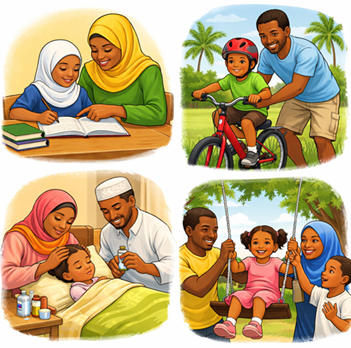
Children's rights from parents are essential things a child needs to grow up healthy, safe, confident, and happy. Parents or guardians have a responsibility to provide these rights because a child depends on adults for upbringing and protection. Among these rights are:
Example 2
Examples.
- Right to food.
- Right to love.
- Right to protection.
- Right to education.
- Right to health care.
Example 3
Draw your family helping you.
Exercise 5
Exercises and Answers.
- Name one right from parents. A: Food.
- Why do children need love A: To feel safe and happy.
- Tell one right you get at home. A: Protection.
- Who helps you get your rights? A: Parents
- Is giving food important? Why? A: Yes, it helps children grow.
- Make a short sentence about your right. A: My parents give me love.
Exercise 6
General Questions.
- What rights do children get from parents?
- Why is protection important?
- How can you say your rights politely?
- Name two rights from home.
Answers.
- Food, love, safety, education.
- Keeps children safe.
- By speaking respectfully.
- Food and love
Conclusion.
Knowing rights from parents helps children grow healthy and confident.
Simple oral information on situations
Introduction:
Simple Oral Information on Situations refers to the ability to listen to and understand simple spoken information about different everyday situations.
These situations may include:
- At school (e.g., a teacher giving instructions)
- At home (e.g., a parent giving directions)
- In the community (e.g., someone explaining where they are going or what they need)
Expected Competency:
The learner will be able to listen to and understand simple oral information about different everyday situations, identify the main message and given instructions, and respond to questions or carry out the instructions correctly and confidently according to the context of communication.
Identify indicators of gender-based violence.
Introduction:
Sometimes children or adults may be treated unfairly or hurt because they are boys or girls. Learners need to recognize warning signs early so they can stay safe and ask for help from trusted adults.
Concept:
Indicators of gender-based violence are signs showing someone is being hurt, threatened, isolated, or treated unfairly because of gender.
What You Will Learn in Brief:
- Meaning of indicators
- Common warning signs
- How to recognize unsafe situations
- Who to tell when you see danger
Explanations:
Simple oral information on situations means speaking clearly to explain what is happening in a real-life event or problem. A “situation” can be something good, challenging, urgent, or normal—like a school event, a lost item, an accident, or asking for help. Children use oral information to inform, report, warn, or request assistance.
Example 4
Examples:
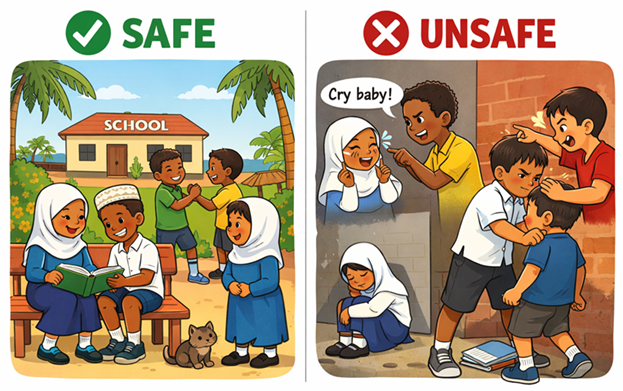
- A girl is always mocked because “girls are weak.”
- A boy is beaten for playing games said to be “for girls.”
- A learner looks scared whenever a certain person comes near.
- Someone is forced to keep secrets about harm.
- A child stops coming to school due to fear.
Activity 5
Safe and Unsafe.
Activity 6
Draw your family helping you.
Exercise 7
Exercises and Answers.
- Mention two warning signs. Answer: Fear, insults, physical harm.
- Explain why insults are harmful. Answer: They hurt feelings and lower confidence.
- What should you do if a friend is scared? Answer: Tell a trusted adult.
- Identify warning signs in a short story. Answer: Fear, isolation, threats.
- Is it right to force someone into activities? Why? Answer: No, it is unsafe and unfair.
- Draw a safe school environment. Answer: Shows respect and equality.
Exercise 8
General Questions:
- What are indicators of violence?
- Name two unsafe behaviors.
- Who can help a child in danger?
- Why is it important to report harm?
Answers:
- Signs that someone is being hurt or treated unfairly.
- Hitting, insulting.
- Parents, teachers, guardians.
- To stay safe and stop harm.
Conclusion.
Recognizing warning signs helps learners stay safe and protect others. Speaking up is brave and important.
Clarify effects of gender- based violence.
Introduction:
Gender-based violence is bad treatment done to a person because of their gender (being a boy or a girl). It can include beating, insulting, abuse, or discrimination.
Its effects are:
- It causes physical injuries.
- It leads to sadness and fear.
- It affects school performance.
- It lowers self-confidence.
- It causes problems in families and society.
Concept:
Effects are the results or consequences that happen after someone experiences harm or unfair treatment.
What You Will Learn in Brief:
- Emotional effects
- Physical effects
- Social and school effects
- Long-term consequences
Explanations:
The effects of gender-based violence mean explaining clearly what happens to a person when they experience such violence. Gender-based violence can cause physical harm such as injuries and pain. It can also lead to emotional problems like fear, sadness, and stress. Learners may find it difficult to concentrate on their studies or may miss school. It can also damage relationships with friends and family and make the community feel unsafe and unhappy.
Effects may include:
- Sadness, fear, low confidence
- Injuries or sickness
- Poor concentration in school
- Isolation from friends
- Loss of trust in others
Example 5
Examples:
- A child becomes quiet and withdrawn.
- Frequent headaches due to stress.
- Fear of going to school.
- Drop in academic performance.
- Difficulty trusting friends.
Activity 7
Identify effects in stories.
Instructions:
- Listen to or read a short story from the teacher.
- Identify what happened to the character after the event.
- Discuss feelings, behavior changes, and school or friendship effects.
- Share answers with your group.
Story.
Asha was often laughed at because she liked playing football. After some time, she became quiet and stopped joining games with friends.
Reflection Questions.
- What happened to the character?
- How did the character feel?
- What changed in their behavior?
- How could friends help?
Sample Answers.
She felt sad and isolated; she stopped playing with friends; friends could support and encourage her.
Exercise 9
Exercises and Answers.
- List one emotional effect. Answer: Sadness.
- Why does fear affect learning? Answer: It reduces concentration.
- How can you help a sad friend? Answer: Listen and tell a teacher.
- Identify emotional vs physical effects. Answer: Fear = emotional; injury = physical.
- Why is respect important? Answer: It keeps everyone safe.
- Write a short message encouraging kindness. Answer: “Respect everyone equally.”
Exercise 10
General Questions.
- Name two effects of violence.
- How does violence affect learning?
- What emotions may appear?
- How can friends support each other?
Answers.
- Fear and injuries.
- Reduces focus and attendance.
- Sadness, anger, fear.
- Listen, support, report to adults.
Conclusion.
Understanding effects helps learners build empathy and support safe, caring environments.
Discuss preventive measures against gender- based violence.
Introduction:
Prevention means stopping harm before it happens by building respectful and safe communities.
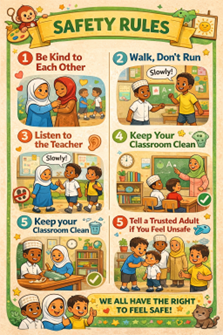
Classroom safety rules.
Concept:
Preventive measures are actions taken to avoid danger and protect everyone’s rights and dignity.
What You Will Learn in Brief:
- Respect for all genders
- Reporting unsafe behavior
- Safe communication
- School and home safety rules
Explanations:
Discuss preventive measures against gender-based violence means to talk about and share ideas on actions people can take to stop gender-based violence from happening and to keep everyone safe and respected.
Preventive measures include:
- Treating everyone equally
- Saying “no” to unsafe actions
- Reporting to trusted adults
- Learning respectful communication
- Supporting friends in need
Example 6
Examples:
- Reporting bullying to a teacher.
- Using polite language.
- Walking with friends in unsafe areas.
- Respecting personal boundaries.
- Participating in school safety clubs.
Activity 8
Activity Guide.
Flow of Action Group Discussions: Ways to Promote Respect Introduction (Action Guide): Ask your peers the meaning of respect and why it is important both at school and at home.
Grouping:
Divide yourselves into small groups of 4–5 people.
Brainstorming:
Each group should discuss and list various ways to show respect (e.g., listening when others speak, using polite words, helping others).
Writing and Drawing:
Groups should write their ideas on large sheets of paper (flipcharts) and draw simple illustrations or examples.
Group Presentations:
Each group presents its ideas in front of the class.
Class Discussion:
The teacher leads the students in comparing ideas and identifying key respectful behaviors.
Exercise 11
Exercises and Answers.
- Mention one preventive action. Answer: Report unsafe behavior.
- Why are rules important? Answer: They keep people safe.
- What should you do if bullied? Answer: Seek help from an adult.
- Compare safe vs unsafe communication. Answer: Respectful vs insulting language.
- Why should we respect boundaries? Answer: Everyone deserves safety.
- Design a safety pledge. Answer: “I will respect and protect others.”
Exercise 12
General Questions.
- What is prevention?
- Who are trusted adults?
- How can learners promote respect?
- Why is reporting important?
Answers.
- Actions to stop harm before it happens.
- Teachers, parents, guardians.
- Kind words and equal treatment.
- Helps protect people from danger.
Conclusion.
Preventive actions build safe schools and strong friendships where everyone feels valued and protected.
Listening to this topic