English
READING
Reading settings
Text size
Line spacing
Colours
READING
In this topic, pupils will learn about punctuation marks by identifying them and understanding how they guide reading. They will read simple paragraphs with correct pronunciation and use punctuation marks to control pauses, stops, and reading speed.

Reading for practice (Not more than 200 words)
Identify punctuation marks.
Punctuation marks are symbols used in writing to make meaning clear, organize ideas, and guide the reader on how to read a sentence (pause, stop, ask, show emotion, etc.). Common Punctuation Marks are:
- Full Stop (.)
- Comma (,)
- Question mark (?)
- Exclamation Mark (!)
- Colon (:)
- Quotation Marks (" ")
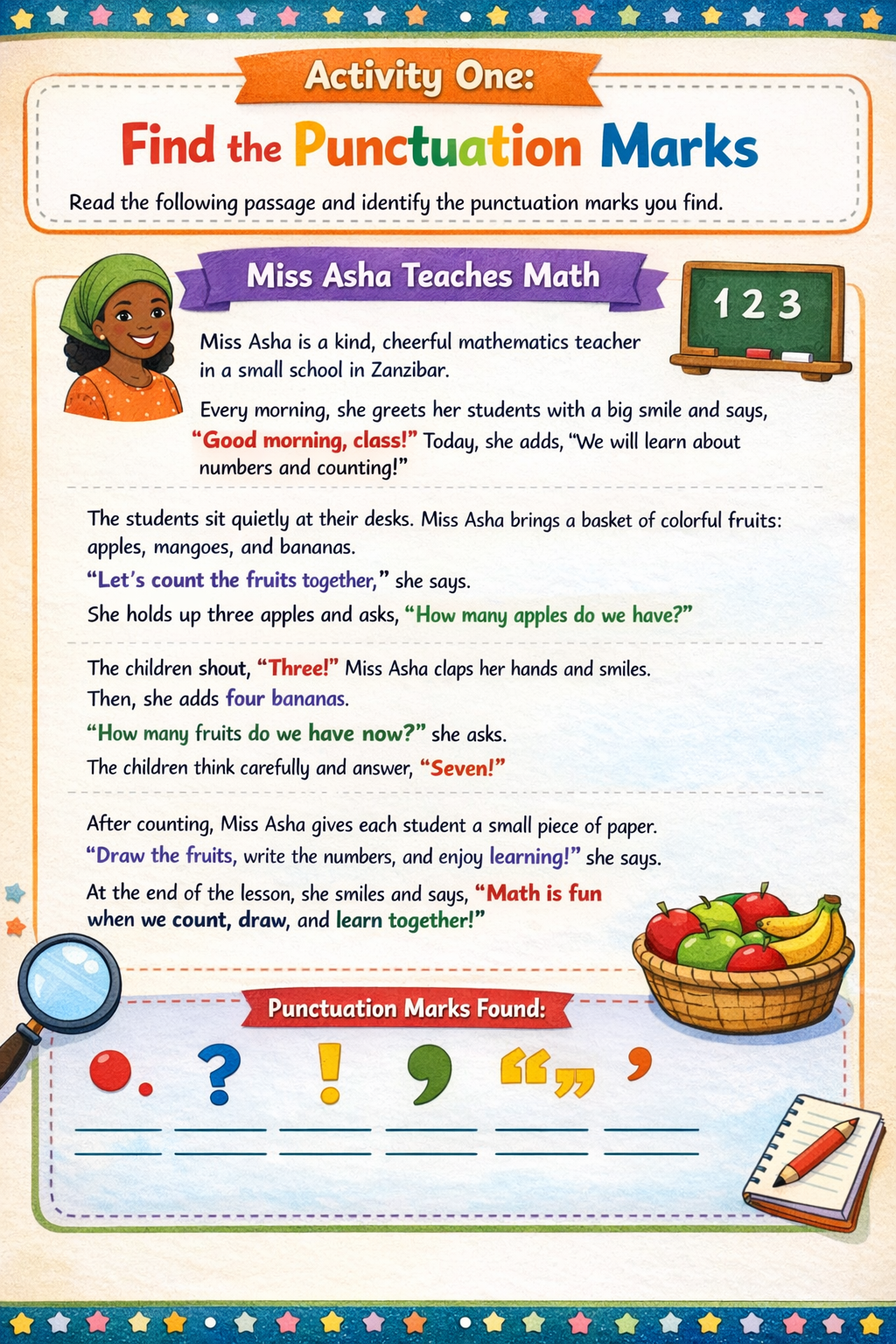
Activity 1
Read the following passage and identify the punctuation marks you find
Read simple paragraphs with appropriate pronunciation.
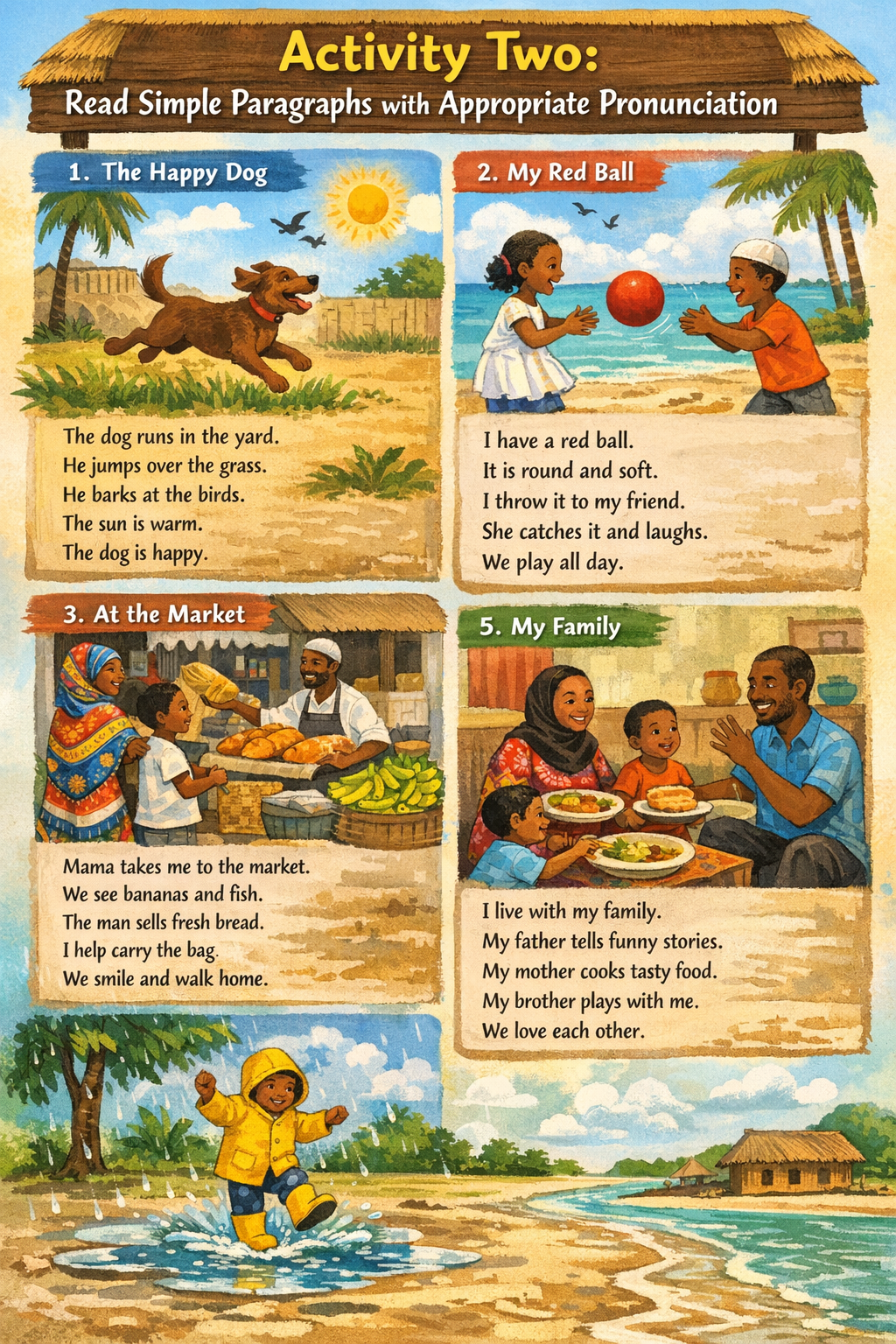
Activity 2
Read the following passage with appropriate pronunciation
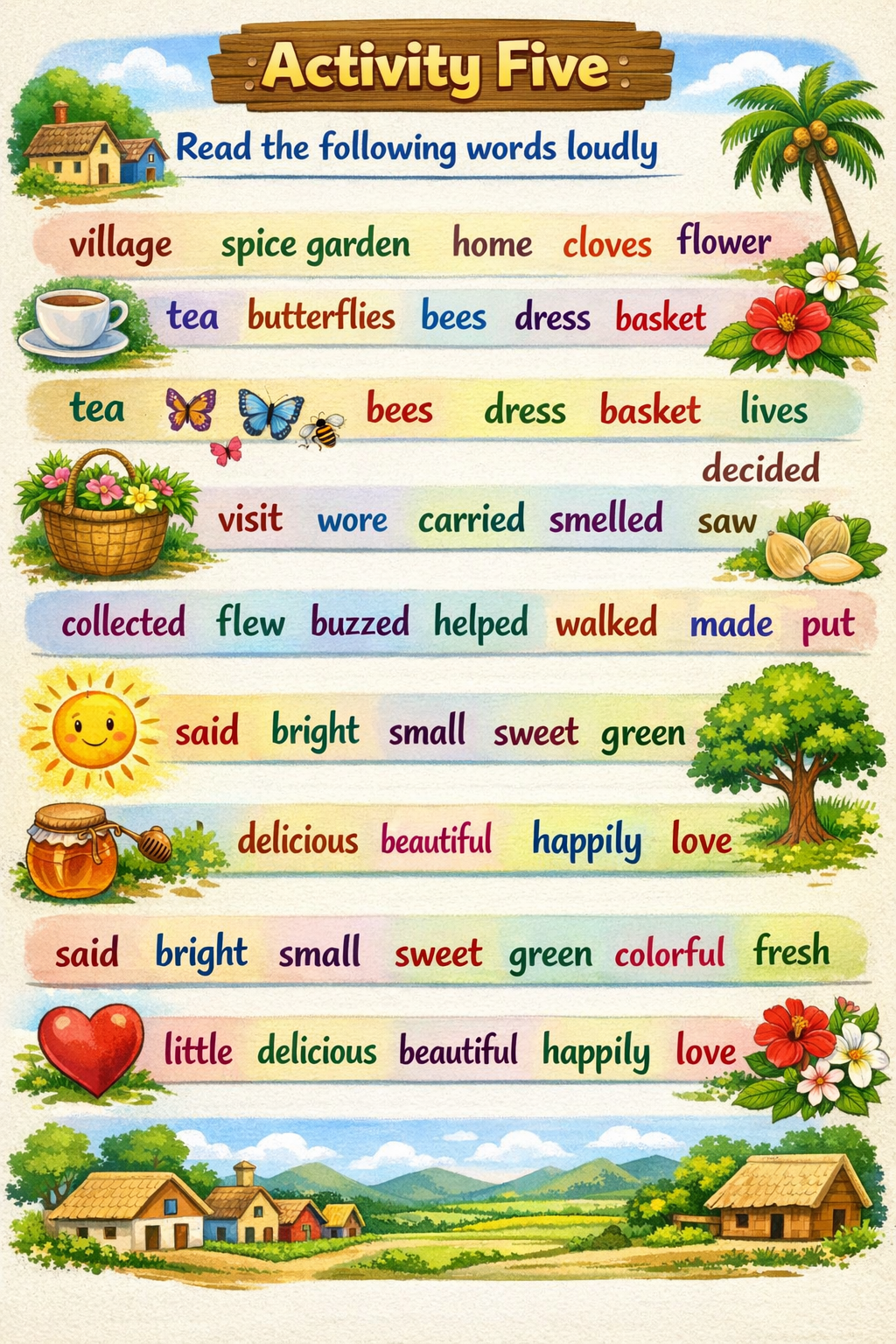
Activity 3
Read the following words loudly
Read the text by considering punctuation marks with the right pace.
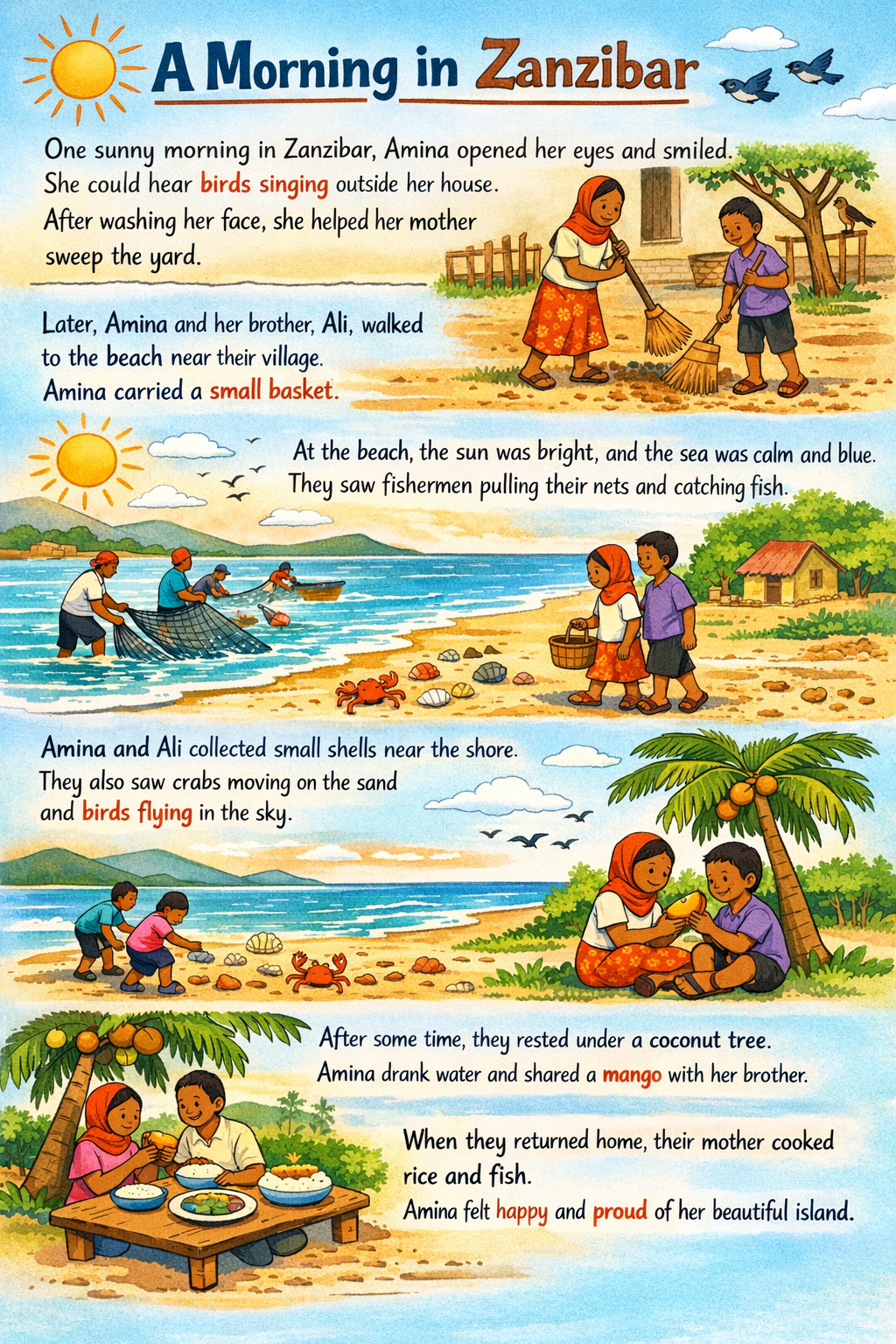
Activity 4
Read the following passage, paying attention to punctuation and reading at the correct pace.
Reading for comprehension (not more than 200)
Identify vocabulary from the text.
Activity 5
Read the following passage bellow and identify the vocabulary
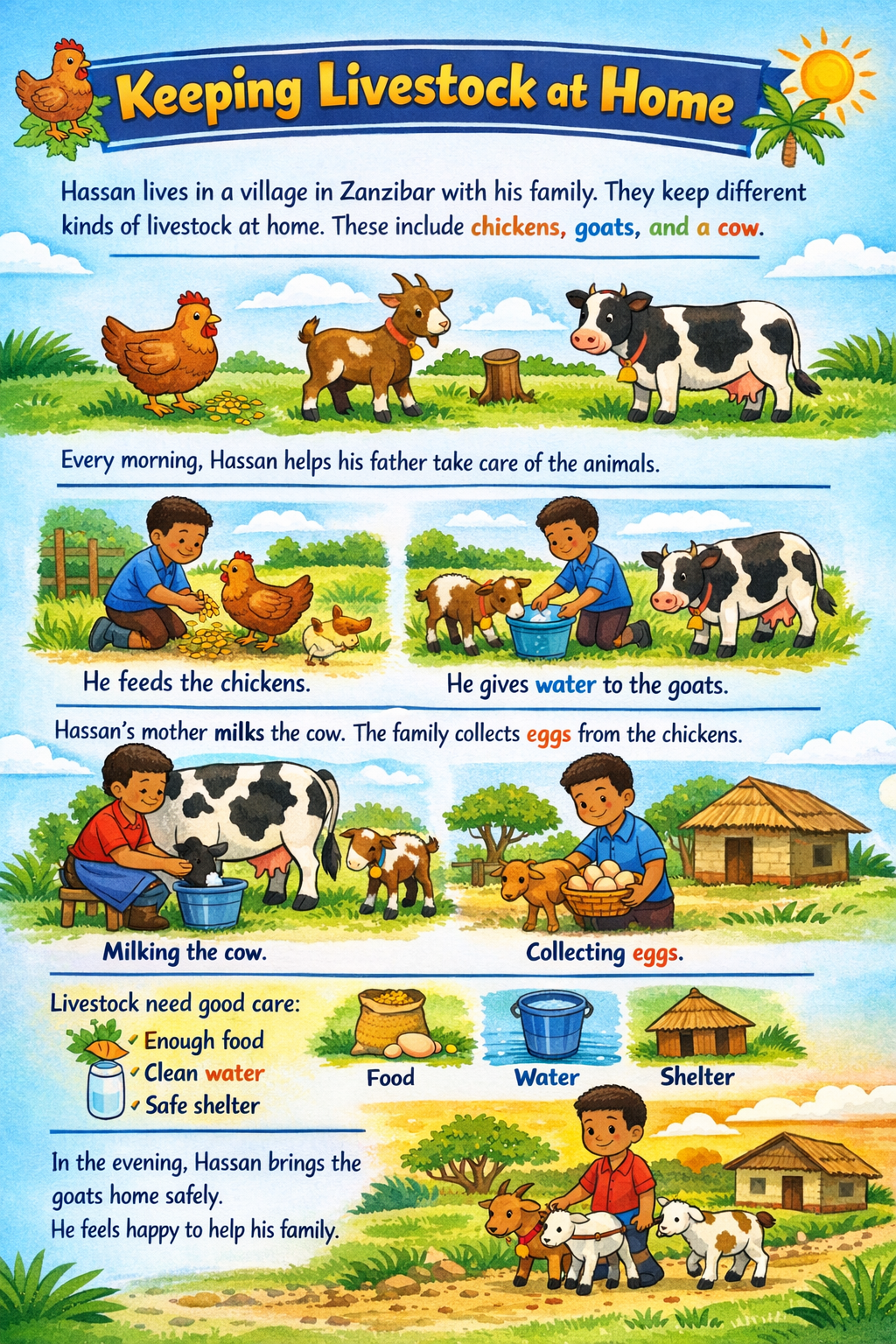
Exercise 1
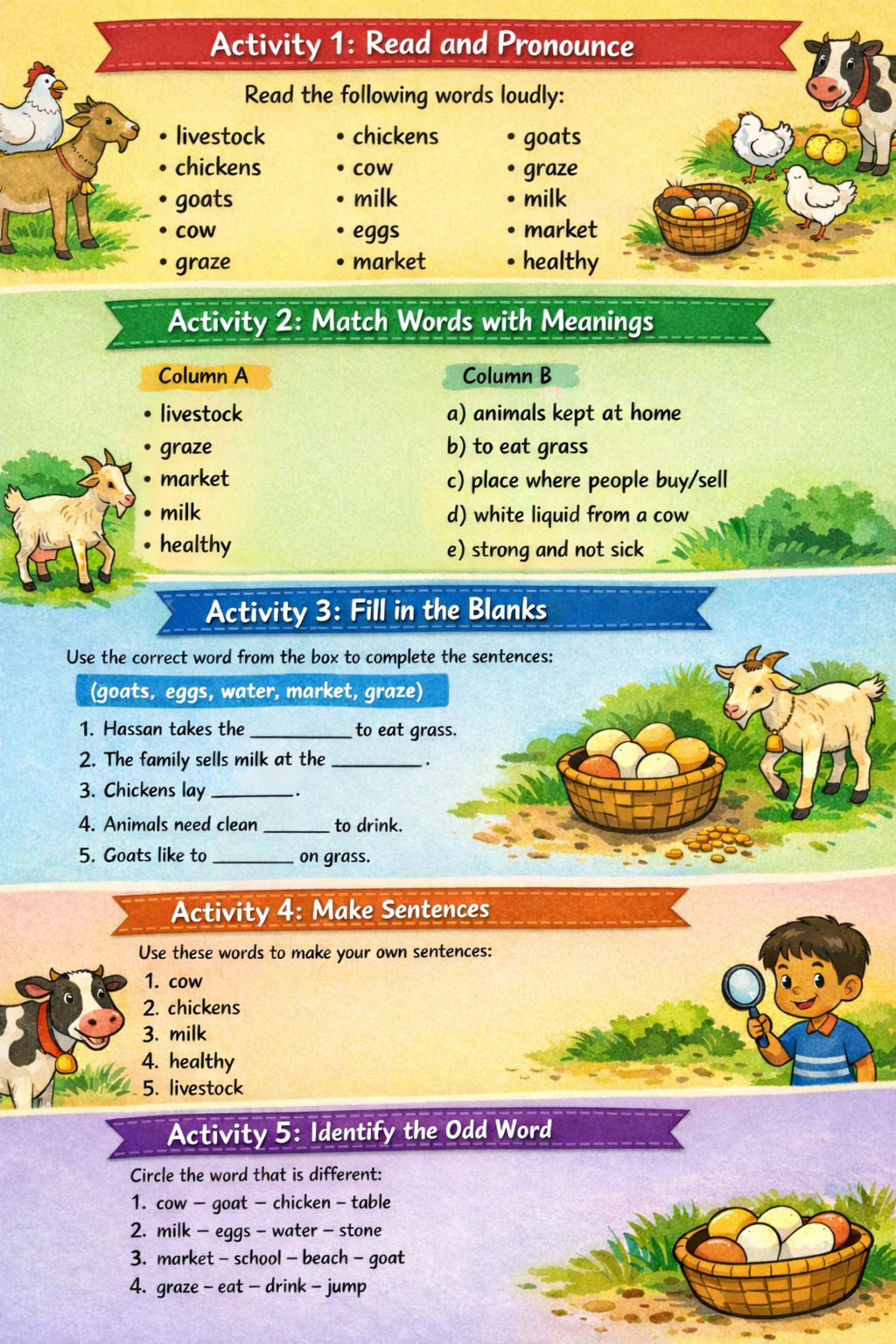
Read the text intensively.
Activity 6
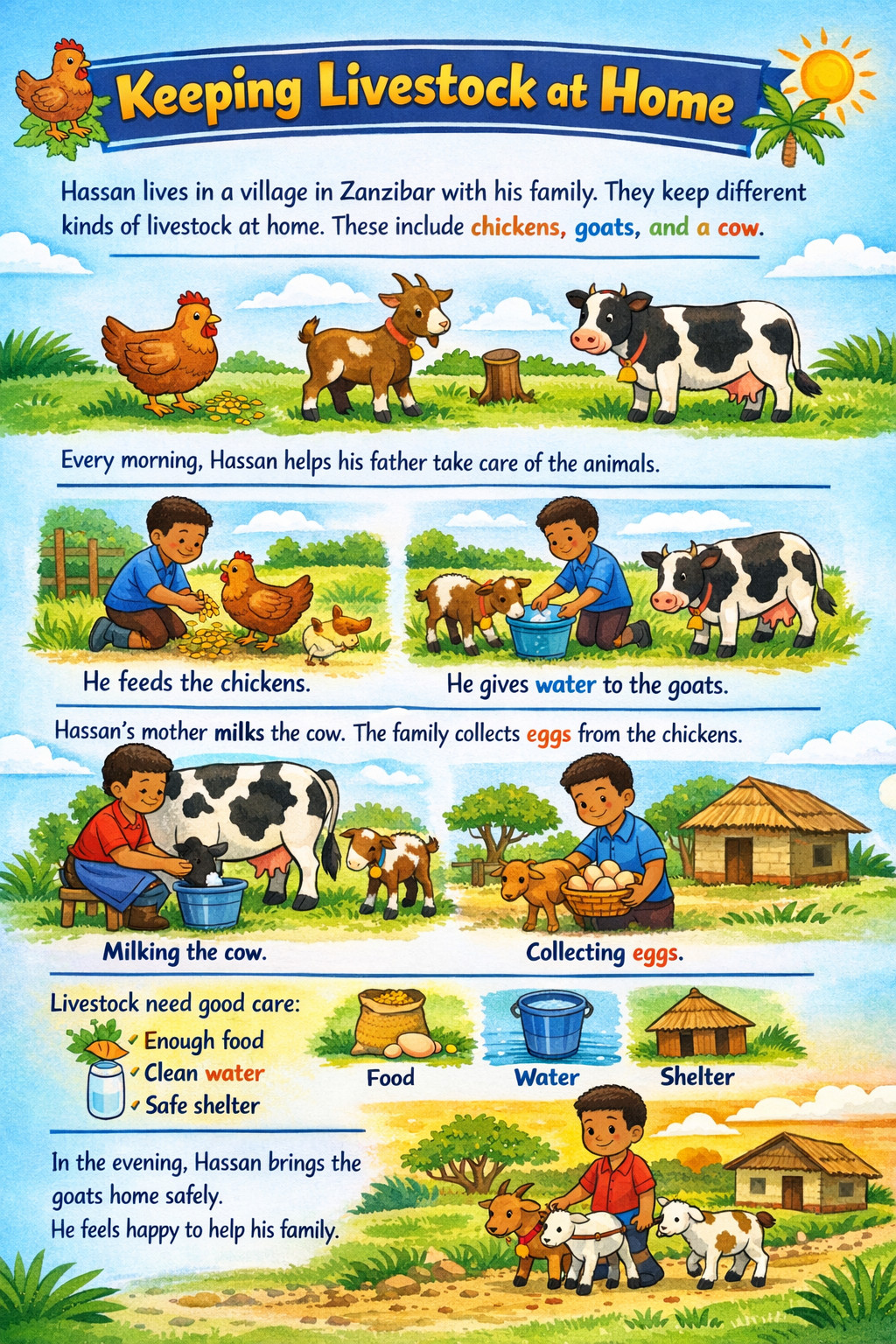
Answer the questions on the text read.
Activity 7
Read the following passage and answer the questions that follow
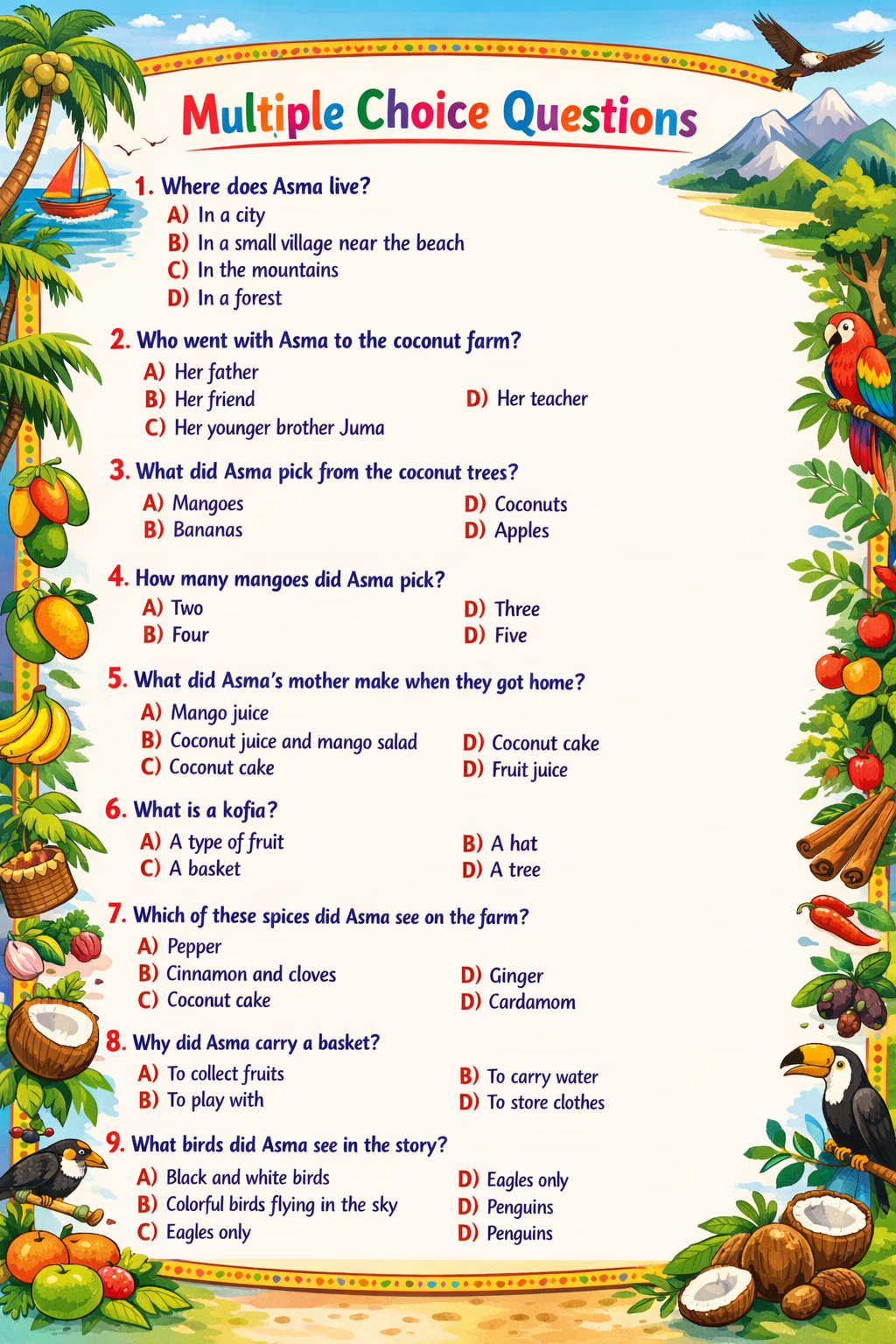
Exercise 2
From the above passage, answer the following questions
- 1. Where does Asma live?
- 2. Who went with Asma to the farm?
- 3. What fruits did Asma pick from the trees?
- 4. What did Asma’s mother make when they got home?
- 5. What type of farm did Asma visit besides the fruit trees?
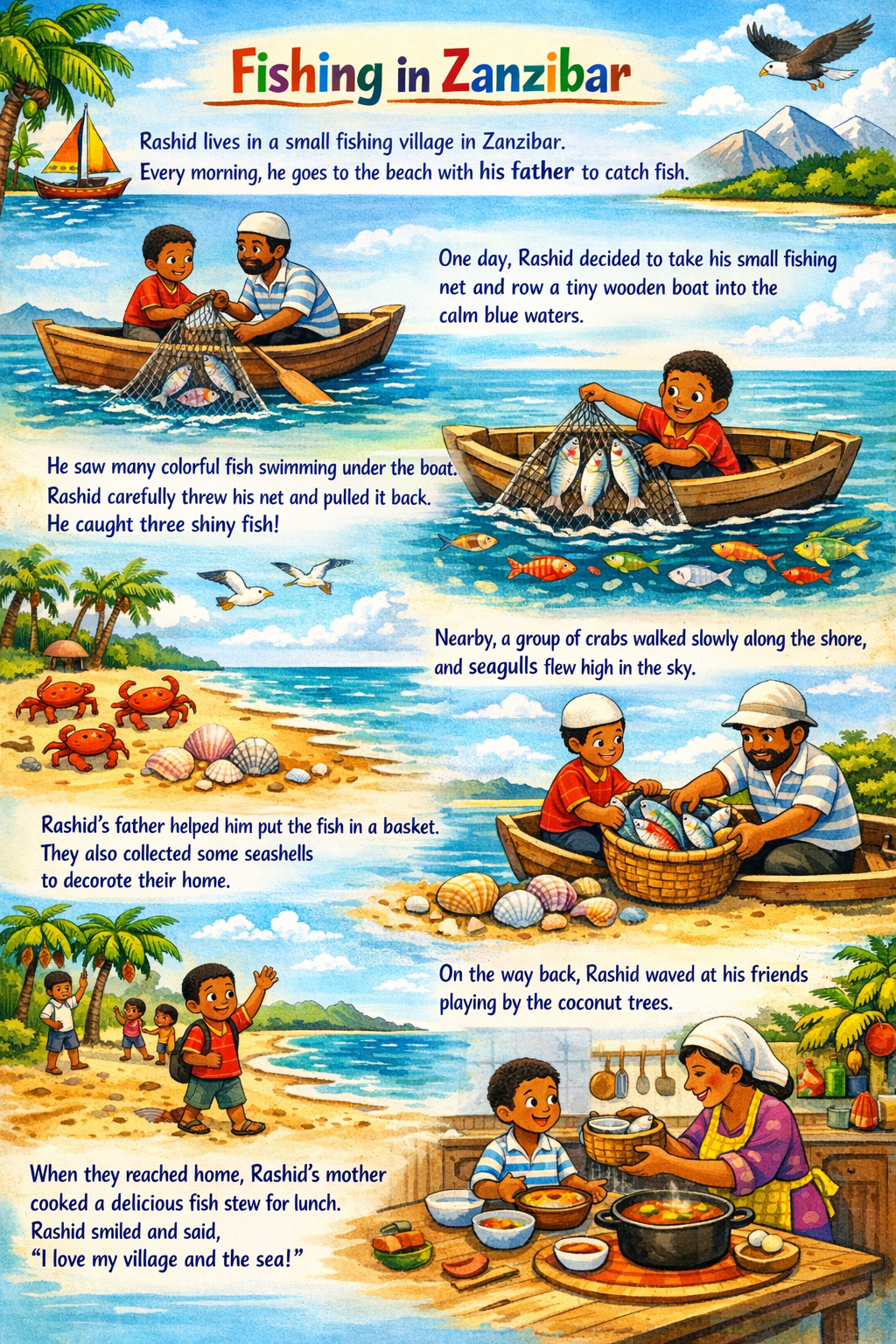
Activity 8
Reda the passage and answer the questions that follow
Exercise 3
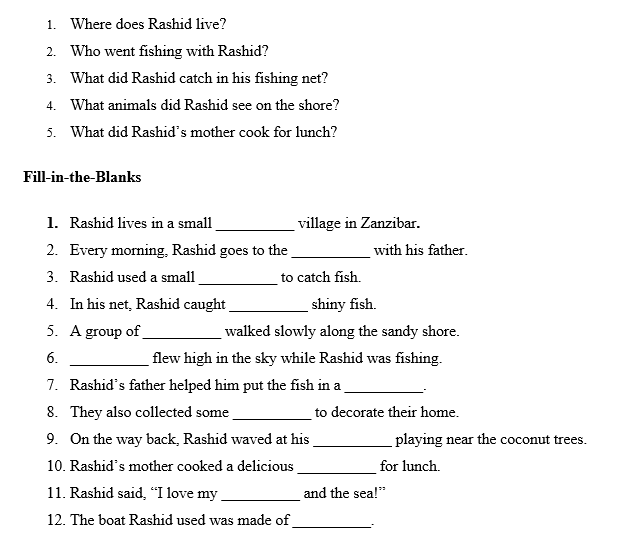
From the above passage answer the following questions
Listening to this topic