English
IDENTIFYING
Reading settings
Text size
Line spacing
Colours
IDENTIFYING
In this topic, pupils will explore the parts of the body by identifying them, drawing them, and describing their uses, which helps them understand how each part supports daily life. At the same time, they will practice reading, writing, and using numbers from 150 to 200, developing skills to compare figures with words, connect numbers to quantities, and apply them in different situations.
Parts of the body
Identify parts of the body
Body Parts fun video.
The human body has many parts. Some common body parts are: Head, eyes, ears, nose, mouth, hands, legs, feet
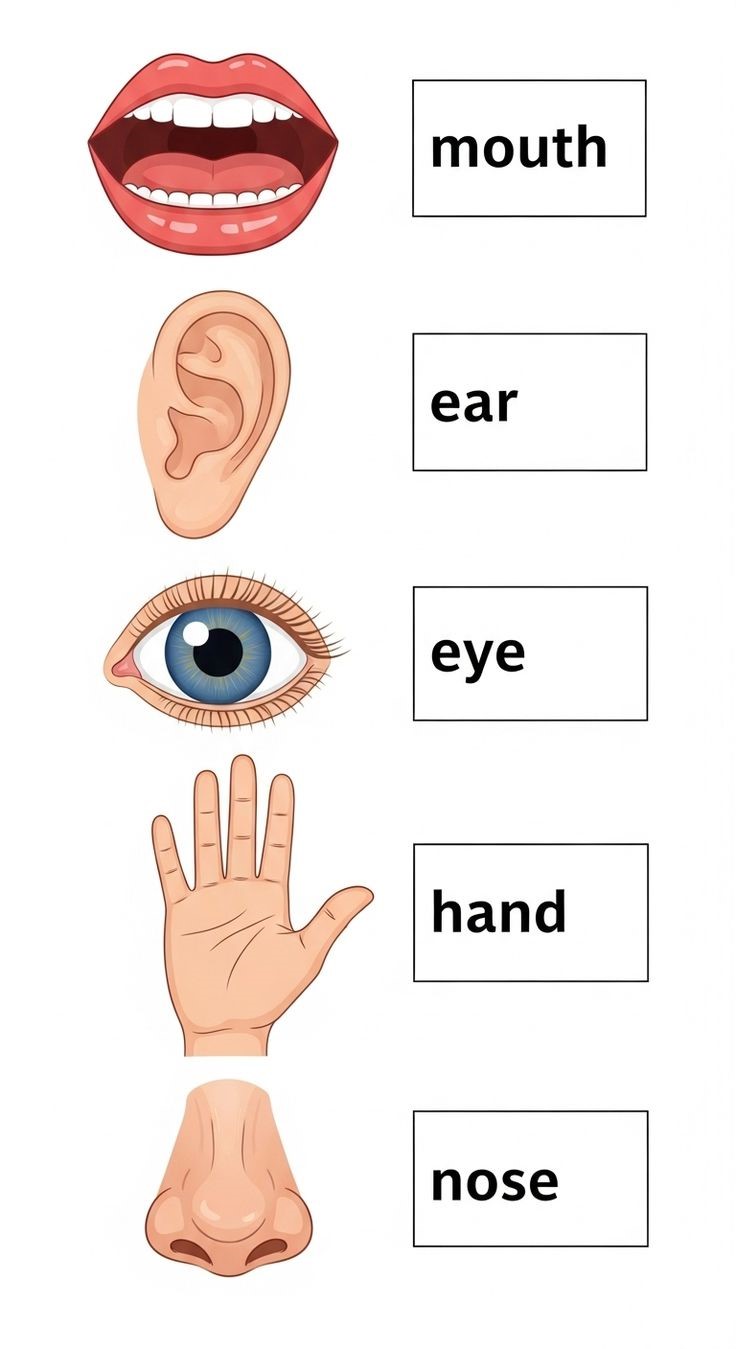
Chart of the parts of the bodies
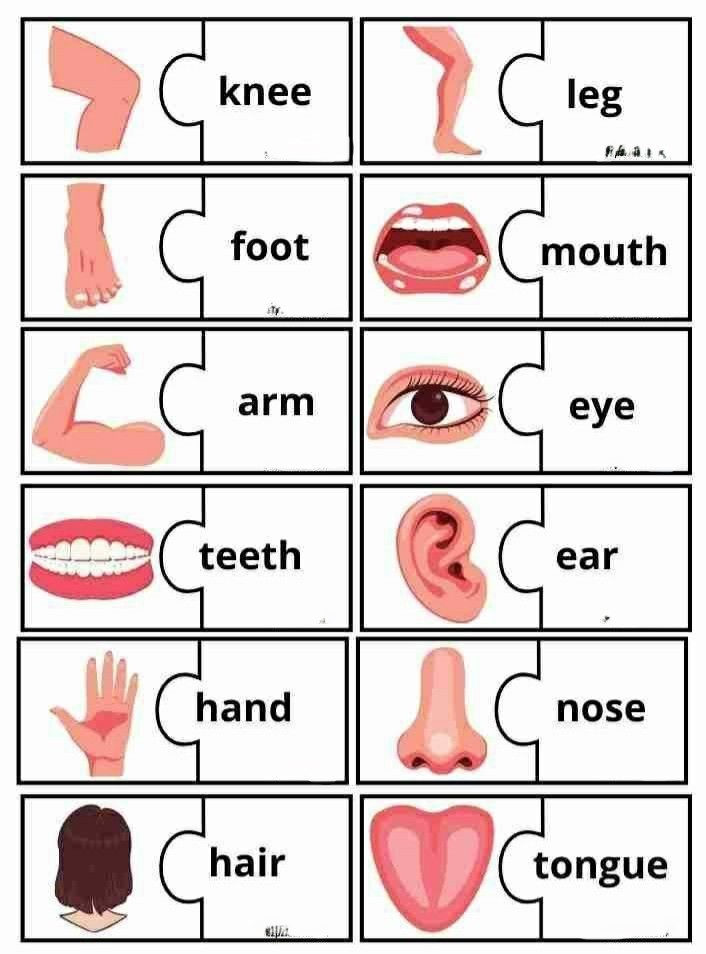
Exercise 1
Circle the correct body part
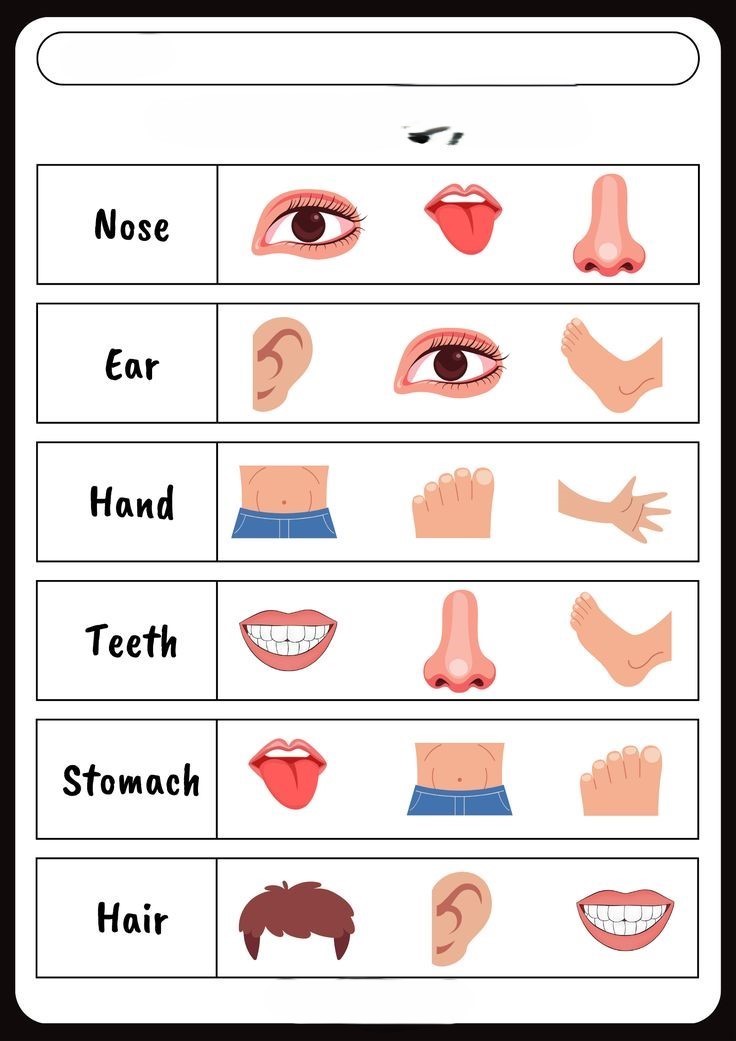
Exercise 2
Tick the correct option
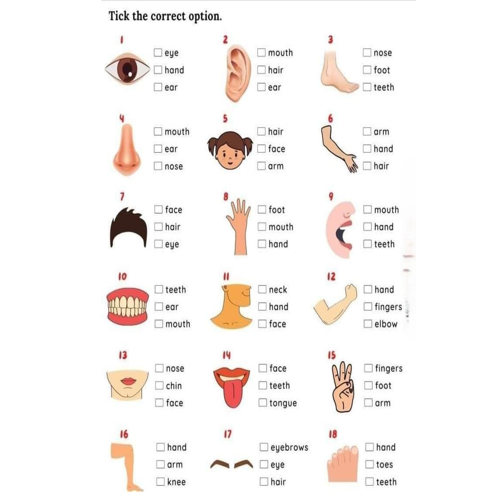
Draw different parts of the body.
Activity 1
Draw the following body parts and colour them: Eye, ear, mouth, nose and hand
Describe the uses of parts of the body.
Activity 2
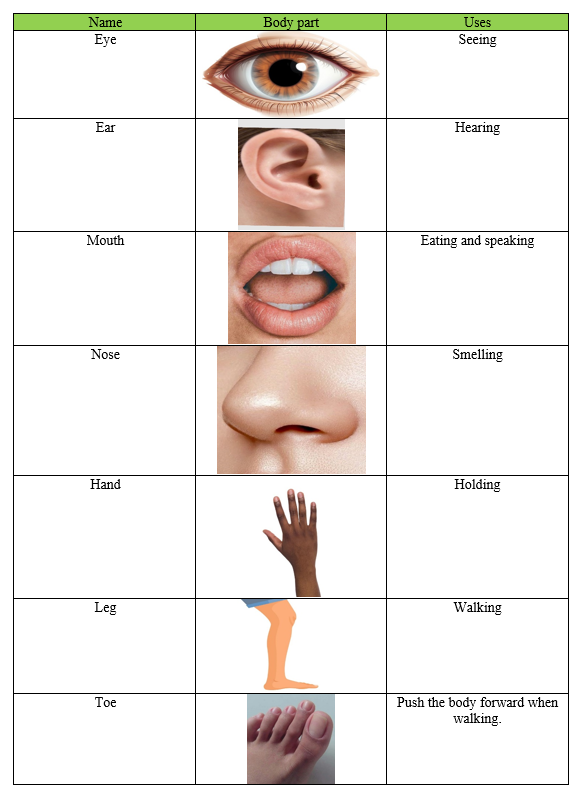
Each body part has a special use. The table below shows the uses of body part.
Exercise 3
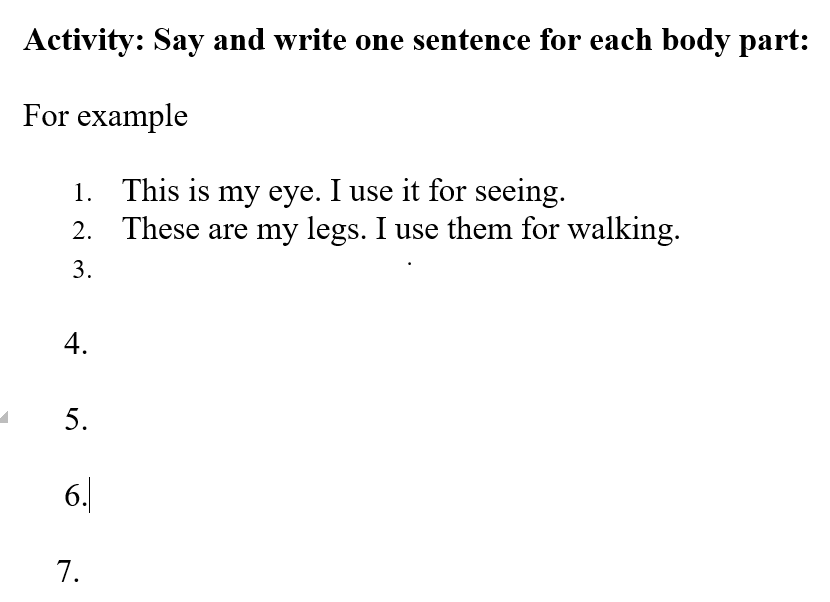
Exercise 4
Match the body part with its use
| Part A | Part B |
| Smelling |
| seeing |
| Walking |
| Hearing |
| Holding |
Exercise 5
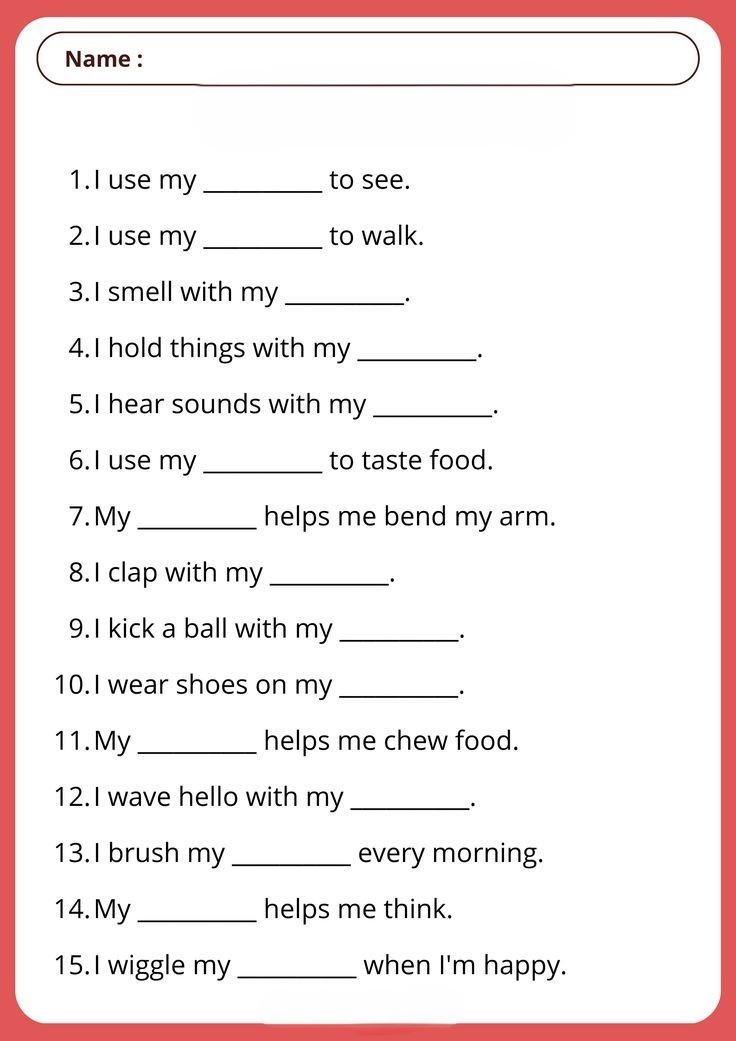
Fill the blanks
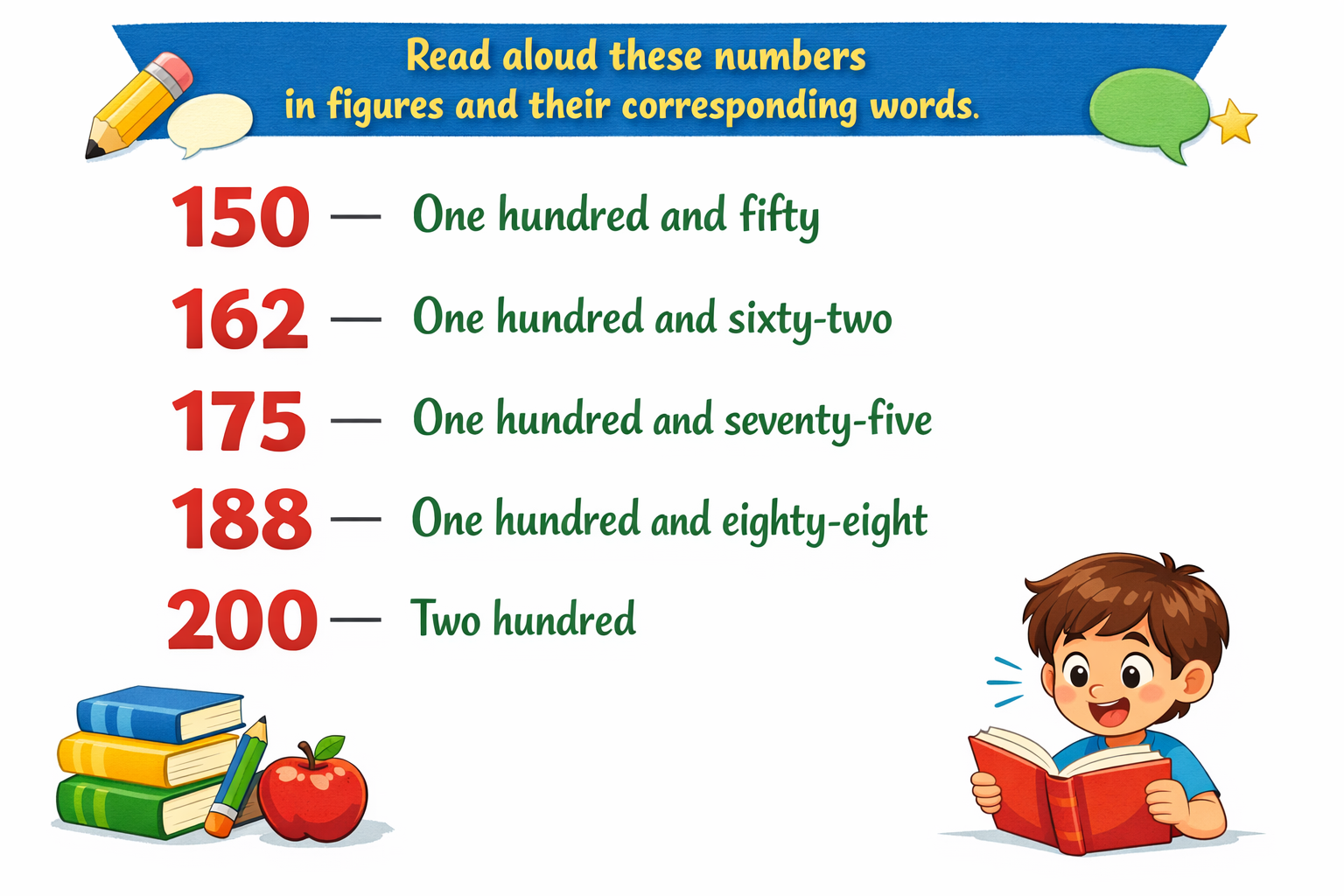
Numbers from 151 to 200
Compare numbers in figures with words.
Activity 3
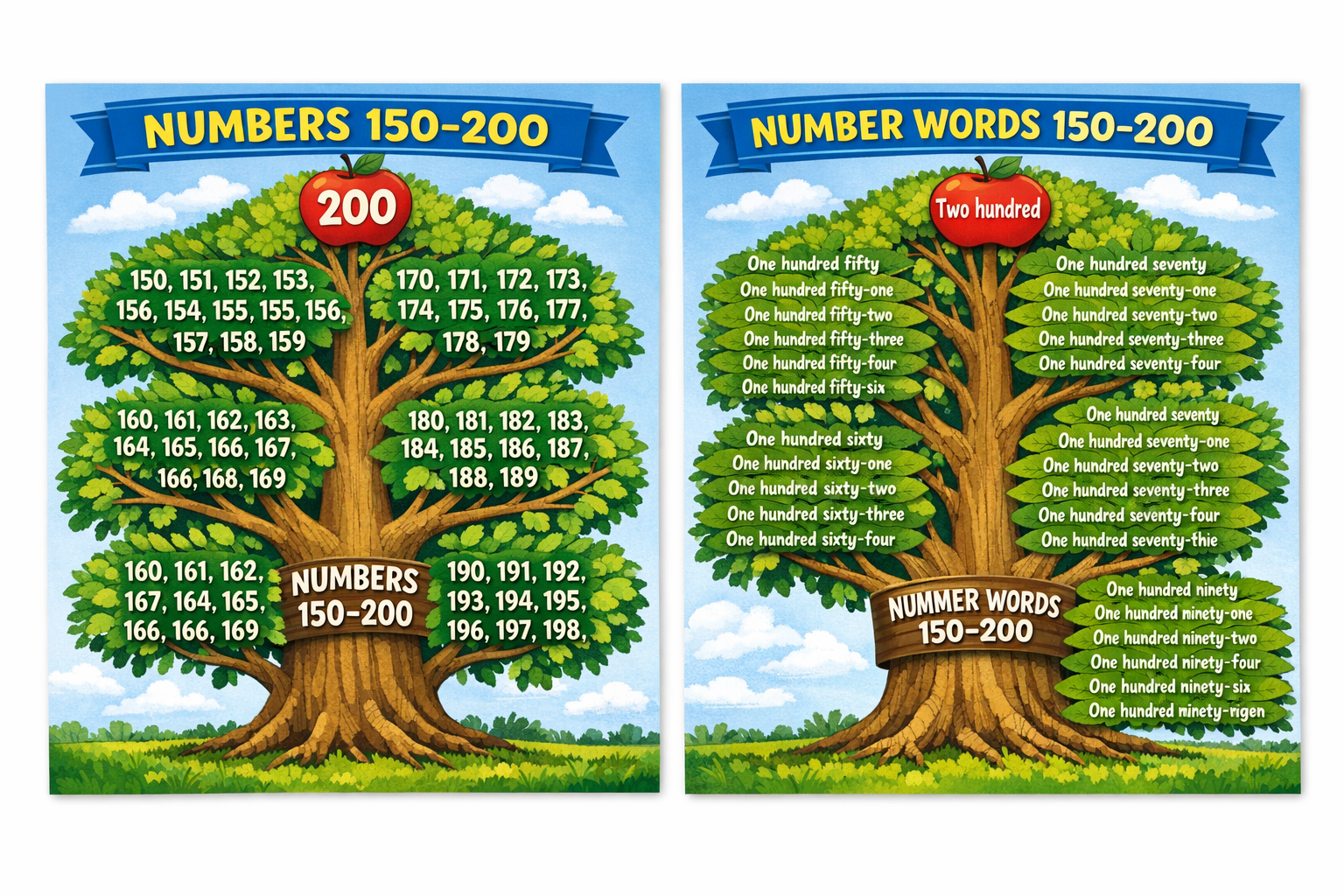
By using these two number trees, compare numbers in figures and numbers in words
Activity 4
Activity 5
Match numbers in figures with numbers in words.
| Figures | Words |
| 154 | One hundred ninety |
| 190 | One hundred fifty-four |
| 168 | One hundred sixty-eight |
| 175 | One hundred seventy-five |
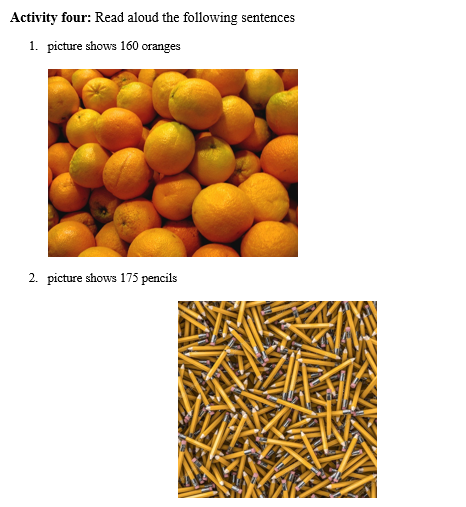
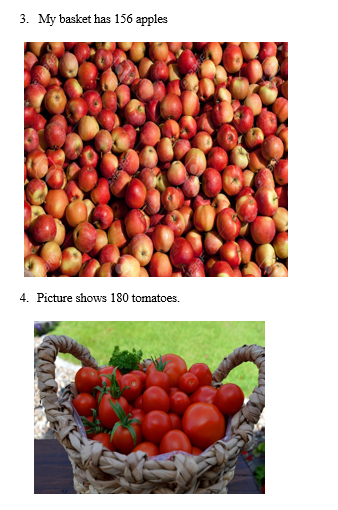
Associate numbers in quantity of things.
Activity 6
Look the following images
Apply numbers in different situations.
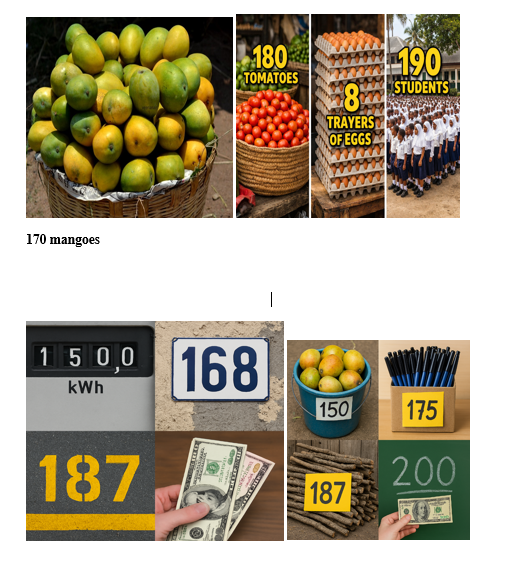
Activity 7
Look at these pictures. Then mention the number of things in each picture
Activity 8
Read aloud the following sentences
- The teacher marked 170 exercise books.
- The school printed 200 exam papers.
- There are 155 pupils in the school.
- There are 197 houses in our village
- The boat takes 164 passengers
Exercise 6
Read each situation carefully and write the correct number that matches the quantity.
- How many bottles are there in a crate of soda?
- How many eggs are in one tray?
- How many sheets are in a ream?
- How many passengers can a school buscarry?
- How many oranges are inthebasket?
- How many pencils are in a pack?
- How many books are in a boxes?
Listening to this topic