Geography
Human Activites
Reading settings
Text size
Line spacing
Colours
Geography is the study of places and the relationship between people and their environment. Geographers explore both the physical properties of the Earth's surface and the human societies spread across it.In the context of dynamic and changing world, it is very crucial to study Geography so as to be able to achieve sustainable human development.
Human Activites
Introduction
In this chapter, you will learn about the concept of human activities, major types of human activities and their importance. The chapter ends with a summary of the topic, revision questions and a list of references
OBJECTIVES
By the end of this topic, you will be able to define the meaning of human activities, explain major types of human activities and their importance
Concept of Human Activities
Meaning of Human Activities
Give the meaning of human activities
Human activities can be defined in various ways: -
- Human activities refer to what people do or cause to happen in order to achieve certain goal in life
- Human activities refer to any tasks performed by man for the purpose of earning his or her livelihood
- Human activities refer to functions, tasks or works done by human being overtime for achieving certain purposes or goals
- Human activities refer to acts or processes of production as intended by people in a certain place, which can be a country, region, district, or a village
- Human activities refer to tasks human beings do to modify the environment as well as extract the resources from the environment which are needed for survival, that is, satisfying human needs and wants.
Based on the given definitions about the meaning of human activities, it is clear that human activities involve the actions of people by performing different tasks or functions on their surrounding environment to earn a living or survive in terms of achieving their basic needs as well other needs. To achieve these goals people have been modifying the tools needed for obtaining resources from the environment from basic to more advanced and efficient technology.
Major Types of Human Activities
Identify major types of human activities
Primary activities
Primary activities involve exploitation of nature in the production of materials. Production in these kinds of activities largely depends on the natural resources available on earth. Examples of primary activities include (agriculture or farming which largely depends on availability of arable land which includes fertile soil, water for irrigation for crop growing or pasture for animal keeping. However, mining and quarrying depends on the availability of rocks with mineral ores. Other activities include fishing, lumbering, hunting and gathering. The production of primary activities includes raw materials for more sophisticated manufacturing industries. For example, cotton from agriculture is used in textile industries, timber for paper industries and leather for shoe-making industries
Agriculture
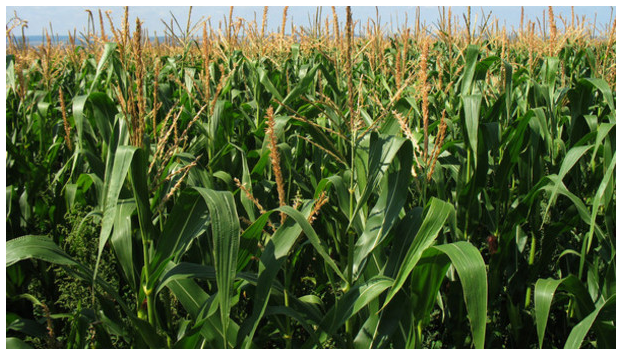
Agricultural activities involve growing and harvesting of crops from farms and rearing of animals. Agriculture is the oldest and commonly practiced primary human activities. This is because it contributes to the provision of food and other raw materials. Some of the crops are used as sources of food, for example, maize, rice, millet, sorghum, soybeans and peas. Figure 1.1 shows a maize farm
Livestock keeping is the rearing of animals for food and for other human uses (Figure 1.2). The word 'livestock' initially was applied primarily to cattle or dairy cows, poultry (chicken keeping), goats, pigs, horses and sheep. However, nowadays even raising of other animals such as donkeys, mules, rabbits and insects such as bees are considered as part of livestock farming

Mining
Mining is the extraction of minerals such as gold, copper, diamond, platinum and uranium from rocks with mineral ores as well as quarrying for obtaining building materials such as concrete or sand soil. The products of mining activities are used as raw materials for processing industries. Some minerals such as coal and uranium are used as sources of power. For example, uranium is used for the production of nuclear energy that is highly demanded all over the world due to its effectiveness in use. Figure 1.3 shows mining activities

Fishing
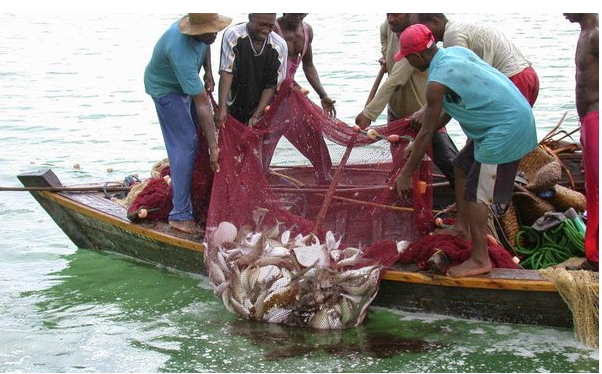
Fishing involves catching fish and other water (aquatic) products from oceans, lakes, seas, dams, rivers and ponds for commercial or domestic purposes. In Tanzania, fishing is done in the Indian Ocean and in the lakes such as Victoria, Tanganyika, Rukwa and Nyasa. There is also fishing in rivers such as Ruvu, Kilombero and Rufiji. Small scale fishing relies on traditional methods such as the use of fish nets or fish lines and hooks. Figure 1.4 shows small scale fishing
Fishing may include catching aquatic animals other than fish, such as molluscs, crustaceans, and echinoderms. The term is not normally applied to catching farmed fish, or to aquatic mammals, such as whales where the term whaling is more appropriate.
Lumbering
Lumbering is an activity which involves cutting timber and preparing it for marketing. It includes cutting down trees, sawing, splitting and even smoothing timber ready for making furniture or use for other purposes (Figure 1.5)

Secondary activities
Secondary activities are human activities that involve processing and manufacturing of raw materials into useful products. Secondary activities are also called processing activities. They involve the processing of raw materials. For example, ginning of cotton from raw cotton and heating crude rocks to get precious stones. Other secondary activities include cloth-making, construction of houses, car assembling, making dyes and making glue. Figure 1.6 shows cloth-making activities in a textile mill

Secondary activities are of great importance as they lead to fast economic development since they produce products that have immediate demands in society. They also accelerate the development of primary activities by providing a market for raw materials produced by primary human activities such as lumbering, agriculture and mining, etc
Tertiary activities
Tertiary activities involve the provision of services that are needed in society for public use. Examples of tertiary activities include trade (restaurants, hotels, lodges, supermarkets, etc.), transport and communication (Figure 1.7), teaching, and provision of social services such as healthcare, water supply, waste management and security. Other tertiary human activities include plumbing, mechanics, entertainment, advertising, legal services, and clerical services or religious services

Quaternary activities
Quaternary activities involve the provision of intellectual services and information. They activities were initially included in the tertiary activities (Figure 1.8). In general, quaternary activities are considered to be new and started in the last decade. Quaternary activities include high-tech, information technology, scientific research, consultancy and library services. Computer-based activities like making software are part and parcel of quaternary activities

Importance of Human Activities
Human activities are important in various ways:
- Human activities facilitate development of manufacturing industry by producing raw materials for them
- Human activities help in creating employment in the country. People are employed in the industrial functions or processes and in turn earn incomes
- Human activities like agriculture and fishing lead to the production and supply of food in a country, hence, contribute to survival of the people
- Human activities of the past and current ones such as recreational activities attract tourists which in turn contributes to earning foreign exchange and growth of the economy in the country
- Human activities like construction of roads contribute to the development of transport infrastructures and communication network
Chapter Summary
Human activity is any task performed by people for the purpose of earning their livelihood. The goals or purposes of human activities include production of food crops and cash crops, livestock husbandry and construction of infrastructure and environmental conservation. The major types of human activities include primary activities which involve the production of materials from nature and for supplying raw materials for industries. Secondary activities involve processes of manufacturing raw materials into useful products which are sold and contribute to economic development. Tertiary activities involve the provision of services that are needed as public goods in the society such as transport and communication services. Quaternary activities involve the provision of intellectual services and information, which among others; they include high-tech, information technology, scientific research, and consultancy
Also, the importance of human activities of human activities has been explained. They include facilitating development of manufacturing industry by producing materials that are needed, help in creating employment in the country because people are employed in industries to perform various such as management, engineering services, accountancy, security guards, driving. Additionally, human activities especially agriculture and fishing lead to the production and supply of food in a country. Furthermore, recreational activities attract tourist who in turn bring foreign currency in the host country
Revision questions
Question Time 1
A.1. Which of the following is human activity?
- Preaching
- Teaching
- Farming
- All the above
2. A human activity which involves keeping of livestock is called .
- farming
- cultivation
- animal husbandry
- livestock grazing
3. Which of the following is a tertiary activity?
- Cotton ginning
- Leather tanning
- Healthcare
- None of the above
4. is a human activity which can lead to deforestation if unchecked.
- Agriculture
- Radio repair
- Settlement
- None of the above
5. Choose a primary activity from the following list
- Grinding
- Hunting
- Playing football
- Transportation
B. Match an item from column I with a corresponding item from column II
| Number | Column I | Column II |
| Mining | A. Movement of goods and services | |
| 2 | Herding | B. Computer maintenance |
| 3 | Secondary activity | C. Keeping of livestock |
| 4 | Quaternary activities | D. Production of food |
| 5 | Transportation | E. Processing of minerals |
| 6 | Animalhusbandry | F. Production of wastes |
| G.Extraction of minerals | ||
| H. Carrying | ||
| I. Crop growing animal keeping | ||
| J. Excavation of non-minerals for building purpose |
C. Short answer questions
- Define the concept human activity
- Record all human activities carried within your school compound
- Explain the importance of each activity you have recorded for question 5 above
- With the help of relevant examples, explain how human activities contribute to environmental pollution
references
- Monkhouse, F.J. and Small, J. (1979). A Dictionary of the Natural Environments. Edward Arnold. London
- Mzezele, S. and Kibuuka, P. (2014). Geography In Focus Form Two. Oxford University Press Ltd. Dar es Salaam
- Tanzania Institute of Education (2002). Geography Course Book for Secondary Schools Book Two. Ecoprint Ltd. Dar es Salaam
Listening to this topic