Geography
Water Management For Economic Development
Reading settings
Text size
Line spacing
Colours
Geography is the study of places and the relationship between people and their environment. Geographers explore both the physical properties of the Earth's surface and the human societies spread across it.In the context of dynamic and changing world, it is very crucial to study Geography so as to be able to achieve sustainable human development.
Water Management For Economic Development
Introduction
In this chapter, you will learn about the meaning of water management and its importance, river basin development, land reclamation, sustainable use of water resources, and water pollution. You will also learn about the relationship between family size, water supply and quality of life, explain the relationship between vegetation and water supply as well as distances to water sources affects the girl child, benefits of developing river basins, problems and prospects of Rufiji River Basin Development Authority (RUBADA) and Tennessee River Valley Authority (TVA). Furthermore, you will learn about land reclamation in selected countries. Moreover, you will learn about water resources. The chapter ends with summary of the topic, revision questions and a list of references
Objectives
By the end of this topic you should be able to explain the uses and economic importance of water, describe the relationship between family size, water supply and quality of life, explain the relationship between vegetation and water supply, explain how distance to water source from household affects the girl child, state the benefits of developing river basins, explain the organization, benefit, problems faced and prospects of Rufiji Basin Development Authority (RUBADA) and Tennessee River Valley Authority (TVA), explain the major aims of land reclamation, describe the techniques used in land reclamation, explain land reclamation process in Tanzania, explain the types of underground water and how it can be tapped for use at local and national levels in Tanzania, differentiate different resources that are obtained from water, describe methods used for extracting resources from water, explain the problems caused by the extraction of water resources, define pollution and differentiate the main sources of water pollution, and describe various ways of conserving water resources
Meaning of Water Management
Water is a colourless liquid found naturally on the land surface, atmosphere and underground reservoirs. Water can exist in liquid, solid, or gas state
Water management is the activity of planning, developing, distributing and managing the optimum use of water resources. It is a sub-set of water cycle management. Much effort in water resource management is directed at optimizing the use of water and in minimizing the environmental impact of water use on the natural environment
Importance of Water
Water is an essential resource for all life on the planet. Of the entire water resources on Earth, only three per cent of it is fresh while two-thirds of the freshwater is locked up in ice caps and glaciers. Of the remaining one per cent, a fifth is in remote, inaccessible areas. At present only about 0.08 per cent of all the world’s fresh water is exploited by mankind in ever increasing demand for sanitation, drinking, manufacturing, leisure and agriculture
Uses and Economic Importance of Water
Explain uses and economic importance of water
Water has numerous uses in life. The following are some of the uses of water
- Biological use: Water is essential to life. Most of the reactions in animals and plants take place in solutions in water. Plants absorb minerals from the soil in solution form. Animals and plants are found near or in areas where water is found
- Domestic use: Domestic water use is probably the most important daily use of water for most people. It includes water that is used in the homes everyday activities like washing clothes and dishes, drinking, babying, food preparation, flashing toilets, watering lawns and gardens etc
- Industrial use: Water is a valuable resource to the nation’s industries for such purposes as processing, cleaning, transportation, dilution, and cooling in manufacturing industries. Major water-using industries include cloth, steel, chemical, paper, and petroleum refining. Industries often reuse the same water repeatedly for more than one purpose. Water is used as a solvent in many industrial processes. It is also used for cooling certain parts of machines
- Water as a solvent: Water is regarded as a universal solvent. It dissolves almost all substances. For this reason, it is used for dissolution of chemicals ranging from poisonous chemicals used in agriculture to non-poisonous chemicals used in hospitals, laboratories, research stations and for other general purposes
- Cooling and heating: Due to its high specific heat capacity, water is used for cooling automobile engines and other machines. Hot water is used during winter for heating homes in cold countries. In higher plants, evaporation causes a cooling effect and therefore helps to cool plant organs. During hot weather, some animals tend to wallow in water in order to cool their bodies either through evaporation or by the water itself
- Habitat: Water is a habitat for fish and all aquatic animals and plants
- Livestock use: This includes water for stock animals, feedlots, dairies, fish farms and other nonfarm animals. In arid regions of Tanzania, the Government has constructed dams to supply water to cattle, and for some domestic uses
- Mining: Water is used in mines for extraction of naturally occurring minerals: solids, such as Sulphur and ores; liquids, such as crude petroleum; and gases, such as natural gas. This includes quarrying, milling (such as crushing, screening, washing, and flotation), and other operations, as part of mining activity
- Generation of electricity: Hydroelectric power is generated by river water. Fast-moving river water (especially in waterfalls and cataracts) is used to turn turbines to generate hydroelectricity that is supplied to homes, industries, towns, etc. Most of the electricity we use at home is generated by this means. Only a small portion is generated through other means
- Navigation and recreation: People, goods and services can be transported via water bodies like rivers, lakes and oceans by using vessels such as boats, dhows, canoes and ships. Water is also used for sports such as swimming, canoeing, fishing, yachting, water skiing, and many other sports carried out on, in and under the water.
- Irrigation: Water is artificially applied to farm, orchard pasture, and horticultural crops, as well as leaching of salts from the crop root zone in sodic soils. Non-agricultural activities include self-supplied water to irrigate public and private flower gardens, loans, football pitches, etc. Crop production in areas that receive little rainfall per year can be achieved through the practice of irrigation. Water for irrigation purposes can be drawn from rivers, lakes, swamps and even from sea

Economic importance of water
Water is one of the most important substances on earth. All plants and animals need water to survive. If there was no water, there would be no life on earth. The following are some of the reasons as to why water is very crucial in economic development;
- It encourages industrial development since it is essential in industries for cooling, dissolution, dumping of wastes and general processing and manufacture of goods and services. Water is one of the vital requirements for the location of any industry
- Water improves the quality of family life since it is used for washing, cooking, cleaning, and providing cash for the family, like in Dar es Salaam and other towns, where you find many vendors selling water to get money
- It is required for the generation of hydro-electric power, which is needed in industries, homes, and mining activities
- Irrigation: It is estimated that 70% of worldwide water use is for irrigation. In some areas of the world, irrigation is necessary to grow any crop while in other areas it permits more profitable crops to be grown and it improves crop yield. Established irrigation schemes such as the famous Gezira (Sudan), and Hero, West Kano and Bunyara (Kenya), etc use enormous quantities of water for irrigation purposes, without which no crop production could be achieved
- Water has also led to the development of fishing industries in countries like Norway, Japan, South Africa, etc
- Certain water sceneries such as waterfalls, cataracts, natural springs, geysers, etc., encourage tourism and hence earn the country foreign exchange
- It encourages the development of transport and communication like navigation
- Sanitation: Industries and town authorities often dump wastes in sewers, a fact which helps to keep our environment clean. Feces from latrines, household wastes and industrial chemical wastes are often directed into the sewage system through which they are dumped to the nearby water source. However, these particular wastes must be thoroughly treated before being emptied into the water as they are potentially detrimental to marine, terrestrial, and even aerial ecosystems
The Relationship between Family Size, Water Supply and Quality of Life
Describe the relationship between family size, water supply and quality of life
Households with many family members will obviously require more water to use for various purposes. If the water supply is so acute as compared to family demand, this will lead to water scarcity. In such a case, the water turns out to be a limited resource. This then affects the quality of life in various ways such as shortage of water for drinking, washing, cleaning, cooking, etc
A large family requires more water and hence its members have to spend much time, energy and money to search for and carry water. In rural areas family members, especially girls and women, spend a lot of time and energy searching for water. In some communities, girl children are stopped from attending schools in order to search for water to be used by the whole family. The family may also be required to spend a lot of money to purchase water from vendors, thus limiting the family’s expenditure on other goods and services. This badly affects the quality of life
For households with a few members, it is easy to manage water resources to make it suffice every member of the household. The quality of life will even be better if that family is well off, in that it can afford to purchase water or even set up water supply infrastructure for own use. A small family, on the other hand, does not require very large amounts of water. Because of its low consumption, such a family is also able to use stored water over a long time in case the frequency of water supply in that locality is low
WATER QUALITY AND SUPPLY
Water quality refers to the chemical, physical, biological, and radiological characteristics of water. It is a measure of the condition of water relative to the requirements of one or more biotic species or any human need or purpose
Water supplied to homes, industries, farms, etc. must be of high quality so as to avoid the problems associated with water of poor quality. It must also be free of contamination with microorganisms and/or hazardous chemicals
Contaminants that may be found in untreated water include microorganisms such as viruses, protozoa and bacteria; inorganic contaminants such as salts and metals; organic chemical contaminants from industrial processes and petroleum use; pesticides and herbicides; and radioactive contaminants Water quality depends on the local geology and ecosystem, as well as human uses, such as sewage disposal, industrial pollution, use of water bodies as a heat sink and overuse
Dissolved minerals may affect the suitability of water for a range of industrial and domestic purposes. The most familiar of these is probably the presence of ions, calcium and magnesium which interfere with the cleaning action of soap
Water supply
Water supply is the provision of water by the government or local authorities, commercial organisations, community endeavours or by individuals, usually via a system of pumps and pipes
Continuity of water supply
Continuity of water supply is not a problem in most developed countries but is a severe problem in many developing countries, where sometimes water is only provided for a few hours every day or a few days a week. It is estimated that about half of the population of developing countries receives water on an intermittent basis
The consequences of water quality and supply
A safe, reliable, affordable, and easily accessible water supply is essential for good health. An inadequate water supply prevents good sanitation and hygiene. Consequently, improvements in water supply enhance public health. An outbreak of diseases like cholera, dysentery, typhoid and diarrhea often occurs during the time when the water supply is very limited such that adequate sanitation cannot be achieved
Water supply issues have specific adverse effects on women in developing nations such as Tanzania. Women are often usually the family members responsible for providing water as well as collecting it. This makes female members of the community spend most of the time searching for water, thus preventing them from participating in other economic activities. Sometimes girl children are stopped from attending schools so as to fetch water for the family
In places where the water supply is low, residents have to spend a lot of money in purchasing it, erecting water infrastructures such as storage tanks as well as much effort in searching for water. This deprives people’s time to participate in other income-generating activities. Also, the money that could otherwise be spent on other life aspects is directed towards solving water scarcity. This may lead to abject poverty for those families with low income
All these problems indicate that water quality and supply have a lot of negative implications to the community. So, the provision of ample and quality water by the responsible authorities is inevitable
The Relationship between Vegetation and Water Supply
Explain the relationship between vegetation and water supply
The availability and quality of water in many regions of the world are more and more threatened by overuse, misuse and pollution. Both water availability and quality are strongly influenced by forests. Moreover, climate change is altering the forest’s role in regulating water flows and influencing the availability of water resources. Therefore, the relationship between forests and water is a critical issue that must be addressed keenly
Areas with dense forests and other thick vegetation serve as water catchments. Many rivers and streams have their sources in forests. Examples of rivers originating from forests are the Congo (Congo forests) and Mara (Mau Forest in Kenya). This water is what feeds streams, rivers and lakes from which we get water for domestic and industrial uses.
Places with abundant vegetation stand a chance of getting reliable water supply compared to those with little or no vegetation. This due to the fact that forests form water catchment areas and they also attract rainfall. Forested lands normally receive high rainfall per year than dry and bare lands
Governments and international and local organizations encourage people to plant more trees and conserve natural forests so as to prevent the occurrence of drought and hence limited water supply to the community. It is therefore important to ensure that everybody is involved in forest conservation in one way or another so as to maintain the water supply. There is a very close relationship between water supply and forests. Forests will only thrive on a soil that receives sufficient water. At the same time, places with many thick forests often receive high rainfall. Therefore, to be sure of adequate water supply, forest conservation is a must. Where there is little water available, vegetation is very sparse and poor
How Distance to Water Sources from Household Affects the Girl Child
Explain how distance to water sources from household affects the girl child
Lack of accessible, sufficient, clean and affordable water supply has adverse impacts specifically related to women in developing nations. In Tanzania, women and girl children are mainly the ones responsible for fetching water from wells, rivers, streams, community water supply, etc. The fetching of water, which may take up to six hours a day to meet the household needs, is a duty often assigned to women and children. This foregone time often prevents children, especially girls, from attending schools and women from pursuing small business opportunities
The distance between home and the water source affects the girl child in the following ways:
- When the distance is long, the girls have to walk long distances, sometimes in harsh weather conditions such as hot sun, rains and coldness. Thus, they get tired and sometimes affected health wise by adverse weather. On the way to and from the water sources, they can also be attacked by dangerous animals such as lions and hyenas, bitten by poisonous snakes or even get molested, raped and abused in various ways. Because they spend much time on the way, this means that they have little time to study, play or socialize with their contemporaries.
- If the distance between home and water source is short, the girl children will take a short time to get the water and have enough time to play or take part in other activities. So they will not get very tired. Those studying will have ample time to study and revise or help their parents to do other activities.
- Therefore, it is crucial that the government and local authorities do whatever it takes to improve the water services so that water can be obtained from sources close to households. This will reduce or eliminate all the hardships facing girl children in search of water for their families

River Basin Development
A river basin is an area of land drained by a river and its tributaries. River basin development, therefore, refers to the development of the river basin, aiming at making the sustainable use of the basin resources. For the development of river basin to take place the following conditions must be met
- The river basin has to cover a substantially large area
- The volume of the main river and its tributaries must be large
- The river basin development should not have a negative impact on the ecosystem or people in the neighborhood of the river basin
- There should be enough capital to ensure the successful development of the project
- Availability of land to set up offices and other infrastructures and facilities.
Benefits of Developing River Basins
State the benefits of developing river basins
The following are some of the benefits of river basin development
- An improved agricultural practice which in turn leads to improved production. In river basin development, the farmers within the river basin are trained on the best methods of agricultural production. The water in the project is used for irrigation hence ensuring maximum production all the year-round
- The development of the river basin includes environmental conservation. The soil is conserved and maintained through controlling soil erosion by planting trees, terracing, good cropping systems, etc
- River basin development may also lead to the improvement of transport in the area within the river basin. The dams constructed may be used for navigation
- It leads to the creation of employment opportunities to the local community. People are employed directly by the authority responsible for river basin development. Some people benefit indirectly through provision of other public services to the river basin development personnel
- It leads to the improvement of water supply to workers and the local community. The dams constructed and water pipes laid help curb the water problem a great deal
- Many river development projects are marked by hydroelectric power production using water from the rivers in the basin. The electricity generated in these power plants is used for both domestic and industrial purposes. This leads to urbanization and industrialization of these areas. River basin development projects have encouraged the development of towns in many places. For example, in Germany, most of the towns like Cologne, Bonn and Frankfurt are found along the river basins. Hence, they can help in solving the problem of overpopulation
- They lead to the development of the fishing industry, especially after the construction of the dams
The Organization, Benefits, Problems and Prospects of Rufiji Basin Development Authority (RUBADA) and Tennessee River Valley Authority
Explain the organization, benefits, problems faces and prospects of Rufiji Basin Development Authority (RUBADA) and Tennessee River Valley Authority
1. Tenessee River Valley Authority (TVA)
The Tennessee Valley Authority is a federally owned corporation in the United Stated created in May 1933. It was created to improve navigation, control flood and soil erosion, electric generation, fertilizer manufacturing and economic development in Tennessee Valley. A region is particularly affected by Great Depression (a time of serious economic decline). The enterprise was a result of the efforts of Senator George W. Norris of Nebraska. TVA was envisioned not only as a provider but also as a regional economic development agency that would use federal experts and electricity to rapidly modernize the region's economy and society
TVA's service area covers most of Tennessee, portions of Alabama, Mississippi, and Kentucky, and small slices of Georgia, North Carolina, and Virginia. It was the first large regional planning agency of the federal government and remains the largest. The authority is headed by a board of directors. At the time of its formation, the Tennessee Valley experiences an extreme economic decline. Crop production had seriously declined due to loss of soil fertility brought about by continuous tilling and soil erosion. Steps that the TVA took in developing the valley include;
- Constructing dams along the river course. A total of 32 dams were constructed to control floods
- Reforestation was done, especially on the steep slopes of Appalachian Mountains
- Gullies were filled up with brushwood to trap the eroded soil particles especially silt
- Modern farming methods were introduced, for example, terracing, contour ploughing and crop rotation on the slopes
- Planting of grass or cover crops on the slopes so as to reduce run-off
At present, the authority is the largest public power producer in the country with over forty-five dams and hydroelectric power generation plants, more than fourteen fossil fuel plants and three fully operational nuclear power plants.
Benefits of the TVA
Below are some benefits of the TVA;
- Flooding has been successfully controlled through construction of dams, planting trees and other methods
- Soil erosion has been controlled by taking various soil erosion control measures
- Mechanized and irrigation agriculture practiced by the TVA has led to an increase in size of the arable land and hence increased agricultural production. This has been achieved by the TVA through provision of cheap fertilizers and other agrochemicals to farmers
- The hydroelectric, nuclear and fossil fuel power plants developed by the authority provide adequate electricity to homes and industries in the basin
- Water, land and electricity made available by the authority have attracted investment in various industries. For example, the availability of electricity has led to the establishment of car manufacturing and aluminium smelting industries and an atomic power station
- The authority has employed many people who carry out the numerous activities in the basin, thus aiding to solve the problem of unemployment. Consequently, it has led to the improvement of the living standard of the inhabitants in and close to the river basin
- The Tennessee River is now navigable with barges able to travel over a length of 1050 km of the river throughout the year. This has improved transportation of goods, people and services. Some of the goods transported include petroleum, maize, steel, machinery and motorcars
- The many economic activities carried out in the basin have led to urbanization of the areas within the basin. Some of the largest urban centres in the valley include Chattanooga and Knoxville. Due to urbanization, social services such as healthcare and housing have been improved
- Tourism has developed in the area due to river basin development. Many public parks and camping areas have been established. These social amenities serve as the facilities for tourists who visit the area
- Because of the dams constructed for electricity generation, the fishing industry has also developed. Fishing is mostly carried out in the dams and rivers. However, fish farming activities are also practiced within the river valley, favoured by the availability of water all the year-round
- There has been increased disease control. Formerly, diseases such as malaria were widespread in the area but now, they have been highly controlled
- There has been an increase in water supply for irrigation, domestic and industrial uses.
Prospects of the Tennessee Valley Authority;
Although the TVA has achieved most of its goals hitherto, there is still great potential for further development and improvement. Below are some of the prospects of the TVA;
- There is still enough room for expansion and diversification of agriculture in the area. There is plenty of arable and irrigable land that has not been fully utilized. If this land is fully utilized, it has the potential to greatly increase agricultural output of the region
- More land is still available for establishment of various industries. Potential growth areas include car and textile manufacturing
- The TVA still has potential in power generation sector. There are quite a number of nuclear power generation projects that were put on hold or cancelled. If these could be revived, the authority would increase its power generation capacity
Rufiji River Basin Development Authority (RUBADA)
Rufiji River is the largest basin in Tanzania, draining most of the southern part of the country and navigable for about 100 km. It is formed by the confluence of the Kilombero and the Luwegu rivers and flows for about 280 km North East and East to enter the Indian Ocean, opposite Mafia Island. The river has major potential for irrigation and hydroelectric power development. Its principal tributary is the Great Ruaha.
The Rufiji River Basin is the largest catchment basin in Tanzania, covering 177,420 km2and has the highest potential for hydroelectric power in Tanzania. The basin covers mainly four regions of Coast, Morogoro, Mbeya and Iringa and some parts of Dodoma and Ruvuma.
The Rufiji Basin Development Authority was established in 1975 to oversee the development of the Rufiji River basin. However, the authority has already been dissolved and no longer exists. Its primary functions were the generation of electricity, the undertaking of flood control measures, and the promotion and regulation of activities in the sectors of industry, agriculture, mining, forestry, fisheries, tourism and transport in the Rufiji River basin
Benefits of Rufiji River Basin Development Authority
Numerous benefits had been attained by RUBADA, the local community and the government through the development of resources within the river basin. Outlined below are some of the benefits that had been achieved by the authority before it was dissolved (broken up);
- Hydroelectric power such as that generated at Kidatu is used to power homes, industries, hospitals, schools, etc. This has contributed to the growth of industries in the area and improvement of the living standards of the people in the area and other parts of the country
- The authority had promoted the growth and development of tourism in the river basin. The area formerly occupied by the basin has abundant wildlife resources. The Selous, Rungwe and Usangu game reserves as well as Mikumi and Ruaha National parks, which are tourist attractions, are all located within the basin
- The development of the Rufiji basin had led to the creation of employment opportunities. Many people had been employed to work as researchers and experts. Other people were employed to work as labourers in farms and companies operating within the basin
- The area had seen to be an improvement in agricultural production due to the irrigation carried out in the basin. The Kilombero sugar factory is one of the beneficiaries of irrigation scheme. Rice is also grown under irrigation system in some areas that used to be covered by the basin
- RUBADA ensured the conservation of resources in the basin. Sustainable development of resources is crucial in any river basin management strategy. For any project, an Environmental Impact Assessment (EIA) is a prerequisite. Furthermore, conservation of catchment areas as a source of water had also received special attention. The general objective of environmental conservation is to ensure sustainable community-based conservation, development and management of all forests, grasslands and woodland, and the catchment area within the basin so that there is enough water for all uses
Prospects of the Authority (RUBADA)
The Rufiji River Basin Development Authority had great potential for social-economic growth and development. This was to be achieved easily if the authority, government, donors and the local community worked together as a team for the benefit of all. Below is an outline of the potential;
i. Hydroelectric power generation
Depending on the availability of funds, the authority was able to increase its power production in the existing power stations. It was also able to set up new stations and hence increase its power production. There were seven hydroelectric power sites with a potential of producing around 4000 megawatts (MW) if they had fully been developed
The seven sites with their maximum production capacities were as follows

ii. Agriculture
In the basin, there was a significant potential which existed for both irrigated and rain-fed agriculture. The area suitable for irrigated agriculture was estimated at 622,400 hectares (ha) as shown in Table 3.2

Among the four zones, Kilombero Valley took the first priority because of its fertility. The Lower Rufiji Valley was ranked second with the Ikwiriri Block, which occupied about 15,000 identified as suitable for irrigated agriculture. The two agricultural potential areas had good accessibility to Dar es Salaam city which is the biggest local market in the country
iii. Forestry
There was a great potential for development and exploitation of forest resources in the basin to the commercial level. Depending on the availability of capital, the authority would be able to invest in this area and realize substantial returns
Problems faced by the Rufiji Basin Development Authority
- Inadequate capital, This was the major problem that faced the authority. Inadequate fund greatly limited the activities of the authority. It hindered research as well as the initiation and successful completion of projects within the basin
- Low level of technology, This lowered the efficiency of projects such as hydroelectric power generation. It also hindered the monitoring and control of activities in the basin
- Rural-urban migration, This problem has denied the authority the necessary skilled and unskilled labour required to carry out project activities.
- Poor transport and communication in frastructures, Thishamperedthemovementofpeopleaswellasresourceswithinandoutsidethebasin.Thepoortransportinfrastructureputoffinvestorsforfearthattherawmaterialsandfinishedproductscouldnotbe transported in time and at affordable costs. The lack of good communication infrastructure limitedthemarketforfirmsoperatingwithinthebasin.Theauthorityhadalsonotbeenabletoattractinvestorsdueto poor means of communication
- Lack of support from the local communities, Local communities did not support some of the activities carried out or proposed by the authority. This made it hard for the authority to achieve its goals effectively. Public participation in river basin management was taken for granted and there were cases where conservation programmes were unsuccessful because of the peoples' non-involvement. Public involvement could ideally take place as early as possible in the project
- Fluctuating water levels, Fluctuating water levels in the Rufiji River and its tributaries greatly affected the authority’s capacity to generate hydroelectric power continuously and steadily. During droughts, the water level was extremely low and hence the generation of electricity was also low. This problem lowered the revenue collected by the authority from electricity bills and thereby hindered its capability to carry out other activities in the basin
- Soil exhaustion due to massive farming, Intensive farming led to deterioration of the soil and a great loss of soil nutrients. This made farming expensive since crops could not give a good harvest unless a lot of agricultural chemicals (fertilizers, herbicides, and insecticides) were applied. The extensive use of these chemicals further destroyed soil structure and could have led to soil erosion and hence loss of soil nutrients.
- Reallocation of human settlements, Displacing people from the basin meant that the authority had to incur the cost of reallocating them outside the basin as well as compensating them for their land, crops and other assets. Without strong financial support from the donors and the government, the authority could not be able to settle all these costs by itself
- Water-borne diseases, The outbreak of water-borne diseases such as cholera, dysentery, diarrhea and typhoid are very common in irrigated lands. Malaria is also prevalent because the water used for irrigation is a breeding ground for mosquitoes. Diseases are a threat to manpower engaged with production in the basin. It also caused losses to the authority as the authority had to spend a lot of cash to combat the problem through purchases of drugs, and control of the diseases
- Water pollution, This was caused by the industries within the basin. Pollution discouraged the utilization of water from the river basin for economic development.
Land Reclamation
Land reclamation is the process of turning the wasteland or unproductive land into a useful state of land which can be used for economic activities and settlement. The process of land reclamation may involve irrigation, draining off excess water from the land, dredging of rivers, dam construction, etc.
Examples of land reclamation includes;
- Water-logged lands, marshy lands or wetlands can be reclaimed by draining water using canals or pumps
- The arid land can be reclaimed by establishing irrigation systems and planting of trees in the respective region
- Eroded land can be reclaimed by planting trees, growing cover crops, filling the gullies with brushwood for trapping eroded soil, and normal land filling with soil
- Exhausted soil into infertility can be reclaimed through applying manure, fertilization, etc
The Major Aims for Land Reclamation
Explain the major aims for land reclamation
The main aims of land reclamation include
- To increase the size of the land for cultivation purposes. An arid and non-arable land which was once useless may be turned into arable land through various soil conservation measures. The soil conservation measures may include soil erosion control, manuring and fertilization and establishment of irrigation system into the system. Thus, the once arid and non-arable land will add to the existing arable land
- To get enough land for settlement. This can be achieved by clearing dense forests or levelling the land by filling in the holes, ditches, trenches, etc. with soil, vegetation, stones etc. This will make the land convenient and suitable for constructing settlement infrastructures such as buildings and roads
- To control floods. The floods can be controlled in three ways. First, by raising the level of the riverbanks by adding soil or other concrete material so that water does not flow over the banks to cause flooding. Second, flooding can also be controlled by constructing a dam that serves as a reservoir for water in case flooding occurs. Third, flooding can be controlled by digging trenches to drain the marshy or water-logged land
- To get more land for establishing industries and construction of other infrastructures for the growth of industrial and commercial activities
- To pave the way for accessing resources so as to be able to utilize them fully. Thus, land reclamation enables reaching certain places (land) which contain certain resources which were once not reachable to be reached and the resources available to be exploited
The Techniques Used in Land Reclamation
Describe the techniques used in land reclamation
Land reclamation can be achieved with a number of different methods. The simplest method involves simply filling the undulating land with large amounts of heavy rock and/or cement until the desired level is attained. The process is called "infilling" and the material used to fill the space is generally called "infill".
Draining of submerged wetlands is often meant to reclaim land for agricultural use. Deep cement mixing is used typically in the situations where the material displaced by either dredging or draining may be contaminated
Various techniques are used in land reclamation. The method chosen for reclaiming the land depends on the state of the land in question. The following are some of the techniques that can be used to reclaim the land;
- Irrigation, Irrigation can be used to reclaim arid and semi-arid lands. An arid land may contain sufficient plant nutrients only that these nutrients are not available to plants unless dissolved in water. Irrigation may be followed by the addition of fertilizer or manures if the land does not contain adequate nutrient elements to sustain plant growth. The irrigation can be done on a small or large scale depending on the size of the land and the scale of production into which the land is to be put after reclamation.
- Drainage, Drainage involves digging trenches or channels through which water from swampy lands can drain out, thus helping to dry the land. This in turn makes the land suitable for agriculture or settlement. Drainage may also be used to reclaim land from the sea or lake. For example, drainage was used in the Netherlands to reclaim land from the sea. In the Zuider Zee project in the Netherlands, dykes were built to block sea water. The water in the enclosure was pumped out using pumps. The land was then rehabilitated by planting reeds to prevent growth of weeds and to further drain the water. The reclaimed land was ultimately used for agriculture
- Landfill, Landfill involves levelling the land by filling soil, vegetation, stones or other material in the holes, depressions, trenches or undulating land surface to make it suitable for various uses. Landfill can also involve adding a layer of fertile soil on top of a barren or unproductive soil to be used for agricultural production. This technique of land reclamation is commonly practiced by countries which lie in desert or arid belts where addition of fertile soil is followed by irrigation and fertilization
- Flushing or acidification, Flushing or acidification is used to reclaim land in areas where the soil contains excess salts particularly sodium ions. The soil in such areas is too basic (saline) and therefore the soil is not fit for agriculture. Land reclamation by flushing or acidification involves flushing the salts by passing water through it. Alternatively, the salts can be neutralized by the addition of Sulphur or sulphury acid. However, this technique is very expensive. It can only be practiced where necessary, when other alternatives are inconvenient and more expensive compared to it
- Clearing vegetation and controlling pests, Some places consist of dense vegetation covers. Such places often are infested with tsetse flies. One of the methods of controlling tsetse is through clearing of bushes (their breeding grounds). Once the bushes have been cleared, the tsetse flies are ultimately killed using chemicals or by biological methods. The reclaimed land can then be used for crop cultivation, livestock keeping or settlement
- Afforestation and reforestation, Afforestationinvolvesplantingtreesonthelandthathasscantornovegetationatall.Itismainlycarriedoutontoreclaimbadlyerodedlands,aridorsemi-aridareas.Itcanalsobedonetoreclaimaswampyland. In such cases, trees that consume a lot of water such as eucalyptus are planted so as to drain theland.Ontheotherhand,reforestationinvolvesplantingoftreesonanareawhosenaturalvegetationhasbecomescantor cleared by man. Afforestation is done for four major reasons which include;
- To create water catchment. Water catchment is an area where water is collected by the natural landscape. In principle, the forests attract rainfall and thus they act as water catchment
- To prevent soil erosion. When trees are planted and grow, they protect soil from the impact of direct rain drops as well as wind, thus protecting the soil from erosion by water and wind, respectively. In addition, the roots of trees and the associated grass help to bind the soil particles firmly so that they are not easily eroded by agents of erosion such as water, wind and animals
- Forests may be established for the purpose of producing timber or poles for sale or logs for paper manufacturing
- Forests modify the climate through processes such as evapo-transpiration. Evapo-transpiration involves release of water vapour from plant leaves into the atmosphere. The forests also attract rainfall and hence improve the amount of rainfall that a place receives. Increased amount and reliability of rainfall can stimulate crop cultivation and animal husbandry.
Land Reclamation Process in Tanzania
Explain land reclamation process in Tanzania
Various land reclamation efforts have taken place and are still going on in Tanzania. A number of methods are employed to reclaim wasteland, turning it a useful land.
Some of the land reclamation initiatives in Tanzania include the following:
- Irrigation. This is carried out on dry lands found within the Rufiji basin. Water from river Rufiji and its tributaries are used for this purpose. Irrigation is also carried out in dry regions of Singida, Dodoma and Shinyanga.
- Drainage. The land in some parts of the country has been reclaimed by using this technique. For example, parts of Kunduchi and Msasani were reclaimed through drainage in order to obtain land for settlement and other purposes
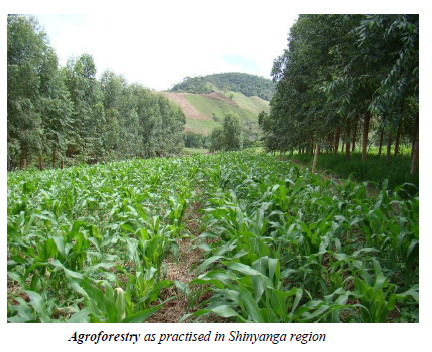
- Afforestation and reforestation. This is one of the various methods used to reclaim wastelands in Tanzania. Shinyanga region is the best example of the land reclaimed trough afforestation. Under the afforestation programme called Hifadhi Ardhi Shinyanga (HASHI), the government has encouraged planting trees to create forests as well as planting trees in crop farms (agroforestry).17The land which was formerly unproductive is now productive again and can be used for agricultural production, settlement and other economic activities. Also in Kondoa district the land has been reclaimed through afforestation campaign, among other techniques.
- Clearing of vegetation: This was mainly done by colonialists in miombo woodlands. The vegetation was cleared to get rid of tsetse flies which affected livestock production. The cleared land was used for livestock keeping as well as settlement.
Sustainable Use of Water Resources
The Types of Underground Water and how it can be Tapped for Use at Local and National Levels in Tanzania
Explain the types of underground water and how it can be tapped for use at local and national levels in Tanzania
Water can be found both on the surface of the earth and underground. Underground water also called ground water or subterranean water, is the type of water found below the surface of the earth. Underground water include all water that is found below the earth’s surface, occupying interstices (pores) or voids of pervious rocks and soil. Like surface water, it is derived principally from precipitation that falls upon the earth’s surface and percolates downward under gravity.
Different Resources Obtained from Water
Differentiate different resources that are obtained from Water
Types of underground water
Underground water is categorised based on its source as follows
- Connate water: It may also be described as fossil water. This is water trapped in the pores of the rock during the formation of the rock. Connate water can change in composition through the history of the rock. Connate water is normally saline. Formation water or interstitial water, in contrast, is simply water found in the pore spaces of rock and might not have been present when the rock was formed. This type of water can be found in desert rocks where rainfall does not occur for a long period of time
- Meteoric water:This refers to underground water which originates from rainfall and other forms of precipitation such as hailstorms and snowfall. When the rainfalls or snow melts, a considerable portion of this water gradually infiltrates into the ground. This infiltrating water continues its downward journey to the zone of saturation to become part of the ground water in aquifers (water–bearing rocks).
- Juvenile water:Juvenile water, also described as magnetic water, is water that exists within magma. It is brought close to the earth during vulcanicity. Magnetic water rises from great depth accompanying the magma flow from down the earth’s crust.
- Oceanic water:This is underground water that results from the seepage of ocean water into the ground. It is common in coastal areas where ocean water seeps horizontally into the ground from the ocean.
Underground water can be tapped and put into various uses. The water tapped from the ground can be used for domestic and industrial purposes. Domestic uses include cooking, washing, bathing, watering plants, cleaning and many other uses. Industrial uses may include cooling of machinery, dissolution and dilution of chemicals, beverage manufacture, etc.
Underground water can be tapped in a number of ways which include the following:
- Digging wells:Just like boreholes, a hole is dug into the ground until water is reached. The difference between boreholes and wells is that water from the well is mainly drawn mechanically using containers such as buckets that are raised mechanically or by use of simple pulleys or hand. The walls of wells may be lined with bricks or stones and cement.
- Where the water occurs very close to the surface, the soil may be scooped to expose the water. The water may then be scooped using cups or other containers. It may be directed to farms for irrigation via channels or trenches. The water may also be pumped and channelled into pipes to provide tap water.
- Underground water may be naturally exposed to form springs or oases in deserts. This water may be scooped directly using containers. It may also be directed to farms through channels.
- Drilling boreholes. These are holes dug deep into the ground to reach the water table. When the water table or underground water is reached, the water seeps up through the hole under pressure. It is then brought above the ground by pumping manually or using a water pump

Methods Used for Extracting Resources from Water
Describe methods used for extracting resources from water
Resources obtained from water
There are a number of resources that can be obtained from water. Outlined below are some of the resources that can be extracted from water:
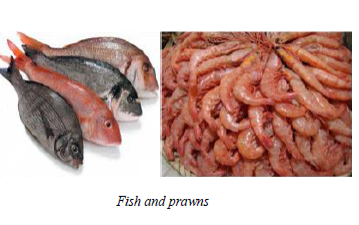
- Fish and other edible creatures, such as crabs and prawns: These resources may be caught either for sale or family consumption.(Figure 3.5)
- Building materials: The building materials obtained from water include sand, coral rock, gravel and clay. Sand can be obtained from beaches of seas or lakes or river valleys and rocks are collected from the sea shore. The rocks and gravel are a result of erosion of the coastal rock by sea waves. Clay can also be obtained from the sea floor or river bed.
- Electricity: Marine wind is used to turn windmills to generate electricity. Hydroelectric power is also a resource from the water since it results from the running water which is used to turn turbines to generate electricity.
- Salt which is used at home and in industries, is mainly obtained from sea water though it can also be extracted from salty rivers and lakes.
- Ornamental items such as cowrie shells, snail shells, lobster shells, etc are also water resources since they come from animals that inhabit water.
- Sea weed is used in many maritime countries as a source of food, for industrial applications and as a fertiliser. High utilisation of these plants as food is in Asia, particularly Japan, Korea and China, where sea weeds cultivation has become a major industry.
- Limestone and gypsum: Limestone forms from shells of dead marine organisms ranging from molluscs to corals and plants. Limestone can be used directly or converted into cement for construction purposes. Gypsum forms during evaporation of sea water and thus may occur with limestone. The gypsum deposits are mined and generally converted into Plaster of Paris which is mainly used as a building material.
Extraction of resources from water
Many resources are extracted from water and used by man. The following are the means by which the named resources may be extracted from the water: Fish and other edible marine creatures, Fish may be obtained from water through the use of a hook and line, nets, herbs, spears or traps. In the case of a hook and line, bait (such as worm or meat) is attached to a hook which is joined to a string tied to a long stick or rod. The hook is sunk into the water. When the fish bites the bait, it gets caught by the hook and pulled out. This method is used for small-scale fishing
Another method of catching fish is through the use of certain plants called tephrosia. This plant is poisonous to fish. When the leaves of this pea plant are pound and mixed with water, the fish are poisoned, fall unconscious and float on water. They are then picked from the water by hand or use of a spear (harpooning). The fisherman spears fish in water and it is attached to the tip of the spear from which it is detached and put in a container
Nets are used to catch a large number of fish. With nets, the fish are enclosed in a net with small perforations through which fish cannot penetrate. They are then hurled to the seashore, removed from the net and put in containers
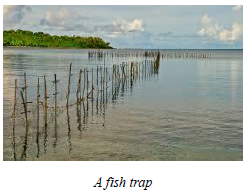
The traps are mainly used where there are floods or at the coast where there are tides. These traps are set up at the bank of the river or on the beaches. The fish are washed into the banks or beaches by the water. As the water receded the fish remain trapped behind the traps Figure 3.6
Sand
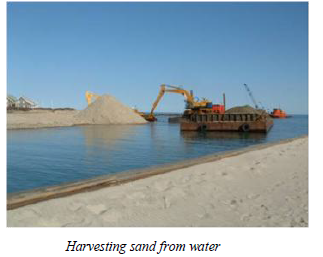
Sand is extracted from the beaches or dredged from the ocean or riverbeds. This can be done by using scooping machinery or by hand using shovels, pans, hoes, etc. It is then loaded onto truck or lorry using shovels or a grab dredge (Figure 3.7)
Salt
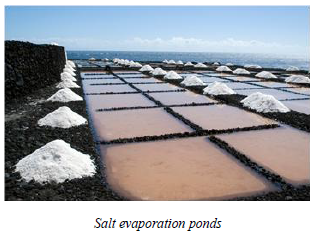
The process of extraction of salt from water involves evaporation. The salty water is trapped in evaporation ponds. The sun evaporates the water. As the water vapourizes, the salt remains behind.Eventually, enough of the water evaporates to leave behind a layer of salt crystals that can be collected, dried and stored in bags.Another alternative for salt extraction from the water is by means of evaporation tanks. Salty water is pumped into the tanks where the water is evaporated, leaving the salt behind.
Hydrolectricity
- Hydroelectric power is generated by using turbines that are turned by the fast-flowing river water,where the kinetic energy of the water is transformed into electrical energy.
- Tidal power or marine wind is used to turn windmills to generate electricity. The kinetic energy of wind is converted into electrical energy by windmills (wind turbines).
Ornamental items
These can be obtained from the sea or lake by picking them using hands. This is normally done during low tide and after the water has receded. Ornamental items are brought to the shore from deep sea by the tides or sea waves.
Seaweeds are harvested by hand-picking. The weeds occur naturally or they can be planted. Limestone and gypsum are mined by quarrying.
The Problems Caused by Extraction of Water Resources
Explain the problems caused by extraction of water resources
Extraction of water resources may cause various problems and disturbance to ecosystem. Below are some of these problems:
- Overfishing, and indiscriminate fishing whereby even very young fish are caught reduces the availability of fish resources in water. It also causes an imbalance in the ecosystem.
- Water pollution is a problem where dynamites or poisons are used as methods of fishing.Dynamites produce loud sounds which disturb the fish and other aquatic organisms while poison kills fish, aquatic plants, and other marine organisms.
- Sand harvesting may lead to loss of media for growth of plant life. It may also disturb aquatic life,for example, it may interfere with breeding of some marine organisms such as monitor lizards,Salt evaporation ponds, snakes, crocodiles, alligators and turtles. These animals normally lay eggs in the sand. Sand extraction from river banks may also lead to flooding since the sand deposited besides a river acts as a levee which prevents water from leaving its channel during floods. It may also accelerate river erosion because the extraction process loosens the soil and makes it easy to erode.
- Harnessing hydroelectric power from river water requires dams to be constructed. This can cause water shortage to the areas downstream. Water trickling from the tank to the nearby areas may also lead to flourishing of disease vectors such as mosquitoes and snails which harbour causative agents for malaria and schistosomiasis respectively.
Some of the solutions to these problems include the following:-
- Giving guidelines on the kind of nets allowed for fishing certain fish species. To achieve this, the fishermen must be closely monitored to ensure that holes of the nets they use for fishing are not too small to catch even young fish.
- Restricting fishing in some parts of the water, especially those areas identified as fish breeding grounds, so as to allow fish to breed and increase in number.
- Encouraging and educating people to practice fish farming so as to reduce fishing pressure on natural water bodies such as rivers, lakes and seas.
- Restricting or controlling sand harvesting in beaches and shores so as to ensure that aquatic environment is not destroyed and that aquatic life is not disturbed.
- Banning the use of dynamites or poisons in fishing because this act pollutes the water and is likely to harm fish consumers.
- Taking stern actions against those people breaching environmental conservation laws. The actions may include fines, jail sentences or both.
Water pollution
Water pollution is the introduction of substances that lower the quality of water bodies such as oceans, rivers, lakes, aquifers and ground water. This makes the water unsafe for use in homes and industries. Water pollution also affects living organisms (plants and animals) living in water.
Water pollution is caused by some or a combination of many factors. The following are some of the major causes of water pollution:
- Agricultural chemicals; Agricultural chemicals that are applied to crops and animals drip onto the soil and may eventually run off into the local streams and rivers. They can also seep down to reach ground water. These chemicals contaminate the water and make it unwholesome for human use and can drastically affect the aquatic life.
- Oil spills; Oil spills in oceans and seas cause water pollution and big problems for local wildlife, fishermen and aquatic organisms. Oil spilled onto land is also carried into water bodies by surface run off. This includes drips of oil, fuel and fluid from motor vehicles, oil spilled onto the ground at filling stations; and drips of oil from industrial machinery. These sources and many more combine together to form continual petroleum pollution to all of the world’s waters.
Mining
Mining causes pollution in a number of ways. They include the following:
- The mining process exposes heavy metals and sulphur compounds that were previously locked deep in the earth. Rain water leaches these compounds out of the exposed earth, resulting in “acid mine drainage” and heavy metal pollution that can continue long after the mining operations have practically ceased.
- The action of rain water on piles of mining waste (tailings) transfers harmful chemicals to freshwater supplies.
- In gold mining, cyanide is intentionally poured on piles of mined rock (a leach heap) to chemically extract the gold from the ore. Some of the cyanide ultimately finds its way into nearby water.
- Huge pools of mining waste slurry (semi-liquid mixture) are often stored behind containment dams. If a dam leaks or bursts, water pollution is likely to take place.
- Mining companies in developing countries sometimes dump mining waste directly into rivers or other water bodies as a method of disposal.
Other pollutants:
- Sediment:The act of clearing the forests to get ample land for agriculture, settlement or wood, leaves the land bare and exposed to the agents of denudation. This accelerates soil erosion and the sediment is free to run into nearby streams, rivers and lakes. The increased amount of sediment running off the land into nearby water bodies seriously affects the fish and other aquatic life. Poor farming practices and cultivation along and close to the rivers, exposes the soil to erosion agents. Soil erosion causes water pollution.
- Industrial Chemicals:Most of the water that is used in the production process in industries is eventually discharged into water bodies. This waste water may contain harmful chemicals such as acids, alkalis, salts, toxic chemicals, oil, heavy metals and even harmful bacteria, and other reagents. These substances affect the quality of water and the lives of aquatic organisms.
- In some cases, the waste water discharged into a water body may be hot enough to kill any organism living in that water.
- Sewage:In developing countries, about 90% of untreated sewage is discharged directly into rivers and streams. This renders the water unwholesome for domestic and other uses. Untreated sewage harbours a myriad of disease-causing organisms. This is the reason why diseases such as cholera, dysentery, typhoid and bilharzias are very common among African countries. Leaking septic tanks and other sources of sewage can contaminate ground and stream waters as well.
- Marine debris: (marine litter) Marine debris is trash in the ocean. This is litter that ends up in ocean, seas or other large water bodies. The debris mainly comes from urban sewers and garbage thrown overboard from ships and boats. Examples of marine debris include plastic bags, water bottles, balloons, shoes, lags etc. It can also include items that wash in from the ocean, such as fishing line, ropes, nets and traps, and items from ship such as lost cargo from container ships.
- Heat:Heat is a water pollutant. Increase in water temperature results in deaths of many aquatic organisms. This is because, as water temperature increases, the amount of oxygen that can dissolve in it also decreases. Therefore, warm and shallow water will contain very little oxygen to an extent that the dissolved gas will not sustain aquatic life. This increase in temperature is most often caused by the discharge of cooling water (which is always hot) by factories and power plants. Global warming also contributes significantly to the heating of the oceans
Conservation of water resources
For resources to be sustainable, they must be conserved to ensure continuity and availability to upcoming generations. Water, as a resource, can be conserved thought the following ways:
- Avoiding wastage:All people should use water wisely to minimise wastage. All taps should be turned off when they are not used. The used water may be re-used again. For example, water that has been used to rinse clothes can be re-used to mob the floor, soak the dirtiest clothes, rags etc. Do not use water directly from the tap, instead fetch the water in a container and use it wisely.
- Controlling polluting: People should neither throw wastes carelessly nor introduce any chemicals into water. Stern laws should be made and enforced to stop industries from dumping toxic wastes into the water bodies. Any industry found polluting the water by any means should be heavily punished or even closed down altogether.
- Protection of water catchment:Vegetation in water catchment areas should be protected and cared for. People should not carry out agricultural activities close to water sources. Planting of trees that consume a lot of water, such as eucalyptus, near water sources or rivers should also be avoided. Any activity that destroys the water catchment should be banned. In the past, the government ordered people to cut down all eucalyptus trees planted close to water sources so as to prevent the water sources from drying up.
- Education:People should be educated about the importance of conserving the water resources. This education can be conveyed thought mass media and introducing water conservation courses in schools and colleges. The government and other organizations concerned with conservation of water resources should involve local communities so as to get maximum cooperation in their endeavours. The local people must be involved at all levels and should be given freedom to suggest how best these resources can be conserved.
- Sewage treatment:Sewage is water containing waste matter produced by people. Much industrial sewage contains harmful chemicals and other waste materials. Sewage must be treated before it flows from sewerage systems into lakes, rivers, and other bodies of water. Untreated sewage contaminates the water and, in time, can kill fish and aquatic plants. The sewage makes the water unsafe to drink and can also prevent use of the water for swimming, fishing, and other recreation. Most cities and towns have at least one sewage treatment plant. In most rural areas, homeowners must provide their own sewage treatment. Most do so with large underground containers called septic tanks or pit latrines.
- Controlled use of agrochemicals: Farmers should be educated on the correct use of agrochemicals. Also agricultural activities should not be carried out in areas close to water bodies. The use of organic manures and chemicals in place of harmful industrial chemicals for agricultural production should be emphasised.
- Recycling of products:People should be advised to recycle the waste instead of dumping it in water sources. This will help reduce the problem of water pollution.
- Immediate clean up:When oil is accidentally spilled in water it should cleaned up immediately before causing any harm to aquatic life or people using that water. This can be done by use of chemicals or special machines called skimmer ships.
Water Pollution
Pollution
Define pollution
Water pollution is caused by some or a combination of many factors. The following are some of the major causes of water pollution:
- Agricultural chemicals:Agricultural chemicals that are applied to crops and animals drip onto the soil and may eventually run off into the local streams and rivers. They can also seep down to reach ground water. These chemicals contaminate the water and make it unwholesome for human use and can drastically affect the aquatic life.
- Oil spills:Oil spills in oceans and seas cause water pollution and big problems for local wildlife, fishermen and aquatic organisms. Oil spilled onto land is also carried into water bodies by surface run off. This includes drips of oil, fuel and fluid from motor vehicles, oil spilled onto the ground at filling stations; and drips of oil from industrial machinery.
- These sources and many more combine together to form continual petroleum pollution to all of the world’s waters.
Mining
- Mining causes pollution in a number of ways. They include the following:
- The mining process exposes heavy metals and sulphur compounds that were previously locked deep in the earth.
- Rain water leaches these compounds out of the exposed earth, resulting in “acid mine drainage” and heavy metal pollution that can continue long after the mining operations have practically ceased.
- The action of rain water on piles of mining waste (tailings) transfers harmful chemicals to freshwater supplies.
- In gold mining, cyanide is intentionally poured on piles of mined rock (a leach heap) to chemically extract the gold from the ore. Some of the cyanide ultimately finds its way into nearby water.
- Huge pools of mining waste slurry (semi-liquid mixture) are often stored behind containment dams. If a dam leaks or bursts, water pollution is likely to take place.
- Mining companies in developing countries sometimes dump mining waste directly into rivers or other water bodies as a method of disposal.
- Sediment:The act of clearing the forests to get ample land for agriculture, settlement or wood, leaves the land bare and exposed to the agents of denudation. This accelerates soil erosion and the sediment is free to run into nearby streams, rivers and lakes. The increased amount of sediment running off the land into nearby water bodies seriously affects the fish and other aquatic life. Poor farming practices and cultivation along and close to the rivers, exposes the soil to erosion agents. Soil erosion causes water pollution.
- Industrial chemicals: Most of the water that is used in the production process in industries is eventually discharged into water bodies. This waste water may contain harmful chemicals such as acids, alkalis, salts, toxic chemicals, oil, heavy metals and even harmful bacteria, and other reagents. These substances affect the quality of water and the lives of aquatic organisms. In some cases, the waste water discharged into a water body may be hot enough to kill any organism living in that water.
- Sewage:In developing countries, about 90% of untreated sewage is discharged directly into rivers and streams. This renders the water unwholesome for domestic and other uses. Untreated sewage harbours a myriad of disease-causing organisms. This is the reason why diseases such as cholera, dysentery, typhoid and bilharzias are very common among African countries. Leaking septic tanks and other sources of sewage can contaminate ground and stream waters as well.
- Marine debris: (marine litter) Marine debris is trash in the ocean. This is litter that ends up in ocean, seas or other large water bodies. The debris mainly comes from urban sewers and garbage thrown overboard from ships and boats. Examples of marine debris include plastic bags, water bottles, balloons, shoes, lags etc. It can also include items that wash in from the ocean, such as fishing line, ropes, nets and traps, and items from ship such as lost cargo from container ships.
- Heat:Heat is a water pollutant. Increase in water temperature results in deaths of many aquatic organisms. This is because, as water temperature increases, the amount of oxygen that can dissolve in it also decreases. Therefore, warm and shallow water will contain very little oxygen to an extent that the dissolved gas will not sustain aquatic life.
- This increase in temperature is most often caused by discharge of cooling water (which is always hot) by factories and power plants.
- Global warming also contributes significantly to heating of the oceans.
The Main Sources of Water Pollution
Differentiate the main sources of water pollution
There are two major sources of water pollution which are direct and indirect sources. Direct sources includes effluent from factories, refiners and domestic sewage which affect directly water supply systems. Indirect sources include pollution from runoffs, ground water and contaminated rain water. There are other sources such as oil spills and marine or river dumping of waste.
Ways of Conserving Water Resources
Describe various ways of conserving water resources
For resources to be sustainable, they must be conserved to ensure continuity and availability to upcoming generations. Water, as a resource, can be conserved thought the following ways:
- Avoiding wastage:All people should use water wisely to minimise wastage. All taps should be turned off when they are not used. The used water may be re-used again. For example, water that has been used to rinse clothes can be re-used to mob the floor, soak the dirtiest clothes, rags etc. Do not use water directly from the tap, instead fetch the water in a container and use it wisely.
- Controlling polluting:People should neither throw wastes carelessly nor introduce any chemicals into water. Stern laws should be made and enforced to stop industries from dumping toxic wastes into the water bodies. Any industry found polluting the water by any means should be heavily punished or even closed down altogether.
- Protection of water catchment:Vegetation in water catchment areas should be protected and cared for. People should not carry out agricultural activities close to water sources. Planting of trees that consume a lot of water, such as eucalyptus, near water sources or rivers should also be avoided. Any activity that destroys the water catchment should be banned. In the past, the government ordered people to cut down all eucalyptus trees planted close to water sources so as to prevent the water sources from drying up.
- Education:People should be educated about the importance of conserving the water resources. This education can be conveyed thought mass media and introducing water conservation courses in schools and colleges. The government and other organisations concerned with conservation of water resources should involve local communities so as to get maximum cooperation in their endeavours. The local people must be involved at all levels and should be given freedom to suggest how best these resources can be conserved.
- Sewage treatment:Sewage is water containing waste matter produced by people. Much industrial sewage contains harmful chemicals and other waste materials. Sewage must be treated before it flows from sewerage systems into lakes, rivers, and other bodies of water. Untreated sewage contaminates the water and, in time, can kill fish and aquatic plants. The sewage makes the water unsafe to drink and can also prevent use of the water for swimming, fishing, and other recreation. Most cities and towns have at least one sewage treatment plant. In most rural areas, homeowners must provide their own sewage treatment. Most do so with large underground containers called septic tanks or pit latrines.
- Controlled use of agro-chemicals:Farmers should be educated on the correct use of agrochemicals. Also agricultural activities should not be carried out in areas close to water bodies. The use of organic manures and chemicals in place of harmful industrial chemicals for agricultural production should be emphasised.
- Recycling of products:People should be advised to recycle the waste instead of dumping it in water sources. This will help reduce the problem of water pollution.
- Immediate clean up:When oil is accidentally spilled in water it should cleaned up immediately before causing any harm to aquatic life or people using that water. This can be done by use of chemicals or special machines called skimmer ships.
Chapter Summary
In this chapter, we have discussed about water and water management, and some uses of water include biological use, domestic use, industrial use, irrigation, dissolving of substances, cooling and heating, habitat for aquatic organisms, livestock use, and mining, generation of hydroelectricity, and navigation and recreation
The economic uses of water include boosting industrial development, improving the quality of family life, generation of hydroelectricity, irrigation, development of fishing industries, navigation, tourist attraction, and sanitation. A family with many members uses more water than a family with only a few members. Categories of community water supplies are urban water supply, rural water supply, and the elevated tank
An adequate supply of quality water is essential not only to the health of the community, but it also has economic implications on the community. Water supply and vegetation are closely connected because water comes from rain, which in turn, is greatly influenced by the vegetation that attracts rainfall
Distance to the water source from the household affects the girl child a great deal. A girl child has to walk a long distance with a load of water; a fact which makes them so exhausted and also deprives them of the time to study and rest compared to a boy child
The benefits from Rufiji River Basin Development Authority (RUBADA) include generation of hydroelectric power (H.E.P), tourism promotion, creation of employment opportunities, improvement in agricultural production, and conservation of resources. The prospects of the RUBADA include the developments of hydroelectric power generation, agriculture, fisheries, transport, tourism, and forestry
The benefits of developing river basins include improvement of agriculture, environmental conservation, improvement of transport and communication, creation of employment opportunities, improvement of water supply, development H.E.P projects, and development of the fishing industry. Problems faced by RUBADA are inadequate capital, low level of technology, rural-urban migration, poor transport and communication infrastructures, lack of support from the local communities, fluctuating water levels, soil exhaustion due to massive farming, reallocation of human settlements, water-borne diseases, and water pollution
Benefits of the Tennessee Valley Authority (TVA) include flood control, soil erosion control, agricultural mechanization, H.E.P generation, attraction to investments, creation of employment opportunities, improvement of navigation, urbanization of neighboring areas, tourism development, development of the fishing industry, disease control, and enhancement of water supply. Prospects of the TVA are expansion and diversification of agriculture, establishment of various industries, and expansion of H.E.P generation sector
The main aims of land reclamation include increasing the size of the land for cultivation, controlling floods, getting more land for establishing industries, and paving the way for accessing resources. Land reclamation methods include irrigation, afforestation and reforestation, drainage, landfill, flushing or acidification, and clearing vegetation and controlling pests
The methods used for land reclamation in Tanzania include irrigation, drainage, afforestation and reforestation, and clearing of vegetation
Types of underground water are connate water, meteoric water, juvenile water, and oceanic water. Underground water can be tapped by drilling boreholes, digging wells, scooping the soil to expose the water, and fetching water directly from the spring or oasis
The resources obtained from water include fish and other edible creatures, such as crabs and prawns, building materials, electricity, salt, ornamental items, sea weeds, and limestone and gypsum. The Problems caused by extraction of water resources include extinction of some marine resources and an imbalance in the ecosystem, water pollution, loss of media for growth of plant life and habitat marine organisms, and waterborne diseases
The solutions to problems caused by exploitation of water resources are law enforcement, fishing restrictions, and fish farming
Causes of water pollution include agricultural chemicals, Oil spills, Mining, sediment, Industrial chemicals, sewage, Marine debris (marine litter), and heat
Water resources can be conserved through, avoiding wastage, controlling pollution, Protection of water catchment, Education, sewage treatment, Controlling the use of agrochemicals, Recycling of products, and Immediate clean-up
Revision Questions
Question Time 1
A. 1. Which of the following is not among the uses of water?
- Cooling
- Recreation
- Drinking
- Wastage
2. The running water is used to turn which are responsible for electricity generation
- windmills
- tides and waves
- turbines
- waterfalls
3. Water is a habitat for .
- Marine organisms
- man
- mosquitoes
- toads
4. The act of changing a useless land into a useful land is called .
- land reclamation
- land alienation
- land survey
- land degradation
5. One of the advantages of land reclamation is_____
- Increase of arable land and crop production
- soil erosion and fertility
- land degradation
- soil erosion
6. The use of water for physiological growth and development of plants is termed as
- water use
- plant growth
- plant development
- biological use of water
7. Water in industries is mainly used for .
- heating
- cooling
- irrigation.
- navigation and recreation
8. Which of the following is not the economic importance of water?
- Industrial development
- Navigation
- Generation of HEP
- Swimming
9. The quality of water depends on its .
- volume
- chemical composition
- clearness
- availability
10. Which of the following is the e economic importance of land reclamation?
- Soil erosion and fertility
- Land degradation
- Land erosion and soil erosion
- Increased land production capacity
11. Which of the following is the agricultural method used to restore the fertility of the soil?
- Crop rotation by planting leguminous crops
- Monoculture system of agriculture
- Clearing and burning vegetation
- Terracing system
12. The essence of using water for sanitation is______
- keeping the environment clean
- flushing toilets
- irrigation
- cleaning the home compound
13. Which of the following is not one of the benefits of river basin development?
- Improving agricultural production
- Flood control
- Improvement of navigation
- Reallocation of human settlements
14. The land reclamation process that involves planting trees together with crops on the same field is called
- afforestation
- reforestation
- mixed cropping
- agroforestry
15. Sources of underground water pollution include all the following except
- Waste gases produced by automobiles and other machines
- Untreated industrial effluent dumped on the soil surface, and which finally percolates deep into the ground
- Septic tanks or latrines located too close to the wells
- Surface run-off containing wastes which finally percolates deep into the ground
B. Match the items in Group A with the corresponding items in Group B
| ColumnA | ColumnB | ||
| 1 | Irrigation | A | Fishing |
| 2 | Undergroundwater | B | Heat |
| 3 | Aresourceobtainedfromwater | C | Watertank |
| 4 | Waterpollutant | D | Dam |
| 5 | Floodcontrol | E | Lakewater |
| F | Oceanicwater | ||
| G | Landreclamation | ||
| H | Livestockhusbandry | ||
| I | Snake | ||
| J | Crab |
C. Write TRUE for correct statements and FALSE for incorrect statements
- Massive farming causes soil exhaustion
- A shorter distance to water sources affects girl children
- Thick forests are water catchments
- Poor water supply affects the quality of water
- Chemical, physical, biological, and characteristics of water are the elements of water quality
D. Short answer questions
- Outline the conditions that must be met for river basin development to take place
- List any five problems faced by RUBADA
- List any five uses of water for domestic purposes
- State how water is used in industries
- List any 3 aquatic organisms which are likely to be affected if the water is polluted
- Point out the conditions that favour HEP production
- Explain the relationship between family size and water supply, and the quality of life
- Explain in detail how underground water can be tapped for use
- Describe briefly how salt can be extracted from water
- Discuss the effects that may occur as a result of extracting water resources
- List and describe any five causes of water pollution
- Give a detailed account of how water resources can be conserved
REFERECES
- Focus, F.D and Said, S.N (2014). Fundamentals of Geography Form Two. Longhorn Publishers. Dar es Salaam
- Morrish, M. (1972). Development in the Third World. Oxford University Press. London.
- Msabila, D.T. (2003). A Focal Study on Human and Economic Aspects. Afroplus Industries. Dar es Salaam
- Mzezele,S. andKibuuka, P.(2014). GeographyIn FocusForm Two.Oxford UniversityPress Ltd.DaresSalaam
- Peterson,J.H.(1976).Land,WorkandResources:AnIntroductiontoEconomicGeography.EdwardArnold.London
- TanzaniaInstituteofEducation(2002).GeographyCourseBookforSecondarySchoolsBookTwo.EcoprintLtd.DaresSalaam
Listening to this topic