Geography
Sustainable Mining
Reading settings
Text size
Line spacing
Colours
Geography is the study of places and the relationship between people and their environment. Geographers explore both the physical properties of the Earth's surface and the human societies spread across it.In the context of dynamic and changing world, it is very crucial to study Geography so as to be able to achieve sustainable human development.
Sustainable Mining
Introduction
In this chapter, you will learn about mining, types of mining industry and its distribution by regions in the world, methods of mining, contribution of mining industry to the economy of Tanzania and the effects of the mining industry to the environment. Also, you will learn about oil production in the Middle East, and natural gas production in Tanzania. The chapter ends with summary of the topic, revision questions and a list of references.
OBJECTIVES
By the end of this topic you will be able to define mining, name different types of mining industries, explain major types of minerals in the world, locate mining regions in the world map and the types of minerals extracted, categorize various types of mining, explain ways of processing different types of minerals, explain the economic importance of mining to the economy of Tanzania, describe the effects of mining on the environment, propose ways of minimizing the effects of mining on the environment, and describe advantages of oil production in the Middle East, and natural gas production in Tanzania
Meaning of Mining
Mining is the process of extracting valuable minerals or other geological materials from the earth. Sustainable mining is the process of extracting valuable minerals or other geological materials from the earth in a controlled levels and ways such that the minerals meet the needs of the present and future generation without causing environmental pollution
Types of Mining Industries
Different Types of Mining Industries
Name different types of mining industries
The mining industry can be divided into two main types namely:
- Metal mining industry and
- Non-metal mining industry.
Metal mining industry
Metal mining industry involves the mining of metallic minerals such as gold, manganese, aluminium, silver, iron, lead, zinc and tin. Metal mining industry is further subdivided and named into more categories depending on the specific type of the minerals extracted. Examples of metal mining are gold mining industry, silver mining industry, copper mining industry, diamond mining industry and aluminium mining industry
Non-metal mining industry
Non-metal mining industry involves the mining of non-metallic minerals such as salt, phosphate, potash, nitrates, Sulphur, diamond, mineral oil, coal, natural gas, limestone. Non-metal mining is also further subdivided and named into more depending on the specific types of minerals extracted, Examples include Salt mining industry, Coal industry, and Oil mining industry
Types and Distribution of Mining Regions in the World
Major Types of Minerals Found in the World
Explain major types of minerals found in the world
Over 4600 minerals have been discovered and new ones are discovered every year. Only 100 of these are common, while the rest are either encountered occasionally or are very rare. With such a large number of minerals, it is difficult to identify and classify them separately. However, mineralogists identify minerals based on a number of characteristics which include streak, lustre, sheen, hardness, cleavage, crystal system, colour, specific gravity, clarity or transparency
All minerals are formed and consist one or more of eight main elements. The elements include oxygen, silicon, potassium, sodium, calcium, magnesium, iron and aluminium. Depending on their composition’s minerals are divided into two broad groups, namely, silicate minerals or no-silicate minerals
Silicate Minerals
Silicate minerals are the most common group of minerals found in the Earth's crust. Almost all silicate minerals have silicon and oxygen as their basic units. Most silicate minerals are formed by the cooling of molten rocks. As the molten rocks come closer to the surface cool very fast and combine with the silicon which is the most abundant element in the earth's crust. Silicate minerals constitute approximately 90% of the Earth's crust. Examples of silicate minerals include mica, quartz, amazonite, olivine, and biotite. See Table 5.1 for more examples of the common silicate minerals and their uses
Examples of silicate minerals are as shown in the table below.
| Mineral | Chemical formula | Type of rocks that they are commonly found within | How People Use Them |
| Olivine | (MgFe)2SiO4 | Ultramafic igneous rocks | A gemstone |
| Pyroxene group | (MgFe)SiO2 | Basaltic igneous rocks | - |
| Amphibole group (example: hornblende) | (Ca2Mg5)Si8O22(OH)2 | Andesitic igneous rocks | - |
| Micas | Biotite: K(Mg, Fe)3Si3O10(OH)2 Muscovite: KAl3Si3O10(OH)2 | Andesitic igneous rocks | Colonial Americans used sheets of mica as window glass. |
| Feldspars | Orthoclase: KAlSi3O8 Plagioclase: (Ca, Na)AlSi3O8 | Granitic igneous rocks | Important for making ceramics and glass |
| Quartz | SiO2 | Granitic igneous rocks | Quartz is the raw material for glass and helps clocks keep time. |
Non-silicate Minerals
A range of non-silicate minerals exist. Non-silicate minerals are formed mainly in three ways. Some non-silicate minerals are formed when magma cool. Others are formed when water in them evaporates. Furthermore, other non-silicate minerals are formed due to mineral decomposition. The non-silicates can be further classified into different groups. The groups of non-silicate minerals include native elements, Sulphides, oxides, carbonates, sulphates and organic minerals
Native elements: Native elements are pure elements that are found with a distinct mineral structure and occur naturally in an un-combined form. For example, un-combined carbon is often found in its pure state in the form of graphite or more rarely as diamond. Other elements, which are also found in their pure state, include gold, silver and sulphur. These are pure elements which require no further chemical process and qualify to be known as minerals
Sulphides: This class of minerals have sulphide (S2−) as their basic unit. These inorganic compounds are sometimes as economically important as other ores. Some examples include Nickeline (NiAs), Pyrite (FeS2) and Molybdenite (MoS2).
Oxides: When an ore is found in which one or more elements are combined with oxygen, it is an oxide mineral. These may have chemical formulas of the type XO (MgO, ZnO, CuO, etc.), X2O (Cu2O), X2O3 (Al2O3, Fe2O3), XO2 (MnO2, SnO2) and XY2O4 (MgAl2O4, FeCr2O4). The oxide minerals are mostly of metallic elements. Example: haematite, magnetite, and cuprite. Silicates and oxides are the most common types of minerals in volcanoes, especially after an eruption.
Carbonates: This particular type is formed when a single carbonate ion (CO32-) reacts with a metal ion of complementing polarity. Example: siderite (FeCO3), smithsonite (ZnCO3), calcite (CaCO3). Carbonate minerals are used in making cement and other bonding material.
Sulfates: Sulphates are a class of minerals which includes the sulphate ion (SO42-) within its molecular structure. Examples of sulphate minerals include Gypsum (CaSO4·2H2O) and Barite (BaSO4)
Organic Minerals: Organic mineral is a class of minerals which includes biogenic substances, genesis, or origin of which can be attributed to a specific geological process. Organic minerals include all types of oxalates, mellitates, citrates, cyanates, acetates, formates, hydrocarbons. Moreover, there are many more non-silicate minerals like nitrates, sulphides, halides, phosphates. Specific examples of non-silicate minerals are shown in (Table 5.2)

Mining Regions in the World Map and the Type of Minerals Extracted
Locate mining regions in the world map and the type of minerals extracted
The major types of minerals found in the world and their distributions include coal, petroleum, diamond, copper, gold, iron ores and bauxite.
Coal
Coal has been used as an energy resource throughout history. Coal is primarily burned for the production of electricity or heat. It is also used for industrial purposes such as refining of metals. Coal is the largest source of energy for the generation of electricity worldwide. It also constitutes the largest worldwide source of carbon dioxide which released into the atmosphere and causes air pollution. Nowadays coal is used to heat furnaces for domestic heating and for the generation of thermal electricity
Currently, China is the largest producer of coal in the world. The USA contains the world’s largest coal reserves, followed by Pakistan, Russia, China and India. China and the USA are also among the largest consumers of coal

In USA, the states with largest coal reserves include Wyoming, West Virginia, Illinois, and Montana. The largest coal mine in USA is the North Antelope Rachele. It produces over 100 million tons of coal annually

The Ruhr coalfield in Germany is one of the largest coal reserves. In Tanzania, there are coal deposits at Mchuchuma (Njombe region) and Kiwira (Mbeya region).
Petroleum
Petroleum is mainly used as fuel to power machines such as vehicles. It is also used as a source of heat and heating. Petroleum occurs as crude oil which is then refined to obtain fractions with varied uses. These fractions include diesel, petrol, paraffin (kerosene), jet fuel and lubricants. Some of the leading petroleum producers are Saudi Arabia, Russia, Iran, Iraq, Nigeria, United Arab Emirates, Angola, Venezuela, Kuwait and Libya. In Saudi Arabia, the oilfields are located in areas such as Abqaiq, Ghawar, Khurais, Qatif, Safaniya and Shaybah. In Nigeria the oil wells are found in the Niger Delta
Diamond
Diamond is the hardest and most coveted of all the precious stones. Due to its extreme hardness, it has various uses. The uses of diamond include making glass cutters, drilling devices, rock borers, and used as an abrasive for smoothing very hard materials. The polished diamond is used to make jewellery such as necklaces, rings and bracelets. The major world producers of diamond include Russia, Botswana, DRC,Australia, South Africa, Canada, Angola, Namibia, Ghana and Brazil. In Tanzania, diamond is mined at Mwadui in Shinyanga region
Copper
Copper is a major metal and an essential element used by man. It is found in ore deposits around the world. It is also the oldest metal known to man and has been in use for many years ago. Nowadays, the uses of copper include heating, cooling and refrigeration, electrical wiring, generation and transmission of electrical power, automotive applications and other uses. Some of the major copper-producing countries in the world are Chile, USA, Peru, China, Australia and Zambia. In Zambia, copper is mined at Kitwe and Konkola. Zambia is internationally recognized as a major producer of copper and cobalt. It is ranked the word’s seventh producer of copper and the world’s second largest producer of cobalt after the DRC
Gold
Gold is the most popular and well known mineral, known for its value and special properties since the earliest time. Gold has its use in jewellery, electronics and computers, dentistry and medicine, aerospace, and medals and awards. Some of the leading producers of gold in the word are China, Australia, USA, Russia, South Africa and Ghana.
Tanzania has become one of the fastest-emerging gold producers in Africa, and is now the continent’s third largest producer after South Africa and Ghana. Of late there are nine gold mines in Tanzania namely, Bulyanhulu, Buckreef, Geita, Golden Pride, Golden Ridge, North Mara, Tulawaka and Kitongo.
Iron ores
Iron ores are rocks and minerals from which metallic iron can be economically extracted. The ores are usually rich in iron oxides. The iron itself is found in the magnetite (72.4% iron), haematite (69.9% iron), goethite, (62.9% iron), siderite (48.2% iron) and limonite ores. Natural ores usually, carry very high quantities (greater than 60% iron) of iron, haematite or magnetite. The leading iron producers in the world are China, Australia, Brazil, India, Russia, Ukraine, South Africa and USA
Bauxite
Bauxite is an aluminium ore which is the world’s main source of aluminium. The ore contains about 98% of aluminium oxide. Australia is the top producer of bauxite with almost one-third of the world’s production. Other countries descending order include China, Brazil, Indonesia, India, Guinea and Jamaica. Although aluminium demand is rapidly increasing, the known and existing reserves of bauxite ore are sufficient to meet the worldwide demands for aluminium.
Methods of Mining
Various Ways of Mining
Categories of various ways of mining
Mining methods have drastically transformed over many years. Technological advances have improved the efficiency, effectiveness, safety and health of mining activities. Furthermore, technological advancements have greatly minimized the impacts of mining operations on the environment. The mining process constitutes accessing minerals deposits in rock ores by removing the waste material (overburden) which is not of immediate interest and use to the miners. Several methods of mining are used depending on the type of a mineral and depth at which the mineral can be close or deep in the earth’s crust
The mining methods are grouped into three categories, namely, surface mining, subsurface (underground) mining and alluvial (placer) mining. Each mining method consists of and involves different techniques: open mining, open pit mining, quarrying, stripping, mountain top removal, landfill, underground or subsurface mining. Others are slope mining, shaft mining and alluvial or placer mining
Surface mining
Surface mining involves removing (stripping) surface vegetation, dirt, and if necessary, layers of bedrock in order to reach buried ore deposits. Techniques of surface mining include open-pit mining, quarrying, stripping, mountain top removal and landfill mining
- Open pit mining:This is method is also knows as opencast mining or open cut mining. It involves extracting rock or minerals from an open pit or burrow.
- Quarrying:This is the process which involves excavating stone, rock, construction aggregate, riprap, sand, gravel or slate from the ground. Continuous excavation of these minerals from the earth results to an open pit called a quarry.Note: A quarry is the same thing as an open pit mine from which minerals are excavated. The only trivial difference between the two is that open pit mines that produce building materials and stones are commonly referred to as quarries.
- Stripping:This consists of removing surface layers off to reveal ores or seams underneath.
- Mountaintop removal:This technique, commonly associated with coal mining involves taking the top of a mountain off to reach ore deposits at depth.(Figure 5.4)
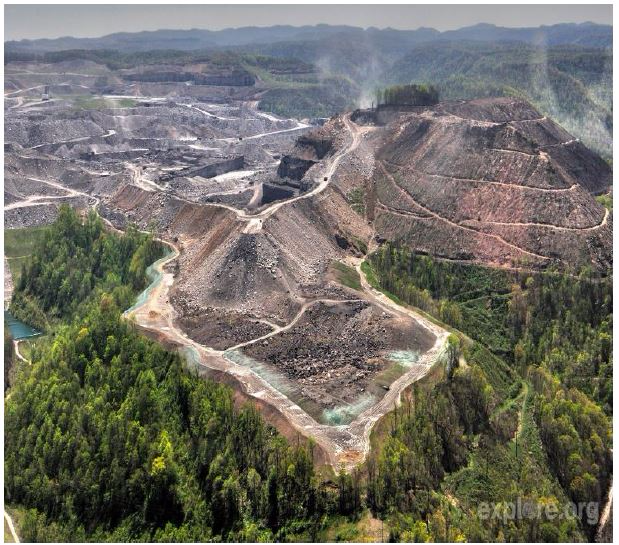
- Landfill mining:A process whereby solid wastes which have previously been land-filled are excavated and processe
Underground (sub-surface) mining
Underground mining involves digging tunnels or shafts into the earth to reach buried deposits. The tunnels and shafts are used to bring to the surface the ore for processing and waste rock for disposal Techniques of underground mining include drift mining, slope mining and shaft mining
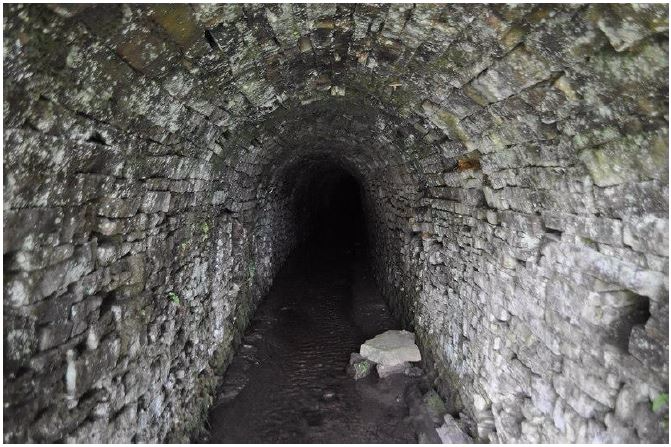
Drift mining – This technique utilizes horizontal access tunnels. Sometimes the mineral occurs in the side of a hill or valley. In such cases, a horizontal or nearly horizontal tunnel is dug into the side of a hill or valley until the mineral is reached. This horizontal tunnel is called an audit. The audit serves as an entrance to an underground mine by which the mine can be entered, drained of water, ventilated and mineral extracted (Figure 5.5)
If the mineral is petroleum or natural gas, the deposit is reached by sinking wells. Pumping or own pressure brings the gas or petroleum to the surface.
Other minerals are extracted by digging shafts to reach the mineral-rock containing layers. Hot water is pumped in to dissolve the mineral and then the mixture is pumped out. Afterwards, the water is unevaporated to leave the mineral behind. Sulphur is one of the minerals extracted through this drift mining technique
Slope mining: This technique, unlike drift mining, uses diagonally-slopping access shafts (tunnels).
Shaft mining: This one utilises vertical access shafts.
Alluvial or placer mining
Placer mining is the mining of alluvial deposits for minerals. This may be done by open-pit (opencast) mining or other means. The placer mining is frequently used for precious metal deposits especially gold and gemstones, both of which are often found in alluvial deposits. That is, the deposits of sand and gravel in stream beds or glacial deposits. The gems and heavy metals such as gold tend to accumulate at the base of placer deposits because they are denser than sand
The placer mining technique involves digging out the alluvial deposit from the river bed, mixing it with water, and then swirling (rotating) the mixture around with water in a shallow pan. During swirling, the pan is tilted in such a way that the lighter sand or gravel is washed over the side, leaving Horse level Adit in the abandoned lead mine, Nenthead, County Durham, UK the heavier mineral at the bottom of the pan. This technique is used in gold mining by small scale gold miners in Tanzania and South Africa.
Ways of Processing Different Types of Minerals
Explain ways of processing different types of minerals
Once the mineral ore has been excavated from the ground, it has to be treated in various ways to separate the required mineral from the waste material and impurities. The process of treating crude ores and mineral products in order to separate the valuable minerals from the waste rock or gangue is called mineral processing. Depending on the chemical composition of the ore, mineral processing can involve the following general operations
Comminution
Comminution is a process which involves reducing the particle size of materials. It can be carried out on either dry materials or slurries. Crushing and grinding are the two primary comminution processes. Crushing is first and normally carried out on the raw ore. Then grinding is normally carried out on dry or slurred material (Figure 5.6)

Sizing
Sizing is the general term for separating particles according to their sizes. Sizing in a simplest way involves Screening or passing the particles to be sized through a screen or number of screens. The screening equipment can include various types of screens or wire mesh. Screens can be static which is typically used for very coarse material). Alternatively, screens can be non-static which incorporate mechanisms to shake or vibrate the screen

Concentration
Concentration involves increasing the percentage of the valuable mineral in the concentrate. The concentrate is a mixture of gangue and valuable mineral. A number of ways can be used to increase the concentration of the wanted minerals. They include gravity concentration, froth separation, electrostatic separation, magnetic separation, automated sorting and dewatering
Gravity concentration
Gravity separation is the separation of two or more minerals of different specific gravity by their relative movement in response to the force of gravity and one or more other forces (such as centrifugal forces, magnetic forces, buoyant forces), one of which is resistance to motion (drag force) by a viscous medium such as heavy media, water or, less commonly, air.
Gravity separation is one of the oldest techniques in mineral processing, but its use is declining because of other new methods like flotation, classification, magnetic separation and leaching
Froth flotation
Froth flotation is used with sulphide ores (e.g., CuS or ZnS). The ore is powdered, fed into water tanks and made into slurry with water. Then “frothing” chemicals (suitable oils) are added. Sulphides are attracted to these chemicals. When air is blown through the slurry, froth rises to the top of the tank carrying the metal sulphides with it. Then they are skimmed off and dried
Electrostatic separation
This kind of concentration process involves passing a stream of particles past a charged anode plate. The particles that are conductors lose electrons to the plate and are pulled away from the other particles due to the induced attraction to the anode and are removed from the mixture. For efficient separation to occur the particles must be extremely small (between 75 and 250 micron), the particles need to be dry, have a close size distribution and uniform in shape. Of these considerations, one of the most important is the water content of the particles. This is important as a layer of moisture on the particles will render the non-conductors as conductors as the layer of the water is conductive.
Magnetic separation
Magnetic separation is a process in which magnetically susceptible material is extracted from a mixture using a magnetic force. This separation technique can be useful in mining iron as it is attracted to a magnet
Automated ore sorting
Modern, automated sorting applies optical sensors (visible spectrum, near infrared, X-ray, ultraviolet), that can be coupled with electrical conductivity and magnetic susceptibility sensors, to control the mechanical separation of ore into two or more categories on an individual rock by rock basis. Also new sensors have been developed which exploit material properties such as electrical conductivity, magnetization, molecular structure and thermal conductivity. Sensor based sorting has found application in the processing of nickel, gold, copper, coal and diamonds.
Dewatering
Dewatering is an important process in mineral processing. The purpose of dewatering is to remove water absorbed by the particles. This is done for a number of reasons, specifically, to enable ore handling and concentrates to be transported easily, allow further processing to occur and to dispose of the gangue. The water extracted from the ore by dewatering is reused for plant operations after being sent to a water treatment plant.
Iron processing
The process of iron extraction is carried out by the following steps: Concentration of ore The ore is concentrated by removing impurities such as soil. The process involves the crushing and washing of ore (Figure 5.8)
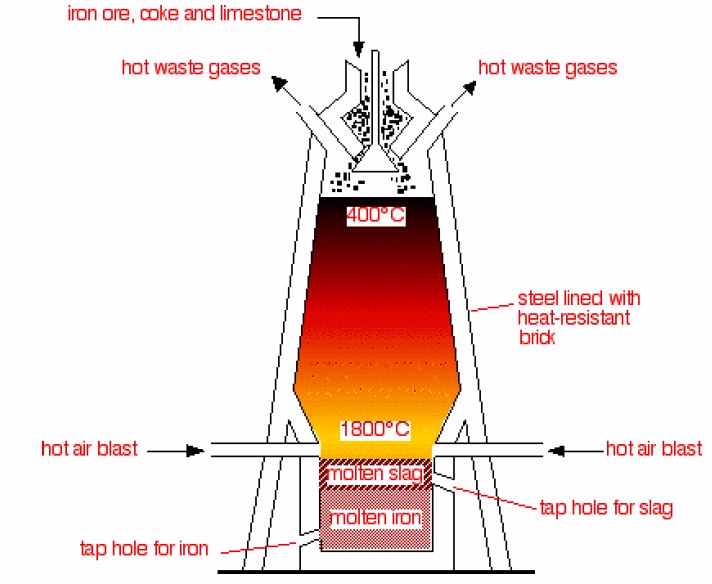
- Calcination or roasting of the ore, The concentrated ore is now heated in the presence of air. Then roasting is done to convert the iron to iron (III) oxide (Fe2O3. All forms of iron ore are converted into the oxide and then introduced into the blast furnace. The blast furnace is a cylindrical tower in which the ore is reduced to iron metal
- Reduction of ore, The process of reduction is carried out in a blast furnace. Iron ore, coke and limestone are mixed together to give a mixture called charge. The charge is introduced into the blast furnace
In the blast furnace, carbon is oxidized to carbon monoxide gas. The carbon monoxide gas reduces the iron (III) oxide to molten iron, which is removed as either pig iron or cast iron. This is the raw material for production of iron, steel and other products. Pig iron is made into steel by melting it to remove all its impurities, after which small amounts of other metals are added to make different types of steel.
The impurities in the ore, mainly silicon oxide (silica) reacts with limestone to form calcium silicate (slag) which is tapped off from the furnace and put into various uses.
Copper processing
Copper ore is mined in open pits and below ground. The mined ore is ground, concentrated and slurred with water and chemical reagents. Air is blown through the mixture and attaches to the copper, causing it to float to the top of the slurry. Then copper is removed with a skimmer. Skimmer is a machine that separates a liquid from particles floating on it or from another liquid. The tailings remain and are dewatered and disposed of in tailing ponds. The water is recovered and recycled. Tailings are the materials left over after the mineral has been separated from the gangue of an ore
The concentrated copper recovered through floatation is dried and then smelted in copper smelters. The smelters reduce the concentrate to copper blisters. The copper blisters contain 97–98% of pure copper. The copper blisters are purified by electrolysis in order to get pure copper with 99% of purity. This purification process is called copper refining
Gold processing
The ore is crushed and dissolved in a solution of sodium cyanide. The chemical dissolves the gold particles leaving behind stone and other mineral waste. The sodium cyanide solution containing gold particles is drained off and mixed with zinc dust which causes the gold particles to solidify. The particles are then separated, dried, melted and moulded into bars called ingots.
Aluminium processing
Aluminium is processed by the following three steps:
- Concentration of the ore:Aluminium ore, bauxite, is mined from the ground by open-cast mining. The ore is then sorted, crushed, grinded and fed into large grinding mills where it is mixed with sodium hydroxide solution at high temperatures and pressure. The grinding mill grinds the ore to an even finer size. The material finally discharged from the mill is called slurry.The resulting liquor contains a solution of sodium aluminate and undissolved bauxite residues containing iron, silicon and titanium. These residues, commonly referred to as “red mud”, gradually sink to the bottom of the tank and are removed.
- Purification of the ore:The sodium aluminate obtained in the above stage is purified through a number of industrial processes to get aluminium oxide (alumina).
- Electrolysis:The purified aluminium oxide is then electrolysed to get pure aluminium metal. Because aluminium oxide has a high melting point, it dissolved in molten cryolite to lower its melting point because it is too expensive to carry out electrolysis at very high temperatures.During electrolysis the molten metal falls to the bottom of the electrolytic cell and is tapped off.
Contribution of Mining Industry to the Economy of Tanzania
The Economic Importance of Mining to the Economy of Tanzania
Explain the economic importance of mining to the economy of Tanzania
Contribution of the mining industry to the economy of Tanzania include:
- Creation of employment opportunities:The mining sector has led to creation of employment opportunities to local Tanzanians. Many people are employed as mine workers and in mineral processing industries. A good number of people are also engaged in mineral trade which consists of purchasing and selling of minerals such as gold, tanzanite, diamond and other gemstones.Many people are also employed in industries that emerge due to mining, for instance, people are employed to run shops and hotels that serve workers and their families.
- Urbanization: Mining activities attract settlement which also attracts delivery of social services and amenities. This leads to development of towns. For example, Nyamongo village in Tarime District grew into township after discovery and establishment of gold mine.
- Development of other sectors:The mining industry has led to the development of other sectors such as agriculture, trade and transport and communication. For example, the road from Tarime town to North Mara Gold Mine at Nyamongo village has been improved by my owners. This has improved transport and communication between Tarime and the villages that surround the mines. Moreover, presence of gold mine necessitated and facilitated transmission of electricity from Tarime to Nyamongo and adjacent villages
- Provision of raw materials:The minerals obtained from the mining industry provide raw materials for other industries. For example, tanzanite and gold are sources of raw materials for making jewellery. Gypsum is the raw material for cement making industries.
- Foreign exchange:The mining industry provides foreign exchange to the country through export of minerals and mineral ores. The contribution of the mining sector to the country’s GDP has risen in recent years following increased production of minerals, such as gold, diamond, tanzanite and other gemstones.
- Improvement of social services:Mining companies improve service delivery to local communities through investment in community projects, such as construction of social infrastructures which include schools, hospitals, boreholes, roads and many others. Many mining companies have managed to provide these services to local communities, thereby improving the living standard of the local people. This has, in turn, helped a great deal to improve the public relation between mine owners and the host communities.
The effects of the Mining Industry in the Environment
The Effects of Mining to the Environment
Describe the effects of mining to the environment
Mining activities can cause a great harm to the environment if common sense is not observed during mining operation. The following are some effects of the mining industry to the environment:
- Land subsidence (sagging): Holes created due to underground mining cause land to sink (or subside). This is because the holes underneath the ground cause imbalance in weight of the soil above the ground. This may result to severe damage to buildings and other infrastructures such as roads, railway trucks and so forth.
- Poisonous substances: Poisonous compounds (for example of lead, cadmium and arsenic) are found in many ores. These may be washed into the soil and streams because of the mining process. If they happen to reach the water, they can kill fish and plant life, and can end up in your food as well.
- Large volume of waste: Large-scale mining operations inevitably produce a great deal of waste. This waste not only comprises of earth from the soil and gangue but also includes the toxic chemicals added to the ore to aid mineral extraction. The waste material gets washed into streams and rivers. The sediment that builds up, blocks rivers and alters their routes. This serves as a source of pollutants to natural water systems.
- Noise and dust: Mining activities produce a lot of noise and dust. Noise and dust can be due to haulage trucks, rock blasting and crushing, drilling operations, and heavy traffic. Everything for miles around the mine may get covered with dust. The loud sound due to blasting of rocks is likely to destroy the adjacent buildings due to earth tremor.
- Big holes in the ground: Mineral extraction leads to boring of deep holes through the ground in the course of searching for rich ores. Huge amounts of rock are dug up to get a small amount of ore. For example, 1000 tonnes of rock may produce just 5 tonnes of copper. This leaves huge scars on the landscape (if it is opencast method) or huge holes underground (if it is underground mining).
- Great heaps of earth material: Unwanted rock material, after the metal has been extracted from the ore, gets heaped up in tips. These are unsightly. They can be unstable and therefore dangerous. During heavy rains, a landslide is likely to occur, a catastrophe that often results to loss of life and destruction of property.
- Soil erosion: Before mining operations are carried out, the natural vegetation on and around the mining site is usually cleared up in order to give enough room to mining activities. The consequent removal of vegetation cover leaves the soil bare and, therefore, susceptible to erosion. Prolonged soil may, in turn, lead to aridity and loss of biodiversity.

- Air pollution: Large-scale mineral extraction results to production of gases such as Sulphur dioxide, carbon dioxide and other bad gases which are emitted to the atmosphere (Figure 5.9). These gases may bring about greenhouse effects and even cause Acid rains

Ways of Minimizing Effects of Mining to the Environment
Propose ways of minimizing effects of mining to the environment
Measures should be taken to minimize the effect of the mining industry on the environment. Some of these measures are being practiced in many areas affected by mining activities. The following are the ways through which water pollution by mines can be controlled
- Cleaning up the existing and abandoned mines: Mining companies need to clean up the abandoned mines which continue to release pollutants to the environment
- New mines need to be established in areas where they are not likely to cause water pollution problems
- Banning of mining practices that cause water pollution
- Enacting and enforcing laws that govern environmental conservation. The laws and regulation should be put in place that direct how the mining companies should carry out their operations and activities without causing environmental pollution. Strict measures including punishment should be imposed against any mining company that pollutes the environment. Punishments may include fines, jail sentences or even closure of the mining activities
- Strict controls apply to the production of wastes that may be toxic or may cause damage to the environment. Safety regulations and practices must be maintained to avoid the risk of accidental release of harmful materials
- Rehabilitation of the land after ceasing and closure of mining activities following exhaustion of minerals. Rehabilitation involves reclaiming the abandoned mines and re- using the land for other economic activities. Land rehabilitation activities can include levelling of the heaps of rock, replacement of the topsoil with a fertile one, filling up the holes, and planting trees in the mined-out areas. This can be followed with relocating streams, wildlife and other valuable resources
- Quarries and opencast workings can be reclaimed by the process of filling the holes with solid wastes. The eroded bare soil can be conserved by planting trees and grasses to serve as a soil cover
- Carrying out Environmental Impact Assessment before starting the mining operations in an area will help establish the possible environmental effects of the mining activities and possible measures to prevent and mitigate their effects on the environment
- Control of dust levels by measures such as spraying water on roads, stockpiles and conveyors. Other steps can include filling of drills with dust collection systems and purchasing additional land surrounding the mine to act as a buffer zone. Trees planted in these buffer zones can also minimize the visual impact of dust from the mining operations to local communities
- Noise can be controlled through a careful selection of equipment and insulation and enclosures around machinery
- The poisonous and toxic substances used in metal extraction must be treated properly before being directed into rivers and streams. In some mines, absorbent carpets are spread on the surface of the ground to trap the toxic substances contained in liquid chemicals. This prevents the chemicals from finding their way into water bodies

Focal Studies
Oil Production in the Middle East
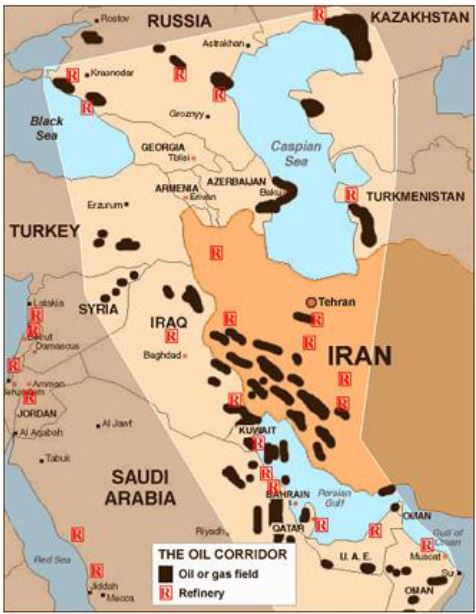
The Middle East is the largest oil-producing region in the world. It accounts for over one-third of the total world production. The major producers of oil in this region include Saudi Arabia, Iraq, Kuwait, Iran and the United Arab Emirates. Others include Bahrain, Qatar and Yemen. Most of these countries are members of the Organization of Petroleum Producing countries (OPEC). OPEC is an intergovernmental organization which manages and overseas the oil production industry. For example, OPEC roles include regulation of oil production among member states and fixing of the oil price
However, the prospection, drilling, refining and transportation of petroleum are mainly carried out by international companies from Europe and America. A portion of the oil is refined in oil refineries within the Middle East while the rest is exported overseas as crude oil
Natural Gas Production in Tanzania
Natural gas is a fossil fuel formed when layers of buried organic matter are exposed to intense heat and pressure over thousands of years. It is used for various purposes such as the generation of electricity, fueling machines, cooking and heating
Tanzania has recently managed to exploit this mineral at Songosongo in Kilwa, Lindi region. The gas is processed at Songosongo and then transported via pipeline to Dar es Salaam where it is used to generate electricity. It is also supplied to homes and industries for heating and other operations. According to the existing records to date, Tanzania has four natural gas fields. They include Songosongo, MnaziBay, Mkuranga and Kiliwani North. Only – Songosongo and MnaziBay gas fields have been developed the other two fields are still being developed
Advantages of Oil Production in the Middle East and Natural Gas Production in Tanzania
Describe advantages of oil production in the Middle East and natural gas production in Tanzania
Advantages of oil production in the Middle East
- Source of foreign currency:Most of the oil used in many parts of the world comes from the Middle East. A large amount of oil is exported from this region, so the countries earn the much needed foreign exchange which is, in turn, invested in others sectors such as manufacturing industries, commerce and trade.
- Creation of employment opportunities:Most of the Middle East countries lie entirely in the heart of the desert. So it is hard to undertake other economic activities such as agriculture. Most people are solely employed in the oil production industry, which provides them with income that they spend on their basic needs. People are employed to work in oil extraction, transportation, or sale of petroleum products.
- Improvement of social services:The money earned from the oil industry is invested in other sectors of economy. It is also used to established or improve social services and other amenities. The governments spend huge sums of money to set up social services such as schools, hospitals, games and sports, etc.
- Improvement of transport and communication:The income generated by the oil industry is used to develop roads railways, harbours, and airports. This has consequently led to improvement of transportation and communication infrastructures in the region.
- Reliable energy and power supplies, The oil produced provides the Middle East countries with reliable supplies of energy and power used for domestic, industrial production and provision of social services
Advantages of natural gas production in Tanzania
- The gas industry is a source of employment opportunities to Tanzanians. People work in various work capacities in the gas sector which include prospectors, engineers, miners, transporters. This helps to curb the problem of unemployment and incomes earned help to improve the standards of living of the people
- Discovery of natural gas in remote areas of Lindi, Coast and other parts has helped to solve the problem of rural-urban migration. Nowadays people stay in such rural areas and work in jobs related to gas production and other activities which emerged as a result of gas production. This reduces the population pressure in the few cities in the country which are already overpopulated and overburdened
- Natural gas is the production of cost-effective electricity. It is expected that when more electricity generated from natural gas will be available to consumers, the cost of electricity will drop significantly. This will, in turn, reduce the burden of costs of living to Tanzanians. Cheap electricity generated from natural gas will soon be supplied to industries and is expected to cut down the cost of production. As a result, the finished industrial products will be sold at relatively cheap prices affordable to many people. This will in turn improve standards of living
- Exportation of natural gas and sale of electricity will increase the government revenue in terms of foreign exchange. The revenue collected will then be used to improve public services to people around the gas fields and the entire country
- More amount, reliable and cheap electricity will eliminate power rationing which will enable people to engage in production all the time
- More amounts, reliable and cheap electricity from natural gas will enable more people to afford and shift from using firewood and charcoal for domestic and small- scale industrial activities. This will help to conserve the forest and the environment.
Disadvantage of natural gas production in Tanzania
- Even when the local people are compensated, the compensation is small compared to the direct and indirect losses and costs they experience. This is because the houses and other household infrastructures and assets belonging to poor people are demolished carelessly and compensations delay
- Natural gas production is potentially hazardous and disaster prone. This is because natural gas is a highly explosive substance. When the gas pipelines explode, great losses of properties, lives of the people and the biodiversity occur. The magnitude of losses is great to people living or undertaking their activities close to gas pipelines
- It is not a sustainable source of energy and power in the long run because natural gas is a non-renewable resource. It can be exhausted an aspect which destabilizes the activities and sectors which are established and mainly depend on the availability of natural gas
Chapter Summary
In this chapter, you have learnt that mining is a process of extracting valuable geological substances from the earth’s crust. The mining industry can be divided into two main types, namely, metal mining industry and non-metal mining industry. Minerals are categorized into two broad groups, namely, silicate minerals and non-silicate minerals. Non-silicate minerals are further subdivided into native elements, sulphides, oxides, carbonates, sulphates and organic minerals
The major types of minerals found in the world include coal, petroleum, diamond, copper, gold, iron ores and bauxite. Mining methods are divided into three broad types, namely, surface mining, underground mining and alluvial or placer mining
Surface mining methods involves five techniques. They include open-pit mining, quarrying, stripping, mountain top removal and land fill mining. Underground mining method involves three main techniques. They include drift mining, slope mining and shaft mining
The three main methods of processing minerals include comminution, sizing and concentration. Several ways are used to increase the concentration of wanted minerals in the ores. The ways include gravity concentration, froth flotation, electrostatic separation, magnetic separation, automated ore sorting and dewatering
Mining industry contributes to the economy of Tanzania in many ways. It includes creation of employment opportunities, enhancing growth of urbanization, earning foreign exchange, provision of raw materials to other industries, development of other sectors, and improvement of social services
The effects of the mining industry on the environment include land subsidence (sagging), discharge and dispose poisonous substances, air and noise pollution, destruction of landscape and natural scenery through big holes in the ground and heaps of earth materials and soil erosion
Many ways are used to minimize the effects of mining industry on the environment. They include carrying out environmental impact assessment before starting the mining operations in an area, water sprinkling, use of insulation and enclosures around machinery, treatment of the mining waste, cleaning up the existing and abandoned mines
The advantages of oil production in the Middle East include source of foreign exchange, creation of employment opportunities, improvement of transport and communication, and generation of energy and power and improvement of social services. The production of natural gas in Tanzania is advantageous in many ways. They include source of employment opportunities, growth of urbanization, generation of cost-effective H.E.P, improvement in the standards of living, improvement in public services, and environmental conservation
Revision Questions
Question Time 1
A. 1. Which of the following statements best defines the term “mining”?
- Digging holes into the ground
- Extracting valuable materials from the ground
- Surface and subsurface methods
- Metal and non-metal mining industries
2. Mining industry can be divided into two broad groups, namely
- surface and subsurface mining industries
- metal and non-metal mining industries
- quarrying and underground industries
- silicates and non-silicates
3. Minerals are divided into two broad groups, based on their composition as either
- metal or non-metal minerals
- silicate or non-silicate minerals
- surface or ground minerals
- dull or bright minerals
4. The uses of coal include .
- burning charcoal
- generation of electricity and heat and refining of metals
- extraction of salt from the sea
- alloying of metals
5. Mountaintop removal mining is mainly associated with the mining of
- diamond
- coal
- gold
- copper
6. Sustainable mining refers to _____
- controlled extraction of minerals and control of environmental pollution
- control of environmental pollution by cleaning up abandoned mines
- treatment of liquid waste before dumping it into water bodies
- mineral extraction process which ensures that all minerals are extracted from their ores
7. The term “mineral” is used to refer to two different kinds of components
- elements formed by geological processes and those formed due to deposition
- dietary minerals and the elements formed due to geographical processes
- the elements formed due to geographical processes and the ores
- surface and ground minerals
8. Which of the following minerals is described as a “native element”?
- Iron
- Copper
- Magnesium
- Gold
9. In Tanzania, coal deposits are found at .
- Songosongo and Mkuranga
- Chunya and Liganga
- Mchuchuma and Kiwira
- Mnazi Bay and Songosongo
10. The Niger Delta in Nigeria is famous for extraction of .
- gold
- natural gas
- oil
- coal
11. The following are the methods of processing minerals except
- Commination
- Sizing
- Concentration
- Quarrying
12. One of the contributions of the mining industry to Tanzania’s economy is
- creation of employment opportunities
- decreased crime rates in mining areas
- decentralization of industries
- improvement of water quality
13. One of the ways in which an abandoned/exhausted mine can be reclaimed is thorough_____
- filling up audits with the rock
- establishment of settlements on the mined-out areas
- reforestation
- carrying out environmental assessment impact
14. Land subsidence due to mining activities is mainly caused by .
- heaps of earth on the soil surface
- big tunnels underground
- heavy traffic passing close to mines
- the chemicals dripping from the gangue
15. The following are contributions of the mining industry in any country. Which one is not?
- It Leads to The Development of Industries
- It Provides Employment Opportunities to The Local People
- It Stimulates the Development of Transport and Communication Systems
- It Causes Economic Conflicts Among the Citizens
B. For each of the following statements, write TRUE if the statement is correct and FALSE if the statement is incorrect
- Open-pit mining involves extracting rocks or minerals from an open barrow
- Communition is only carried out on slurries
- Mineral sizing makes use of a screen or a number of screens
- Diamond is refined in the blast furnace
- Before being introduced into the blast furnace, all forms of iron ore must be converted into the oxide
- Copper blisters contain 99% of pure copper
- In geology, a mineral is a chemical compound that is normally crystalline
- Non-silicate minerals constitute about 90% of the earth’s crust
- In mineral extraction, dewatering means removing the water absorbed by the mineral particles
- A quarry is the same thing as an open pit mine from which minerals are excavated
B. Match the items in Group A with the corresponding items in Group B
| ColumnA | ColumnB | ||
| 1 | Purificationofametal | A | Slopemining |
| 2 | Extractionofiron | B | Quarrying |
| 3 | Separatingthemineralfromitsore | C | Gold |
| 4 | Placermining | D | Diamond |
| 5 | Surfacemining | E | Mineralprocessing |
| F | Mineralextraction | ||
| G | Blastfurnace | ||
| H | Smelting | ||
| I | Ionexchange | ||
| J | Electrolysis |
D. Short answer questions
- Name two types of mining industries
- List the characteristics used by mineralogists to identify minerals
- Give any four products that are obtained when petroleum is refined
- Mention any three areas in Saudi Arabia where oil fields are found
- State any two surface mining methods
- What is an audit?
- Describe how drift mining is carried out.
- What are the contributions of the mining industry to the economy of Tanzania?
- Describe the effects of the mining industry on the environment
- Explain how can the effects of the mining industry on the environment be minimized?
- Explain in detail the advantages of natural gas production in Tanzania
References
- Focus,F.DandSaid,S.N(2014).FundamentalsofGeographyFormTwo.LonghornPublishers.DaresSalaam
- Msabila, D.T. (2003). A Focal Study on Human and Economic Aspects. Afroplus Industries. Dar es Salaam
- Mzezele, S. and Kibuuka, P. (2014). Geography In Focus Form Two. Oxford University Press Ltd. Dar es Salaam
- Tanzania Institute of Education (TIE) (2011). Geography Teacher’s Manual for Ordinary Secondary Education. TIE. Dar es salaam
- Tanzania Institute of Education (2002). Geography Course Book for Secondary Schools Book Two. Ecoprint Ltd. Dar es Salaam
Listening to this topic