Geography
Structure Of The Earth
Reading settings
Text size
Line spacing
Colours
Geography is the study of places and the relationship between people and their environment. Geographers explore both the physical properties of the Earth's surface and the human societies spread across it.In the context of dynamic and changing world, it is very crucial to study Geography so as to be able to achieve sustainable human development.
Structure Of The Earth
Introduction
test 3
In this topic, you will learn about the earth‘s crust, the mantle, the core and their respective characteristics. You will also learn about the types of rocks of the Earth‘s crust and the simplified geological time scale (GTS).
Objectives
By the end of this topic, students should be able to identify concentric zones of the earth, account for the variation in density and thickness of the concentric zones of the earth‘s crust, describe the characteristics of the earth‘s crust, the mantle and the core, identify types of rocks of the earth‘s crust, explain the mode of formation for each type of rocks and their economic importance, and describe the geological time scale and explain the mode of formation for each type of rocks and their economic importance.
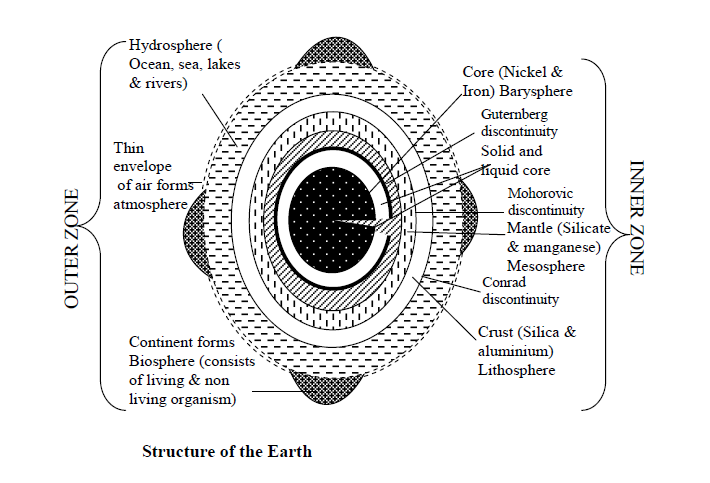
The earth is composed of the inner and the outer zones (layers) as shown in Figure 1.1. The earth's outer layer comprises the atmosphere, biosphere and hydrosphere, while the inner layer comprises the crust, mantle, and core.
The Earth's Crust, The Mantle, The Core and their Respective Characteristics
Concentric Zones of the Earth
Identify concentric zones of the earth
The Outer Layers (Zones) Of The Earth
Atmosphere
This is a thin layer of various gases. The atmosphere is composed of a mixture of gases which form an envelope around the earth. Various elements of weather such as sunshine, temperature, wind, precipitation, clouds and pressure operate in this zone. The atmosphere is divided into five layers based on temperature variation. These layers are Troposphere, Stratosphere, Mesosphere, Thermosphere and Exosphere.
Biosphere
This layer consists of all sorts of living organisms ranging from microscopic to macroscopic organisms, for instance, plants, animals, insects and human beings.
Hydrosphere
This layer is occupied by water bodies like seas, oceans, lakes and rivers. It covers the largest part of the earth‘s surface. About 71% of the earth‘s surface is covered by water.
The Internal Structure Of The Earth
The earth is composed of three internal, concentric layers of increasing densities as represented in Figure 1.1. These layers are the crust, mantle and core. They are made up of different layers of rocks, with their densities increasing towards the centre of the earth, that is, the densities of rocks that make up the earth increase as you move from the surface towards the interior
The Crust (Lithosphere)
This is the outermost layer of the earth. This layer sub divided into two important layers of SIAL and SIMA. Sial being the most top layer is made up of silica and aluminium (sial). Sial forms the upper layer of the continent and is mostly composed of granite rocks. The layer below SIAL is called SIMA. This layer is made of silica and manganese. It is a layer of basaltic rocks which are denser and underlies the continental block to form the ocean floor. Lithosphere is the rigid outer part of the earth, consisting of the crust and upper mantle
The Mantle (Mesosphere)
This is the layer below the crust. It is composed of iron and manganese. It lies between the crust and the core. The layer which separates crust and mantle is called Mohorovic discontinuity. The mantle is made up of very dense and hot igneous rocks, found in semi liquid states. It extends downwards 2900 km and the temperature ranges between 5000°C and 7000°C. The density of the mantle is 3 – 3.3 g/cm3. It is divided into two parts namely, the upper and lower mantle. The upper mantle is rigid and combines with the crust to form a layer called lithosphere. Below the upper mantle there is a layer called asthenosphere
The Core (Barysphere)
This is the innermost layer of the earth. It is composed of nickel and iron. Its diameter is approximately 2500 – 2700 km and its temperature is around 5500°C. The average density of the barysphere is about 5.2 g/cm3. Most geographers believe that the core is divided into solid and liquid core. The total mass of the earth is about 5.976 x 10²¹ tonnes.
The Variation in Density and Thickness of the Concentric Zones of The Earth's Crust
Account for the variation in density and thickness of the concentric zones of the earth's crust
ROCKS
A rock is an aggregate of mineral particles found in soft, solid or unconsolidated state. The earth‘s crust consists of rocks and rocks consist of a combination of different minerals. All minerals are formed from one or more of eight main elements. These are: oxygen, silicon, potassium, sodium, calcium, magnesium, iron and aluminium.
Rocks can be broadly categorized into three types. These are igneous rocks, sedimentary rocks and metamorphic rocks. These kinds of rocks are classified according to their origin, chemical composition and age.
The Characteristics of The Earth's Crust, The Mantle and The Core
Describe the characteristics of the earth's crust, the mantle and the core
Variations in characteristics of the three interior zones of the earth are the result of temperature and pressure as they increases from the surface to the center of the earth.Factors which accounts for such variations includes: pressure on the underlying materials, weight of the underlying materials, radioactivity, magma movement and heat generated during the formation of the earth.
Types of Rocks of the Earth's Crust
The Types of Rocks of the Earth's Crust
Identify types of rocks of the earth's crust
Classification Of Rocks According To Their Origin
Igneous rocks
These rocks are formed when molten rock cools and solidifies. All igneous rocks originate inside the earth where they are under great pressure. Igneous rocks do not occur in layers and they don‘t contain fossils which are the chemically-changed remains of ancient plants and animals embedded in rocks. These rocks solidify either within the earth‘s crust and form intrusive features or outside the earth‘s surface and form extrusive features.
Igneous rocks are formed when the molten magma is forced out from the upper mantle to the earth‘s surface, where it cools and solidifies due to low temperature. Crystals form on cooling and the rocks are called crystalline rocks.
There are two main types of igneous rocks:
- Plutonic: these have solidified deep in the crust and they are seen on the surface only after being exposed by prolonged erosion.
- Volcanic: these have been poured on the earth‘s surface where they are called lava.
Characteristics of igneous rocks
- Igneous rocks reflect light.
- They are not found in layers.
- They do not contain fossils.
- They are crystalline rocks.
- They are formed through cooling and solidification of magma.
- They can undergo metamorphic and weathering processes.
- They contain different minerals like iron, magnesium etc.
In Tanzania, many igneous rocks are found in Dodoma, Iringa, and Lake Victoria's shores in Mwanza. The main examples are gabbro, basalt and diorite. Some are found in Kilimanjaro and Rungwe (Mbeya) such as basalt, pumice, diorite, gabbro, syenite and peridotite rocks. Some of these rocks are shown in Figures 1.2 and 1.3


Sedimentary rocks
Sedimentary rocks are found in layers; they contain fossils and are very soft. These are weathered particles formed through deposition and lithification processes. Sedimentary rocks are formed when the sediments are accumulated, compacted and cemented together. The sediments are compacted by compression to form sedimentary rocks. These are called stratified rocks.
Characteristics of sedimentary rocks
- They are formed when particles or sediments are accumulated, compacted and cemented together.
- They contain fossils.
- They are found in layers (strata).
- They do not reflect light.
- They are non-crystalline rocks.
- They can undergo metamorphic process.
Types of sedimentary rocks
Mechanically-formed sedimentary rocks
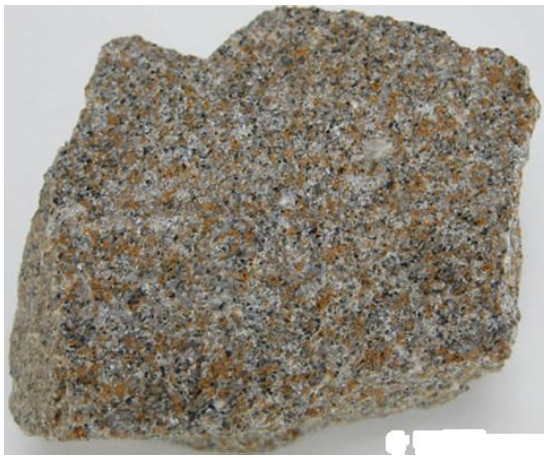
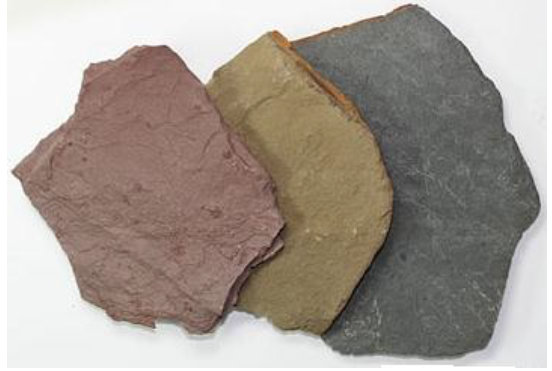
These are formed through weathering process. When weathering agents erode and deposit rock particles, they are accumulated, compacted and cemented together to form sedimentary rocks. Examples of mechanically formed sedimentary rocks are clays, gravels and alluviums (all deposited by water), moraines, boulder clay and gravels (deposited by ice) and loess (deposited by wind); sandstones and shale.Examples of mechanically-formed sedimentary rocks are indicated in Figures 1.4, 1.5 and 1.6 below.

Chemically-formed sedimentary rocks
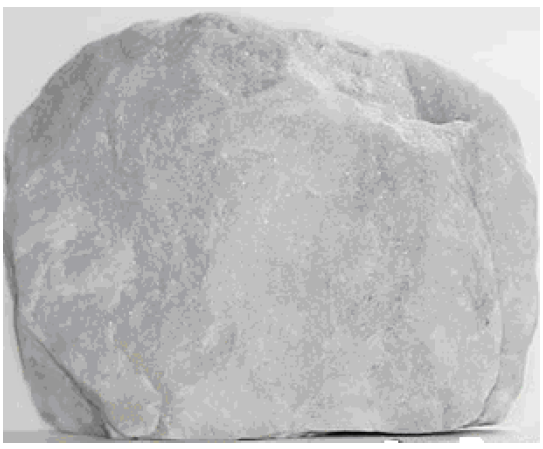
These are formed through chemical precipitation process. They include carbonate (as it is in stalactite and stalagmite), sulphate, chloride, etc. The main examples are gypsum, rock salt, lignite, dolomite, flint, borax, limonite, haematite, etc. Figure 1.7 shows dolomite as a typical example of chemically-formed sedimentary rocks
Organically-formed sedimentary rocks
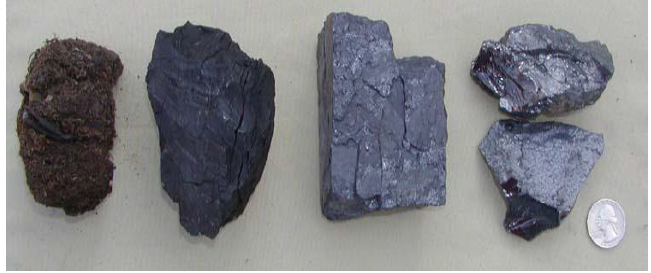
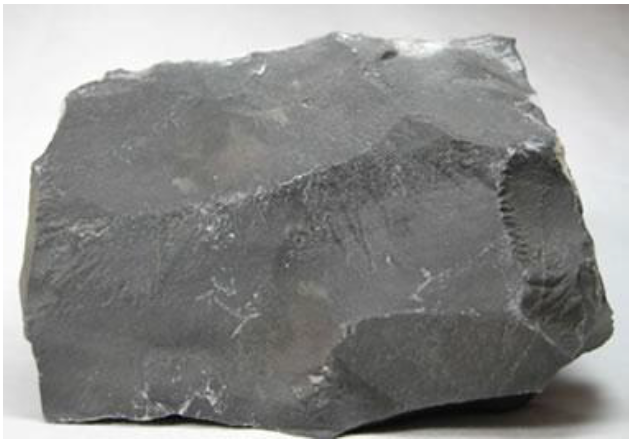
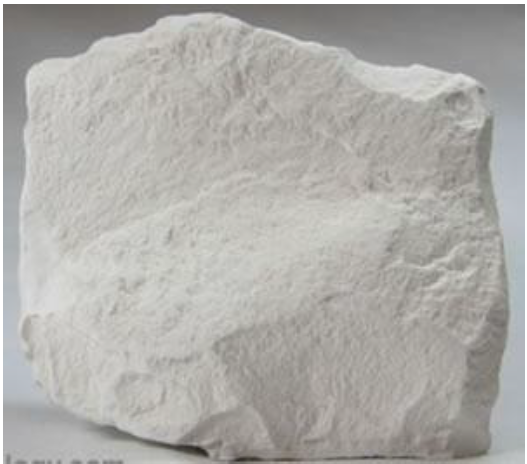
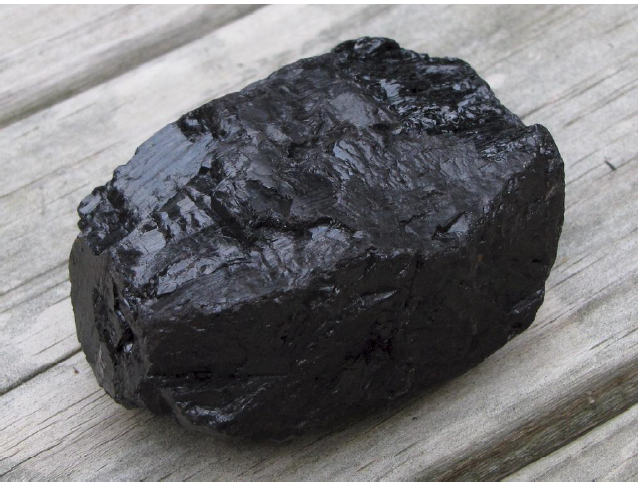
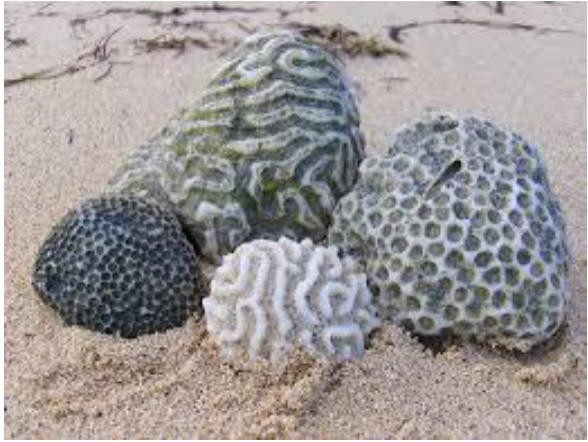
These are formed through mineralization process of decaying and decomposition of dead organisms such as animals and plants. The remains of living organisms are accumulated, compacted and cemented together to form these sedimentary rocks. The main examples are chalk (limestone) and coral (formed from animals), and peat, coal and lignite (formed from plants). Some of these rocks are shown in Figures 1.8 – 1.12. (Source: geology.com)
Metamorphic rocks
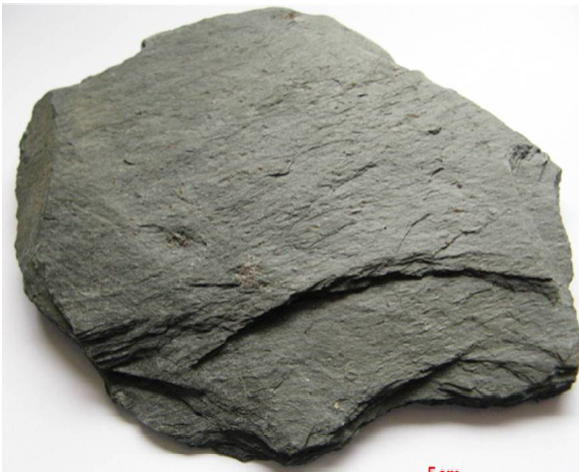
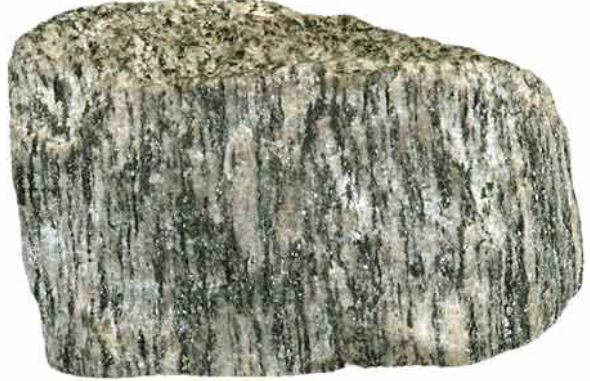
These are rocks that have changed their shape, size, appearance or chemical composition due to the contact of heat, pressure or both. This process is referred to as metamorphism. Any rock can be changed into a metamorphic rock. Examples of metamorphic rocks are slate, marble, gneiss and schist. Some metamorphic rocks are shown in Figures 1.13 and 1.14
Characteristics of metamorphic rocks
- They are very hard due to prolonged action of heat and pressure.
- Any type of rocks can be subjected to metamorphic rocks.
- They can undergo weathering process.
The main examples of metamorphism in rocks include the following:
- Sandstone to quartzite.
- Coal to graphite.
- Limestone to marble.
- Clay to slate.
- Granite to gneiss.
ROCK CYCLE
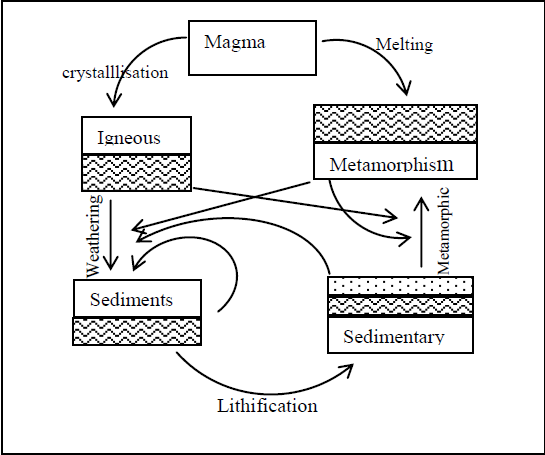
This is the cycle in which rocks tend to change from one type to another. For instance igneous rocks may change to metamorphic rocks or sedimentary rocks; sedimentary rocks to metamorphic or igneous rocks, etc. It is a relationship in which rocks tend to change from one type of rock to another.as shown in Figure 1.15.
Necessary conditions for rock cycle to take place
- First, the molten rocks erupt from the interior of the earth and then cool and solidify to form igneous rocks.
- Secondly, the igneous rocks are subjected to denudation process to form sedimentary rocks.
- Third, either igneous or sedimentary rocks undergo metamorphism, due to prolonged heat and pressure, to form metamorphic rocks.
- Fourth, metamorphic or igneous rocks can undergo weathering process through erosion and transportation of sediments which are further deposited in layers in the ocean or lake floors where they are cemented and consolidated to form sedimentary rocks and vice versa.
- Fifth, metamorphic or sedimentary rocks can be subjected to heat and pressure where melting take place and later cooling, due to low temperature, to form igneous rocks.
Simplified geological time scale
The geological time scale is a chart for dating the history of the earth including rock span. It tries to explain the age of rocks as far back as 600 million years ago.
The simplified geological time scale
| Era | Period | Years in millions before present | Major geological events in Africa | Man and animals |
| Cenozoic | Quaternary | 1 | Glaciation of East Africa mountains.Formation of river terraces and raised beaches. | Age of man |
| Tertiary | 163 | Formation of the Atlas mountains. Lava flows in Ethiopia. | Age of mammals. | |
| Mesozoic | Cretaceous | 135 | Deposition of marine sediments in the Sahara and Southern Nigeria. Formation of Enugu coalfield. | Age of reptiles |
| Jurassic | 180 | Break-up of Gondwanaland and Marine invasion of East Africa coastlands and separation of Malagasy Island from mainland. | ||
| Triassic | 230 | Drakensburg lava and formation of upper Karro beds. Volcanic activity in West Africa. | ||
| Paleozoic | Permian | 280 | Formation of lower Karro beds. Formation of rich coal deposits in Tanzania and South Africa. Ice age in central and South Africa. | Age of amphibians |
| Carboniferous | 345 | Cape fold formed. | ||
| Devonian | 405 | Marine invasion of Libya, the Sahara and Western Sudan. Continental basins formed by crustal warping | ||
| Silurian | 425 | Continental sedimentation in Zaire basin,Tanzania and South Africa, followed by intensive folding. | ||
| Ordovician | 500 | Extensive deposition of sediments.Formation of sandstones in Guinea, Mali, Volta basin and North West Ethiopia | Age of marine invertebrates | |
| Cambrian | 600 | Marine invasion of Western Sahara and Kalahari basin. | ||
| Proterozoic | Pre Cambrian or Archarean | Glaciations of Africa South of Equator.Extensive metamorphism of oldest known fossilized, unicellular algae formed in Swaziland and Mali. | Algae |
The Mode of Formation for each Type of Rocks and their Economic Importance
Explain the mode of formation for each type of rocks and their economic importance
The importance of rocks
- Rocks are very important in the formation of soils which can be used for agricultural production.
- Rocks are used for building purposes, some rocks such as limestone, sandstone, gravels and sand are used for building houses, construction of roads, etc.
- Some rocks are used as sources of energy or fuel such as coal and petroleum (mineral oil).
- Limestone is widely used for cement manufacturing. In Tanzania, cement is produced at Tanga, Mbeya, Kilimanjaro (Moshi cement), Mtwara and Wazo Hill
- Salt extraction: salt usually originates from rock-accruing strata, for instance, in Tanzania UvinzaKigoma, Tunisia and Morocco, there are large salt deposits
- Manufacture of chemicals, some rocks contain nitrate or phosphate, while others have potash. This kind of rocks can be used for making dyes, fertilizers and medicines.
- Mineral deposits, mineral ores occur in veins of some rocks such as igneous rocks. The minerals are formed when the magma coos down. Valuable minerals extracted from rocks include gold, lead, tin, silver, diamond, copper, zinc, aluminium, calcium and manganese.
- Some rocks are so impressive such that they attract tourist to come and view them. In so doing, the country earns a lot of foreign exchange.
- Some rocks are used for decoration of houses as ornaments or they are grinded to produce powder which is used for decoration.
Simplified Geological Time Scale
The Geological Time Scale
Describe the geological time sale
The geological time scale(GTS) is a system of chronological measurement that relates stratigraphy to time, and is used by geologists,paleontologists, and other Earth scientists to describe the timing and relationships between events that have occurred throughout Earth’s history.
Topic Summary
- The earth's outer layer comprises the atmosphere, biosphere, and hydrosphere, while the inner layer includes the crust, mantle, and core.
- The atmosphere is composed of a mixture of gases which form an envelope around the earth.
- The biosphere (from Greek bios = life, sphaira = sphere) is the layer of the planet Earth where life exists.
- The hydrosphere is the total amount of water on a planet. The hydrosphere includes water that is on the surface of the earth, underground, and in the air
- The Crust (lithosphere) is the outermost part of the Earth, consisting of silica and aluminium (sial).
- The Mantle (mesosphere), composed of iron and manganese, is the layer below the crust and occurs between the crust and the core.
- The Core (barysphere) is the innermost layer of the Earth, composed of nickel and iron.
- There are three types of rocks, namely igneous rocks, sedimentary rocks, and metamorphic rocks.
- Two main types of igneous rocks are plutonic rocks and volcanic rocks.
- Types of sedimentary rocks are mechanically-formed sedimentary rocks, organicallyformed sedimentary rocks, and chemically-formed sedimentary rocks.
- Metamorphic rocks are rocks that have changed their shape, size, appearance or chemical composition due to the contact of heat, pressure or both.
- The rock cycle is the cycle in which rocks tend to change from one type to another.
- The importance of rocks includes soil formation, building purposes, energy or fuel sources, cement manufacturing, salt extraction, manufacture of chemicals, mineral deposits, decoration, and used as tourist attractions.
Review Questions
Question Time 1
A. 1. Which of the following is part of the inner structure of the Earth?
- Atmosphere
- Lithosphere
- Biosphere
- Hydrosphere
2. _______is the innermost part of the Earth which is composed of nickel and iron
- Lithosphere
- Mesosphere
- Hydrosphere
- Atmosphere
3. The rocks formed when molten rock cools and solidifies are
- Sedimentary rocks
- Igneous rocks
- Stratified rocks
- Metamorphic rocks
4. The process of rock stratification is directly related to___
- The breakdown of sedimentary rocks by erosion
- The folding of rocks
- The formation of sedimentary rocks
- The conversion of igneous rocks into sedimentary rocks
5. Which of the following, by origin and composition, is not a form of igneous rocks?
- Sill
- Gypsum
- Dyke
- Lava Plain
6. Which of the following statements is incorrect?
- Igneous rocks are formed when molten rocks from the mantle cool and solidify
- Rocks that are changed by great pressure and heat are called metamorphic rocks
- Sedimentary rocks are formed from sediments that are deposited in layers either by water or wind
- Sedimentary rocks do not contain fossils
7. Graphite, slate, marble and gneiss are examples of ___.
- Metamorphic rocks
- Organically-formed sedimentary rocks
- Igneous rocks
- Chemically-formed sedimentary rocks
8. Basement rocks refer to rocks that ___
- Can sometimes be seen at the base as an escarpment overlooking a rift valley
- Form a continental platform on which other rocks have formed
- Have originated in the earth‘s mantle
- Form the core of fold mountains
9. Which one of the following rocks is both porous and permeable?
- Granite
- Sandstone
- Clay
- Basalt
10. Identify an organically-formed sedimentary rock from the following list
- Clay
- Dolomite
- Coal
- Alluvium
11. The Earth‘s crust can also be termed as ___
- The thickest layer of the Earth
- The outer layer of the Earth
- The middle layer of the Earth
- The molten layer of the Earth
B. Short answers question
- Distinguish between hydrosphere and atmosphere.
- Define the term ‗biosphere‘
- Draw a neat, well labelled diagram to show the internal structure of the Earth.
- Describe the major characteristics of the layers you have shown in (3) above
- Why do you think the interior of the Earth is very hot?
- Explain why pressure increases with an increase in depth of the Earth‘s interior
- Describe the outer layers of the Earth
- What is a rock?
- Name the types of igneous rocks and give specific rock examples of each type
- Give the characteristics of igneous rocks.
11. Describe how the following rock types are formed
- Sedimentary rocks
- Igneous rocks.
- Metamorphic rocks.
12. Name three sedimentary rocks and one igneous rock and name the equivalent rocks that form after they undergo metamorphosis
13. Explain the ways in which rocks are of economic importance in Tanzania
REFERENCES
- Bunnet, R.B. (2005). Physical Geography in Diagrams for Africa (28th edition). Pearson Education Ltd. Essex
- Joseph, W.N. (2004). Contemporary Approach to Ordinary Level Geography. Afroplus Industries Ltd. Dar es Salaam
- Kipagile, A.C and Faustine, J.P (2014). Fundamentals of Geography Form Three. Longhorn Publishers. Dar es Salaam
- Msabila, D.T and Kinunda, J.E (2013). Comprehensive Geography for Secondary Schools Form Three. NyambariNyangwine Publishers. Dar es Salaam
- Mzezele, S. and Kibuuka, P. (2014). Geography In Focus Form Three. Oxford University Press Ltd. Dar es Salaam.
- Tanzania Institute of Education (1999). Geography Course Book for Secondary Schools Book Three. Ecoprint Ltd. Dar es Salaam.
Listening to this topic