Geography
Soil
Reading settings
Text size
Line spacing
Colours
Geography is the study of places and the relationship between people and their environment. Geographers explore both the physical properties of the Earth's surface and the human societies spread across it.In the context of dynamic and changing world, it is very crucial to study Geography so as to be able to achieve sustainable human development.
Soil
Introduction
In this topic, you will learn about soil formation, soil composition and properties, soil profile and characteristics, simple soil classification, and soil erosion.
Objectives
By the end of this topic you should be able to define soil, describe factors for soil formation, assess the importance of soil, and illustrate soil composition and properties, define soil profile, illustrate soil profile and its characteristics, and classify soil according to textural groups, define soil erosion, examine how agents of soil erosion work, describe the types and effects of soil erosion on social and economic activities and relate population growth and rate of soil erosion on the quality of life, and demonstrate ways of controlling soil erosion through the application of various conservation techniques
Soil Formation
Soil
Define soil
The term soil is derived from the Latin word “solum” which means ground. Soil is defined as the top layer of the Earth's surface on which plants grow. Soil is a mixture of minerals, organic matter, gases, water, and countless organisms that together support life on Earth. These components interact slowly yet constantly.
Soil is formed through the process of weathering, which breaks up rocks into small fragments. A large portion of the soil, especially the mineral portion, is formed from the parent rock or parent material. Soil formation, therefore, can be defined as the genesis or evolution of the soil from the parent material. This process is continuous. It takes place through the action of weathering processes on the parent material.
Soil formation (pedogenesis) is principally initiated by the weathering of the parent rocks. Weathering can be chemical, biological or mechanical. But the type of soil and rate of soil formation depend on a number of interacting factors (interplay of factors) in a particular environment, hence soil is the product of its own environment. As weathering takes place, the parent rock is broken down into smaller units which mix with organic matter, water, air and living organisms to make up the soil.
Factors for Soil Formation
Describe factors for soil formation
Soil continuously changes. The changes are generally slow but in certain circumstances, especially where human activities are involved, the changes can be rapid. The study of soil involves understanding the factors responsible for its formation. These factors are parent materials, climate, living organisms, relief (topography) and time.
1. Parent material
This is the most important factor in soil formation since it determines the type of soil formed, soil colour, soil depth, the rate of soil formation, soil structure, soil texture, porosity and mineralogical composition or its fertility. It also influences soil maturity, such that if the parent rock is hard, it takes a long time for soil to mature while the rate of maturity is fast where the parent rock is soft. The fast maturity of soils, formed from soft rock is due to the fast rate of weathering process. Mature soils are deep and productive while immature soils are shallow and less productive.
2. Climate
Climate is the principal factor governing the rate and type of soil formation as well as the main agent determining the distribution of vegetation. Dead vegetations decay to form humus as one of the components of the soil.The important variables under climate include temperature, precipitation and wind.
Temperature affects the rate of decomposition of organic matter. It contributes to the rate of soil and soil profile developments through weathering. Where there is high temperature, soil development tends to be fast due to the fast rate of weathering, and where temperature is low, there is also a low rate of soil development due to the low rate of weathering process.
The main effect of temperature on soil is to influence the rate of reactions; for every 10°C rise in temperature, the speed of a chemical reaction increases by a factor of 2 or 3 (twice or thrice). Temperature, therefore, influences the speed of disintegration and decomposition of the parent materials and its consolidation to form the soil.
Precipitation also affects soil profile development. In some areas soil is eroded, leading to soil profile destruction while in areas deposition leads to positive soil development due to accumulation of weathered materials and organic matter. Rainfall adds moisture, which facilitate both chemical and mechanical weathering and hence soil profile development.
The water in soils includes all forms of water that enter the soil system and is derived mainly from precipitation as rain. The water entering soils contains appreciable amounts of dissolved carbon dioxide, forming a weak carbonic acid. This dilute, weak acid solution is more reactive than pure water. It thus reacts with unconsolidated minerals and organic matter, breaking them down into mineral (clay, sand) and organic debris (humus) respectively.
Wind has both positive and negative impacts on soil profile development. It can erode the soil through deflation leading to soil degradation or it can deposit some materials at the edge of the desert to form the soil called loess.
3. Organisms
The organisms influencing the development of soils range from microscopic bacteria to large mammals including man. In fact, nearly every organism which lives on the surface of the Earth or in the soil affects the development of soils in one way or another.
Vegetation influences both chemical and mechanical weathering leading to the development of the soil profile. Also vegetation contributes to soil fertility by adding humus in the soil after dying and decomposing. Some plant roots (legumes) have nodules with bacteria that fix nitrogen into the soil. Plants roots modify the soil by increasing porosity, improving the soil depth and aeration.
Higher plants (particularly grasses) extend their roots into the soil and act as binders. So they prevent soil erosion. The roots also assist in binding together small groups of particles hence developing a crumby or granular structure. Large roots are agents of physical weathering as they open and widen cracks in rocks and stones. When plants die they contribute organic matter to the soil, which acts as a binder of the soil particles. Higher plants intercept rain and they shelter the soil from the impact of raindrops. They also shade the soil and hence reduce evaporation.
Microorganisms play a vital role in decomposition of the organic matter to form humus. When plants die, leaves are dropped onto the soil surface where microorganisms act on them and decay plant tissue. The organic matter is used as an energy source for microorganisms, increasing their population in the soil. These organisms utilize easily digestible materials (like simple sugars and carbohydrates) found in the plant material, leaving more resistant materials (such as fats and waxes) behind. The material left behind is not easily decomposed; it comprises the humus found in soil. Humus acts as a gluing agent, essentially holding primary soil particles (sand, silt, clay) together to form secondary aggregates or ‘peds’. These organisms and the humus they help create aid in the soil formation.
Mammals such as moles, ground squirrels and mice burrow deeply into the soil and cause considerable mixing up of the soil, often by bringing up subsoil to the surface, and creating burrows through which the top soil can fall and accumulate within the subsoil. In doing so, they facilitate weathering process by loosening the soil particles.
Man also adds humus to the soil which contributes to soil profile development. Activities of man are too many and too diverse. Main roles include:
- cultivation of soils for production of food and tree crops, which in many cases has negative effects causing impoverishment of the soil and erosion; and
- indiscrimate grazing, casual burning, cutting of trees, manure and fertilizer use, all of which alter the soil characteristics.
4. Relief (Topography)
This refers to the outline of the Earth’s surface. All land surfaces are constantly changing through weathering and erosion. The soils on steep mountain slopes are shallow and often stony and contain many primary minerals.
The role of topography in soil formation is mostly indirect. It influences climate and vegetation. It controls the rate and nature of weathering, soil erosion, surface runoff, drainage, and removal and deposition (redistribution) of the soil parent materials. The most important aspects of topography, as a factor of soil formation, are slope, altitude, aspect and location along the slope.
Soil erosion is rapid on steep slopes and less on gentle slopes. Therefore, on steep slopes, soil profiles are shallow while on gentle slopes they are expected to be deeper. Also leaching is more pronounced in the upper-slope areas leading, among other things, to a well-drained soil.
Altitude affects soil mainly through the action of climate and vegetation. Altitude lowers temperature and increases precipitation. Thus, it leads to zonation of climate, vegetation and soil along hillsides.
In terms of aspect, the side that receive more sunshine and high rainfall tends to have well developed soil than the side which receives low amount of sunshine and rainfall since precipitation and insolation (solar radiation received at the earth's surface) accelerate plant growth and the weathering process. This influences the soil formed on each slope (leeward slope and windward slope).
On very flat landscapes where there is poor drainage, swampy conditions develop. Soils forming in such areas do not develop to maturity. This is because the rate of leaching is very low. These soils are also devoid of air, leading to poor aeration. This affects microbial populations, such as bacteria, millipedes, nematodes and earthworms, and the influence of these organisms on soil formation. Also there is low chemical disintegration of various materials making up the soil, e.g. humus.
5. Time
Soil formation is a very slow process requiring thousands and even millions of years. Younger soils have some characteristics from their parent material, but as they age, the addition of organic matter, exposure to moisture and other environmental factors may change its features. With time, they settle and are buried deeper below the surface, taking time to transform. Eventually they may change from one soil type to another.
When soil formation has taken a long and enough time, the soil tends to be more mature and it is usually deep and well developed.
The age of a soil is determined by development and not chronological age. Degree of aging depends on intensity of the other four soil forming factors.
The Importance of Soil
soil fertile
Assess the importance of Soil
Soil is a very important natural body without which life on Earth could probably not exist. Soil is essential for life, in the sense that it provides the medium for plant growth, habitat for many organisms, supports animal life, it is a source of building materials, acts as a filtration system for surface water, carbon store and maintenance of atmospheric gases, among others. Let us take a closer look at each of these:
Medium for plant growth
Almost all plants on Earth grow on soil. Soil is a medium through which water, air and mineral nutrients are made available to plants. It, thus, provides plants with essential minerals and nutrients. It also provides air for gaseous exchange between roots and atmosphere. Better still, it holds water (moisture) and maintains adequate aeration.
Animal life support
Soil supports plants, which are the source of food for animals and humans. Some animals, especially herbivores and omnivores feed directly on plants. Carnivores, in turn, benefit indirectly by feeding on herbivores and omnivores.
Habitat for organisms
Insects and microbes (very tiny single-cell organisms) live in the soil and depend on soil for food and air. The soil is home to a diverse range of organisms such as worms and termites. These organisms are important in the process of soil formation. Soil provides the needed moisture and air for breakdown of organic matter. It also provides a breeding ground for many organisms such as insects to lay and hatch eggs and rodents to give birth to new offspring.
Source of building materials
Think of all the buildings and a diversity of other man-made structures you find on Earth. All of these were and are built by materials obtained from the soil. For example, soil is used in making bricks, cement, tiles and whitewash. All of these materials are used in building houses, bridges and other structures. The iron sheets we use to roof our houses are made from metals extracted from the soil. Also soil is used directly in road construction, just to mention a few examples.
Source of minerals
All known natural minerals are obtained from the soil. The minerals are extracted for commercial purposes. The soil is also used to make fertilizers as it contains mineral nutrients, for example, the minjingu phosphate rock (MPR), mined in Manyara region is used as a phosphatic fertilizer.
Supports agriculture and settlement
Agriculture (crop cultivation and livestock rearing) is carried out on soil. This is because, acting as a medium for plant growth, soil supports the growth of pasture for animals. Likewise, human settlements are established on the soil. Soil influences distribution of settlement for example the areas with fertile soils are densely populated compared to the areas with poor soil.
Provides materials for pottery and ceramics
A special clay soil provides raw materials for pottery (ceramics) and sculptures. Ceramic products are made from clay (or clay mixed with other materials). This helps to generate income to people engaged in pottery.
Filtration system for surface water
After rainfall and snow melt, water flows on the Earth’s surface to water bodies, but much of it soaks and gets infiltrated into the ground. As it continues its way downwards through the many layers in the ground, it is filtered from dust, chemicals and other contaminants. This is why aquifers (underground water) are one of the purest sources of water. Filtered water also provides plants with clean, unpolluted water needed for growth.
Carbon store and maintenance of atmospheric gases
Soils help regulate atmospheric carbon dioxide by acting as a carbon store. On a global scale, soils contain about twice as much carbon as the atmosphere and about three times as much as vegetation. This results in the accumulation of organic matter in the soil which is high in carbon content. Also nitrogen, phosphorus, and many other nutrients are stored, transformed, and cycled in the soil.
Soil Composition and Properties
Soil Composition and Properties
Illustrate soil composition and properties
(a) Soil composition
Soil is a complex body composed of five major components namely:
- mineral matter (inorganic particles) obtained by the disintegration and decomposition of rocks;
- organic matter, obtained by the decay of plant residues, animal remains and microbial tissues;
- water (moisture), obtained from the atmosphere and reactions in the soil (chemical, physical and microbial);
- air or gases, from atmosphere, reactions of roots, microbes and chemicals in the soil; and
- living organisms, both big (e.g. worms, insects) and small (microbes).
The typical soil consists of approximately 45% mineral, 5% organic matter, 25% water, 25% air, and <0.1% living organisms by volume. These percentages are only generalizations at best. In reality, the soil is very complex and dynamic. The composition of the soil can fluctuate on a daily basis, depending on numerous factors such as water supply, cultivation practices, and/or soil type.
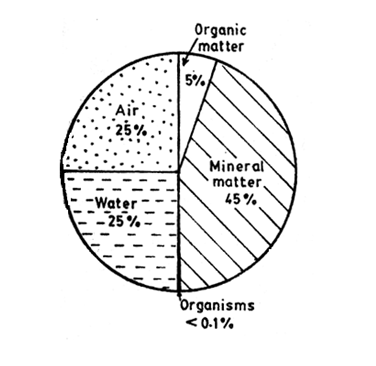
All these five components are completely mixed together forming what we know as soil. Because they are mixed together, chemical and physical reactions normally take place between them. Such reactions create an environment which is suitable for the life of plants as well as other organisms. Each of the five components of the soil is explained in detail below:
Inorganic particles (mineral particles)
Inorganic or mineral particles form about 45% of the total volume of the soil. These inorganic particles are mainly small pieces of rock and different kinds of minerals. The inorganic part of the soil was formed from the parent rock by the action of weathering.
The size of inorganic particles of the soil has a big influence on the properties of the soil. Particles that are small in size have a large surface area on which chemical and physical reactions can take place. For this reason, generally, the smaller the size of the soil particles, the more reactive is the soil.
In addition to this, the size of the individual pore spaces (spaces between soil particles filled with water and air) in any soil depends to some extent on the size of the particles; the smaller the size of the soil particles, the smaller the size of the pore spaces.
Organic matter
The organic matter present in the soil is formed from the remains of plants and animals. It forms about 5% by volume soil and consists of two main components. These are plant and animal remains which have not yet been completely broken down and those which have already been broken down completely.
Organisms and microorganisms present in the soil feed on the remains of plants and animals in the soil. In this way, the soft parts of the remains are broken down. That is they are decomposed. When the rather soft parts of the plant and animal remains are broken down, humus is formed.
Humus consists of very small particles which are usually black or brown in colour. Since these particles are very small in size, they have a very large surface area on which chemical and physical reactions can take place. Humus is actually a complex substance which consists of a mixture of those parts of dead animals and plants which are very difficult to decompose and substances which have been formed through the action of microorganisms.
The quantity of organic matter in the soil is small but, because of the presence of humus, it has got a great influence on the physical and chemical properties of the soil. Humus contains mineral salts. Plants normally get these minerals from the soil. Humus is, therefore, a source of mineral salts which are used by plants.
Humus is also a good binding agent for soil particles. It acts as a glue for soil particles so that they are joined together. When the soil particles are joined to each other, soil structure is formed. Soil structure is very important because it determines the amount of water and air which a soil can hold as well as the movement of water and air in the soil.
Living organisms
The soil contains living organisms of different sizes. While some are large enough to be seen by naked eyes (macroscopic) others are invisible to the naked eyes (microscopic). These organisms give life to the soil. They include members of the animal and plant kingdoms.
In general, organisms make less than 0.1% (<0.1%) of the total volume of the soil. Though they make such a small proportion of the soil, these organisms have a very important influence on the physical and chemical properties of the soil. Without the action of organisms, remains of plants and animals in the soil cannot break down. For example, insects, earthworms, bacteria and fungi feed on the plant and animal remains. When they do this, the remains are broken down and nutrients are released into the soil. This process is called mineralization. The nutrient elements which are released in this way can then be absorbed by plant roots. Humus is also formed by the action of soil microorganisms.
Soil water
Soil water accounts for 25% of the soil volume. Most of the soil water comes from rain. Water dissolves various substances like salts that are derived from animal remains to form soil solution. Plant elements such as calcium, phosphorus, potassium, and nitrogen are absorbed by plants from soil solution. Soil water, therefore, helps plants to absorb mineral nutrients from the soil.
Too much water in the soil leads to leaching and hence loss of nutrients. It also causes the soil to be waterlogged. This causes a reduction in the supply of oxygen in the soil, thus causing a problem to soil microorganisms. It should be noted that most of the soil organisms cannot thrive in such anaerobic environments. Such a condition also hampers root respiration and it can lead to dead of plants.
Soil air
The soil also contains air. Soil air is a mixture of gases such as carbon dioxide, oxygen, etc. Generally, soil air contains more carbon dioxide and more water vapour than atmospheric air. Soil air forms about 25% of the soil by volume. Air in the soil occupies the pore spaces (air spaces between soil particles) which are not occupied by water. This means that a soil which contains a lot of water has very little air and one that contains a lot of air has very little water.
(b) Soil properties
Properties of the soil can be categorized as physical, chemical and biological properties. The properties of each soil determine its characteristics. The physical properties of the soil influence plant growth and soil management. The chemical properties determine soil fertility in relation to mineral content of the soil. Soil biological properties are interconnected with other soil physical and chemical properties; e.g. aeration, soil organic matter or pH.
Physical properties of soil
The major physical properties of the soil include texture, structure, colour, porosity, temperature, consistence, density (particle density and bulk density), pore size, soil depth, and permeability. Each of these physical properties is described in detail below:
Soil texture
Soil texture refers to the composition of a particular soil in terms of the size (diameter) of its particles. The particles that make up soil are categorized into three groups by size: sand, silt, and clay. Sand particles are the largest and clay particles the smallest. Most soils are a combination of the three. The relative percentages of sand, silt, and clay are what give soil its texture. Therefore, soil texture can be defined as the relative proportions of sand, silt, and clay in the soil. These particles are often known as soil separates. The proportions of the separates in classes commonly used in describing soils are given in the textural triangle shown in Figure 3.6
In soil science, soil particles of different diameters are given different names. According to a system used by the International Society of Soil Science, soil particles are classified according to their diameters as shown in Table 3.1.
| Diameter of the particle in mm | Name of particle |
| Less than 0.002 | Clay |
| 0.002 – 0.02 | Silt |
| 0.02 – 0.2 | Fine sand |
| 0.2 – 2.0 | Coarse sand |
| 2.0 – 20 | Fine gravel |
| 20 – 200 | Gravel |
Soil structure
Soil structure is the arrangement of individual soil particles (soil separates) into small clumps, called peds or aggregates. Soil particles (sand, silt, clay and even organic matter) bind together in a repeating pattern to form peds.
Between the peds are cracks called “pores” through which soil air and water are conducted. Soil structure is most commonly described in terms of the shape of the individual peds that occur within a soil. Depending on the composition and on the conditions in which the aggregates formed, the aggregates may be in the form of plates, blocks, prisms, columns, granules, crumbs, etc, hence the terms platy, blocky, prismatic, columnar, granular and crumby structure, respectively.
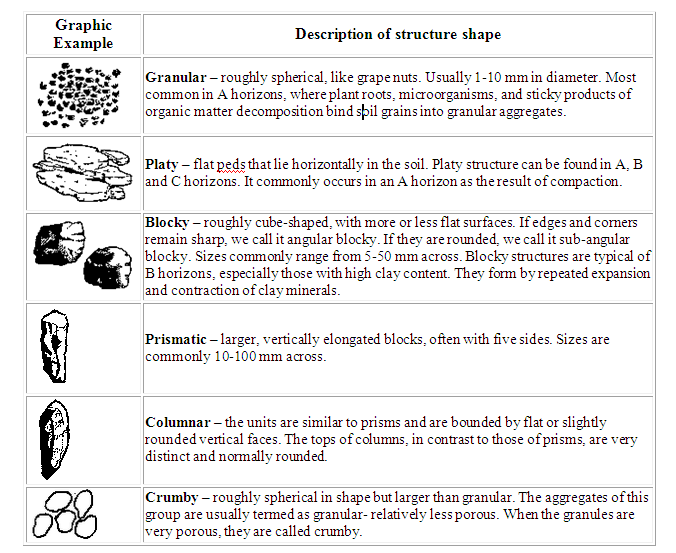
The natural processes that aid in forming aggregates are wetting and drying, freezing and thawing, microbial activity that aids in the decay of organic matter, activity of roots and soil animals, and adsorbed cations.
The wetting/drying and freezing/thawing action and root or animal activity push particles back and forth to form aggregates. Decaying plant residues and microbial byproducts coat soil particles and bind particles into aggregates. Adsorbed cations help form aggregates whenever a cation is bonded to two or more particles.
Soil colour
Soil colours range from black to red to white. Sometimes it can even be blue. Soil colour mostly comes from organic matter, manganese and iron. Red soil indicates the presence of oxidized iron. Oxidized iron is also observed on metal objects that have been exposed to the atmosphere. We call it rust. Yellow soils contain hydrated iron. Grey soils indicate chemical reduction of iron and/or manganese due to wetness and lack of oxygen. Dark brown or black colour in soil indicates that the soil has high organic matter content. The dark soil colour from organic matter at the soil surface aids in the absorption of heat from sunlight to warm the soil.
Wet soil will appear darker than dry soil. However, the presence of water also affects soil colour by affecting the oxidation rate. An even, single colour indicates the soil is well drained. In contrast, rusty spots and grey patches indicate poor drainage.
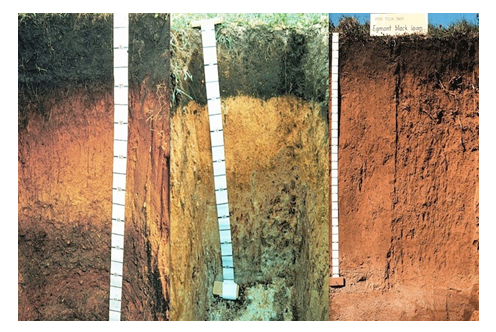
Generally, the factors that influence soil colour include the following:
- Type of the parent material from which soil has developed.
- Chemical composition of the soil.
- The organic matter content of the soil.
- The drainage of the area where soil is found.
Soil temperature
Soil temperature is simply a measure of the warmth in the soil. Ideal soil temperatures for growing most plants are 18 to 24°C. The temperature of a given soil varies according to soil depth, time of the day and season. It also depends on the amount of solar energy received and the ability of the soil to absorb solar radiation (this depends on soil colour). Nighttime and daytime soil temperatures are both important. Ideally, dark-coloured soils absorb more heat than light-coloured soils. Soils under vegetation cover are generally cooler than those exposed directly to the sun. In this respect, soils can be described as being hot, warm, cool or cold, based on the average soil temperature.
Soil temperature is the factor that drives germination, blooming, composting, and a variety of other processes.
Soil density
Density represents weight (mass) per unit volume of a substance.
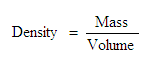
Soil density is expressed in two well accepted concepts as bulk density and particle density.
(i) Bulk density
The oven-dry weight per unit volume of soil is called bulk density. The bulk density of a soil is always smaller than its particle density. The bulk density of sandy soil is about 1.6 g/cm3, whereas that of organic matter is about 0.5 g/cm3.
Bulk density is expressed as a unit of weight per volume, and is commonly measured in units of grams per cubic centimetres (g/cc).
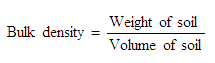
Bulk density is of greater importance than particle density in understanding the physical behaviour of the soil. Generally, soils with low bulk densities have favourable physical conditions.
Factors that influence the bulk density include the following:
- Organic matter content: Organic matter is light and therefore lowers the weight of the soil. If it present in the soil, it lowers the weight of the soil. The addition of even a small percentage of organic soil material to a mineral soil can affect the bulk density of that soil.
- Granulation: A soil that is well granulated (one that has formed into grains or particles) has a lower bulk density than one which is not well granulated.
- Pore space: Since bulk density relates to the combined volume of the solids and pore space, soils with high proportion of pore space to solids have lower bulk densities than those that are more compact and have less pore space. A compact soil has very little pore space. As a result, it has a high bulk density. Any factor that influences soil pore space will affect bulk density.
- Texture: Fine textured surface soils such as silt loams, clays and clay loams generally have lower bulk densities than sandy soils.
- Cultural practices: Continuous cultivation without the addition of organic materials tends to raise the bulk density of the soil while the addition of organic materials lowers the bulk density.
(ii) Particle density
A soil particle has no pore space, and is nothing more than a very small piece of rock. The weight per unit volume of the oven-dry solid portion of soil is called particle density. Usually, particle density is expressed in units of grams per cubic centimetre (g/cm3). An average value for particle density is 2.66 g/cm3. This means that a soil particle that is 1 cubic centimetre in volume weighs 2.66 g. In comparison, water has a density of 1 g/cm3, and organic matter has a density of 0.8 g/cm3.
Particle density of a soil sample is given as:
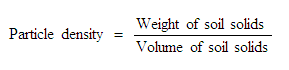
The particle density is higher if large amount of heavy minerals such as magnetite; limonite and hematite are present in the soil. With increase in organic matter of the soil, the particle density decreases. This means that the amount of organic matter present in the soil determines, to some extent, the particle density of the soil. The higher the organic matter contained in the soil, the lower the particle density of that soil. For this reason, surface soils generally have lower particle density than the subsurface soils.
Porosity
The term porosity refers to the percentage of the soil volume that is occupied by water and air. It is inversely related to bulk density. Since water and air occupy the non solid space of the soil, the arrangement of the solid particles (that is the soil structure) in the soil determines the total pore space to a great extent.
Porosity or % pore space is calculated as a percentage of the soil volume:
% solid space + % pore space = 100
% pore space = 100 - % solid space


Loose, porous soils have lower bulk densities and greater porosities than tightly packed soils. Porosity varies depending on particle size and aggregation. It is greater in clayey and loam soils than in sandy soils. A large number of small particles in a volume of soil produce a large number of soil pores. Fewer large particles can occupy the same volume of soil so there are fewer pores and less porosity.
Compaction decreases porosity as bulk density increases. Aggregation also decreases porosity because more large pores are present as compared to single clay and silt particles that are associated with smaller pores.
Pores of all sizes and shapes combine to make up the total porosity of a soil. Porosity, however, does not tell us anything about the size of pores.
Soil Consistence
Soil consistence refers to the ease with which an individual ped can be crushed by the fingers. Soil consistence, and its description, depends on soil moisture content. Terms commonly used to describe consistence are explained below:
Moist soil:
Loose – noncoherent when dry or moist; does not hold together in a mass.
Friable – when moist, crushed easily under gentle pressure between thumb and forefinger and can be pressed together into a lump.
Firm – when moist, crushed under moderate pressure between thumb and forefinger, but resistance is clearly noticeable.
Wet soil:
Plastic – when wet, readily deformed by moderate pressure but can be pressed into a lump; will form a “wire” when rolled between thumb and forefinger.
Sticky – when wet, adheres to other material and tends to stretch somewhat and pull apart rather than pulling free from other material.
Dry soil:
Soft – when dry, breaks into powder or individual grains under very slight pressure.
Hard – when dry, moderately resistant to pressure; can be broken with difficulty between thumb and forefinger.
Pore size
Pore size is probably one of the most important physical features of a soil. It controls water and air movement and storage. Pores come in all sizes, although clays have predominantly small pores, and sands have large pores. Most soils are a mixture of sand, silt and clay particles, so there is a mixture of different soil pores (Figure 3.3).
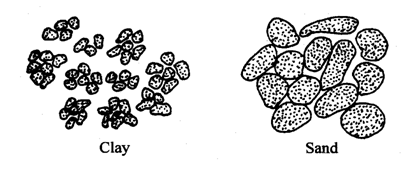
An ideal soil condition is one with an equal number of large and small pores. Large pores allow for soil aeration. Aeration is needed for the exchange of oxygen from the atmosphere and carbon dioxide given off by plant roots and microorganisms. About 10 percent of the pores must be large enough for aeration so that root growth is not restricted.
Within an aggregate, the pores are small. Between aggregates, pores are large. Small pores are usually called micropores, and large pores are called macropores. As organic matter is added, the number of macropores increases. This increase results from the increase in aggregation, decay of root channels and creation of earthworm channels. Macropores are crushed when a soil is compacted. Tillage tends to increase macropores in the short-term, but reduces the number of macropores in the long-term because of the loss of aggregation.
Soil permeability
Soil permeability is the ability of the soil to transmit water and air. As the soil layers or horizons vary in their characteristics, the permeability also differs from one layer to another. Pore size, texture, structure and the presence of impervious layers such as clay pan determines the permeability of a soil. Clayey soils with platy structures have very low permeability.
Organic matter, especially crop residue and decaying roots, promotes aggregation so that larger soil pores develop, allowing water to infiltrate more readily. Permeability also varies with soil texture and structure.
Permeability rate or coefficient of permeability is determined in the field by digging a hole of approximately 30 cm diameter, smearing the sides of the hole with heavy wet clay or lining with plastic sheet and measuring the rate of infiltration of water by filling the hole repeatedly with water and noting the time it takes for the water level to go down by a specific depth.
Water held in a soil is described by the term water content. Saturation is the soil water content when all pores are filled with water. Field capacity is the soil water content after the soil has been saturated and allowed to drain freely for about 24 to 48 hours. Free drainage occurs because of the force of gravity pulling on the water. When water stops draining, we know that the remaining water is held in the soil with a force greater than that of gravity. Permanent wilting point is the soil water content when plants have extracted all the water they can. At the permanent wilting point, a plant will wilt and not recover. Unavailable water is the soil water content that is strongly attached to soil particles and aggregates, and cannot be extracted by plants. This water is held as films coating soil particles. These terms illustrate soil from its wettest condition to its driest condition.
Several terms are used to describe the water held between these different water contents. Gravitational water refers to the amount of water held by the soil between saturation and field capacity. Water holding capacity refers to the amount of water held between field capacity and wilting point. Plant available water is that portion of the water holding capacity that can be absorbed by a plant. As a general rule, plant available water is considered to be 50 percent of the water holding capacity.
The volumetric water content is the total amount of water held in a given soil volume at a given time. It includes all water that may be present including gravitational, available and unavailable water.
The relationship between these different physical states of water in soil can be easily illustrated using a sponge. A sponge is just like the soil because it has solid and pore space. Obtain a sponge about 6 x 3 x 0.5 inch in size. Place it under water in a bucket, and allow it to soak up as much water as possible. At this point, the sponge is at saturation. Now, carefully support the sponge with both hands and lift it out of the water. When the sponge stops draining, it is at field capacity, and the water that has freely drained out is gravitational water. Now, squeeze the sponge until no more water comes out. The sponge is now at permanent wilting point, and the water that was squeezed out of the sponge is the water holding capacity. About half of this water can be considered as plant available water. You may notice that you can still feel water in the sponge. This is the unavailable water.
Soil depth
Soil depth shows how thick the soil cover is. The exact soil depth is difficult to assess and is very variable. Soil depth is estimated by means of topography, bedrock outcrops, and observations made when digging pits for soil classification and soil sampling.
Depth of soil profile differs significantly for different soil types. It is one of basic criterions used in soil classification. Soils can be very shallow (less than 25 cm), shallow (25-50 cm), moderately deep (50-90 cm), deep (90-150 cm) and very deep (more than 150 cm).
Soil depth has a great influence on soil fertility and productivity. Deep soils are normally fertile and they hold more water than shallow soils. Deep soils support a wide variety of plants including the deep-rooted and shallow-rooted plants while shallow soils can only support shallow-rooted plants and they are poorly drained.
Chemical properties of soil
The chemical properties of soil include such properties as Cation Exchange Capacity (CEC), soil reaction (pH), salinity, C:N ratio (Carbon-to-Nitrogen ratio), and soil fertility.
Cation Exchange Capacity
A cation is a positively charged ion. Most plant nutrients exist as positively charged ions, or “cations”, in the soil environment. Among the more common cations found in soils include hydrogen (H+), aluminium (Al3+), calcium (Ca2+), magnesium (Mg2+), zinc (Zn2+), copper (Cu2+), manganese (Mn2+), and potassium (K+). Most heavy metals also exist as cations in the soil environment. These cations are in the soil solution and are in dynamic equilibrium with the cations adsorbed on the surface of clay and organic matter. CEC is a measure of the quantity of cations that can be adsorbed and held by a soil.
Clay and organic matter particles are predominantly negatively charged (anions), and have the ability to hold cations from being “leached” or washed away. The adsorbed cations are subject to replacement by other cations in a rapid, reversible process called cation exchange.

Cations leaving the exchange sites enter the soil solution, where they can be taken up by plants, react with other soil constituents, or be carried away with drainage water.
CEC is dependent upon the amount of organic matter and clay in soils and on the types of clay. The greater the clay and organic matter content, the greater the CEC should be, although different types of clay minerals and organic matter can vary in CEC.
Cation exchange is an important mechanism in soils for retaining and supplying plant nutrients, and for adsorbing contaminants. It plays an important role in wastewater treatment in soils. Sandy soils with a low CEC are generally unsuitable for septic systems since they have little adsorptive ability.
Soil reaction (pH)
By definition, soil pH or soil reaction is a measure of the hydrogen ion (H+) concentration in a soil solution. It is an indication of the acidity or alkalinity of a soil.
The pH scale ranges from 0 to 14, with values below 7.0 described as acidic, and values above 7.0 described as alkaline. A pH value of 7 is considered neutral, where H+ and OH- are equal, both at a concentration of 10-7 moles/litre.
The most important effect of pH in the soil is on ion solubility, which in turn affects microbial and plant growth. A pH range of 6.0 to 6.8 is ideal for most crops because at this pH there is optimum solubility of the most important plant nutrients (Figure 3.4). Some microelements (e.g., iron) and most heavy metals are more soluble at lower pH. This makes pH management important in controlling movement of heavy metals (and potential groundwater contamination) in soil.
In acid soils, H+ and Al3+ are the dominant exchangeable cations. The latter is soluble under acid conditions, and its reactivity with water (hydrolysis) produces hydrogen ions. Calcium and magnesium are basic cations; as their amounts increase, the relative amount of acidic cations will decrease.
Factors that affect soil pH include parent material, vegetation, and climate. Some rocks and sediments produce soils that are more acidic than others. For example, quartz-rich sandstone is acidic while limestone is alkaline. Some types of vegetation, particularly conifers, produce organic acids, which can contribute to lower soil pH values. In humid areas, soils tend to become more acidic over time because rainfall washes away basic cations and replaces them with hydrogen ions. Addition of certain fertilizers to soil can also produce hydrogen ions. Liming the soil adds calcium, which replaces exchangeable and solution H+ and raises soil pH.
Lime requirement, or the amount of liming material needed to raise the soil pH to a certain level, increases with CEC. To decrease the soil pH, sulphur can be added, which produces sulphuric acid.
Soil pH affects plant growth in the following ways:
- It affects availability of plant nutrients (in general, optimal pH is between 5.5 and 7.5).
- Low pH soils (<6.0) results in an increase in aluminium ions (Al3+) in the soil. Aluminium is toxic to plants.
- It affects availability of toxic metals (in general, more available in acidic soils).
- It affects the activity of soil microorganisms, thus affecting nutrient cycling and disease risk.
The availability of plant nutrients at different pH levels is as indicated in the following figure.

Salinity
Soil salinity is the salt content in the soil. The process of increasing the salt content is known as salinization. Salts occur naturally within soils and water. Salination can be caused by natural processes such as mineral weathering or by the gradual withdrawal of an ocean. It can also come about through artificial processes such as irrigation.
Saline soils are high in pH and exchangeable Na+. pH is generally higher than 8.5 and exchangeable sodium occupies more than 15% of CEC. The high Na content may affect the growth of phytoplankton, zooplankton and fish. These soils generally occur in arid and semi arid regions. They are reclaimed by treating the soil with gypsum (CaSO4) or sulphur.
Salinity occurs in the soil as a result of various processes. Described below are the major causes of soil salinity:
Natural occurrence
Salts are a natural component in soils and water. The ions responsible for salination are Na+, K+, Ca2+, Mg2+ and Cl−. As the Na+ ions predominate, soils can become sodic. Sodic soils present particular challenges because they tend to have very poor structure which limits or prevents water infiltration and drainage.
Over long periods of time, as soil minerals weather and release salts, these salts are flushed or leached out of the soil by drainage water in areas with sufficient precipitation. In dry regions with poor precipitation, salts may accumulate, leading to naturally saline soils.
Dryland salinity
Salinity in dry lands can occur when the water table is between two and three metres from the surface of the soil. The salts from the groundwater are raised by capillary action to the surface of the soil. This occurs when groundwater is saline (which is true in many areas), and is favoured by land use practices, allowing more rainwater to enter the aquifer than it could accommodate. For example, the clearing of trees for agriculture is a major reason for dry land salinity in some areas, since deep rooting of trees has been replaced by shallow rooting of annual crops.
Salinity due to irrigation
Rain or irrigation, in the absence of leaching, can bring salts to the surface by capillary action. Salinity from irrigation can occur over time since almost all water (even natural rainfall) contains some dissolved salts. When the plants use the water, the salts are left behind in the soil and eventually begin to accumulate. Since soil salinity makes it more difficult for plants to absorb water from the soil, these salts must be leached out of the plant root zone by applying additional water. Salination from irrigation water is also greatly increased by poor drainage and use of saline water for irrigating agricultural crops.
The consequences of salinity include the following:
- Detrimental effects on plant growth and yield.
- Damage to infrastructure (roads, bricks, corrosion of pipes and cables).
- Reduction of water quality for users due to sedimentation problems.
Salinity is an important land degradation problem. Soil salinity can be reduced by leaching soluble salts out of soil with excess irrigation water.
Soil fertility
Soil fertility is the ability of the soil to supply nutrients required by plants in adequate quantities and correct proportions. Plants require at least 16 elements to complete their life cycle. They are: C, H, O, N, P, K, Ca, Mg, S, Fe, Mn, Cu, Zn, Mo, B, and Cl. Some of the lower plants in addition to the above elements require Co, V, and Si. Among these C, H, O, N, P, K, Ca, Mg and S are required in large quantities and therefore called macronutrients and the rest called micronutrients. The elements C, H, O are obtained mainly from air and water and the rest from the soil.
In a fertile soil, production is high at the start but diminish rapidly later due to exhaustion of the soil reserve of nutrients. In order to maintain high production, fertilizers need to be applied frequently to the soil.
The amounts and kinds of fertilizers that need to be applied to the soil depend on the natural fertility of the soil.
Soil organic matter
Soil organic matter is the organic matter component of soil, consisting of plant and animal residues at various stages of decomposition, cells and tissues of soil organisms, and substances synthesized by soil organisms. Organic matter exerts numerous positive effects on soil physical, chemical, and biological properties:
- Physical - stabilizes soil structure, improves water holding characteristics, and lowers bulk density; dark colour may alter thermal properties.
- Chemical - higher CEC, acts as a pH buffer, ties up metals, and interacts with xenobiotics (foreign substances).
- Biological - supplies energy and body-building constituents for soil organisms, increases microbial populations and their activities, source and sink for nutrients, ecosystem flexibility, affects soil enzymes.
Nutrients in the soil organic matter are released through microbial transformations to become available to plants. Release is highest under warm, moist conditions and slowest in cool dry climates. Microorganisms are the driving force for nutrient release to plants.
Carbon-to-Nitrogen ( C:N) ratio
The term carbon-nitrogen ratio or C:N ratio refers to the ratio of the weight of organic carbon to the weight of nitrogen which are present in the soil or in an organic substance. Organic substances which contain a lot of protein (and therefore nitrogen) are said to have a narrow C:N ratio. Those which have low amount of nitrogen are said to have a wide C:N ratio.
Plant tissues with a narrow C:N ratio decompose more rapidly than those with a wide C:N ratio. In other words, plant tissues which are rich in nitrogen e.g. legume plants decompose more rapidly than those with a low nitrogen content. Legume crops have the ability to raise the nitrogen content of the soil through the action of nitrogen-fixing bacteria living in their root nodules.
Biological properties of soil
A large number of organisms live in the soil. Soils harbour bacteria, actinomycetes, fungi, algae, protozoa, nematodes, worms, insects and rodents. These organisms perform a variety of functions for their growth and reproduction. For these functions of soil organisms, soils behave like a living entity. Soil components photosynthesize, respire, and reproduce. In addition, they produce organic matter, consume organic matter, and decompose them. Some of them burrow in the soil, make spaces for their accommodation and movement, and mix surface and subsoil materials together. Soil becomes a dynamic body for the activity of soil organisms.
The changes that are caused by soil organisms have their impact on soil fertility and productivity. Although soil biota, which includes living roots and soil organisms, occupies a very small fraction of the total soil volume (< 0.5%), it has tremendous influences on soil properties and soil processes. 60-80% of the total soil metabolism is due to the microflora (microscopic plants; bacteria are often considered to be microflora). However, soil organisms are usually the most active in the surface soil zone of 0–15 cm, because this zone has accumulation of organic residues and available nutrients. They work best when there is good aeration, a neutral soil reaction, soil moisture content at about half of the water holding capacity, and temperature between 25°C and 38°C.
Soil depth, organic matter and nutrients, microclimate, and physical and chemical soil environment influence the population and function of soil biota.
Soil Profile and Characteristics
Soil Profile
Define soil profile
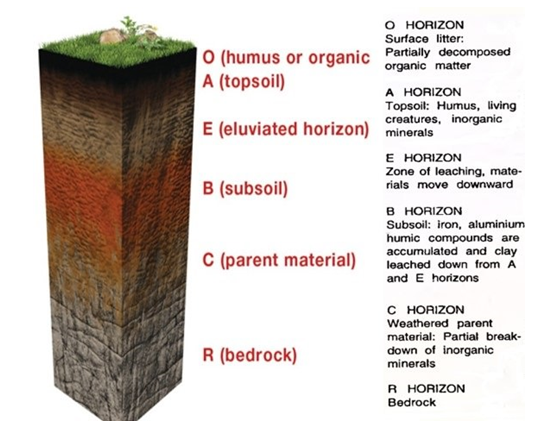
A soil profile is the vertical arrangement of the different layers of the soil from the surface to the bedrock. Each layer is called stratum or horizon. A soil which shows such layers is said to be stratified. A soil profile is usually studied to a depth of 3 to 5 feet.
Soil Profile and its Characteristics
Illustrate soil profile and its characteristics
Soil horizons differ in a number of easily seen soil properties such as colour, texture, structure, and thickness. Other properties are less visible. Properties, such as chemical and mineral content, consistence, and reaction require special laboratory tests. All these properties are used to define types of soil horizons. The differences are developed from the interaction of such soil-forming factors as parent material, slope, native vegetation, weathering and climate.
There are three primary soil horizons, called master horizons. They are A, B, and C. These are part of a system for naming soil horizons in which each layer is identified by a code: O, A, E, B, C, and R. The O horizon is an organic layer made up of partially decayed plant and animal debris. It generally occurs in undisturbed soil, such as in a forest. The A horizon is often referred to as the topsoil and is the surface layer where organic matter accumulates. Over time, this layer loses clay, iron, and other materials because of leaching. The movement of organic matter, chemical substances, and mineral particles from the upper horizons of soil to the lower horizons by the downward movement of water is called eluviation.
The A horizon provides the best environment for the growth of plant roots, microorganisms, and other life. The E horizon is the zone of greatest eluviation. Because the clay, chemicals, and organic matter are leached, the colour of the E horizon is very light. This horizon usually occurs in sandy forest soils with high amounts of rainfall. The B horizon is often referred to as the subsoil. It is often called the “zone of accumulation” because chemicals leached from the A and E horizons accumulate here. The accumulation of organic matter, chemical substances, and mineral particles in the lower horizons of soil from the upper horizons as a result of the downward movement of water is called illuviation.
The B horizon has less organic matter and more clay than the A horizon. Together, the A, E, and B horizons are known as the solum. This is where most of the plant roots grow. The C horizon is called the substratum. It lacks the properties of the A and B horizons because it is influenced less by the soil-forming processes. It is usually the parent material of the soil. The R horizon is the underlying bedrock, such as limestone, sandstone, or granite. It is found beneath the C horizon.
Simple Soil Classification
Classification of Soil According to Textural Groups
Classify soil according to textural groups
In order to have a systematic study of soils and to transfer knowledge from one area to the other, the soils are classified according to their morphological, chemical and physical properties. Soil classification is the separation of soil into classes or groups, each having similar characteristics and potentially similar behaviour. Soils can be classified according to age, texture, colour, and climate. The common classification is that based on texture.
As discussed early, there are three categories for soil particles, that is, sand, silt and clay. The three particles are called soil separates. The proportion of these three soil separates in a soil defines its soil texture. There are 12 classes of soil texture as shown in the soil textural triangle (Figure 3.6). The three sides of the textural triangle represent increasing or decreasing percentages of sand, silt and clay particles. For example, a soil containing 15% clay, 20% silt and 65% sand is sandy loam and a soil containing equal amounts of sand, silt and clay is clay loam.
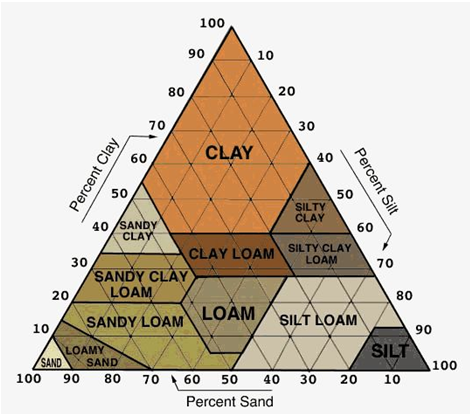
The textural triangle is easy to use once it is understood. Assume that you have a soil that is 60 percent clay, 20 percent silt and 20 percent sand. The percent of clay is identified on the left side of the triangle. From the lower left corner to the top of the triangle, the percent clay increases from 0 to 100 percent. Move along the left side of the triangle until you reach 60 percent clay. Then draw a line at 60 percent clay that is parallel to the bottom of the triangle. The percent silt is identified along the right side of the triangle. From the top of the triangle to the lower right, the percent silt increases from 0 percent to 100 percent. Move along the right side of the triangle until you reach 20 percent silt. Now draw a line at 20 percent silt that is parallel to the left side of the triangle. The bottom of the triangle identifies the percent sand. From the lower right corner to the lower left corner, the percent sand increases from 0 percent to 100 percent. Move along the bottom of the triangle until you reach 20 percent sand. Draw a line at 20 percent sand that is parallel to the right side of the triangle. The area within which these three lines intersect will define the soil’s texture.
Soil Erosion
Soil Erosion
Define soil erosion
Soil erosion is the removal of the topsoil by various agents of erosion at a rate that is faster than the rate at which it is being replaced by the soil-forming processes. The removed soil is ultimately transported from the place of origin and deposited elsewhere.
How Agents of Soil Erosion Work
Examine how agents of soil erosion work
Agents of erosion refer to the factors that lead to soil erosion. There are four main agents of erosion namely, humans, animals, running water, and wind. These agents wear away or break up rocks, sediments, and soil from the land's surface.
The following is a detailed discussion on agents of soil erosion and how each agent works:
Humans
Humans cause erosion through their various activities. Human activities that can accelerate soil erosion include deforestation, overgrazing (or overstocking), overcropping, mining, and poor farming practices.
Deforestation is the cutting down of large areas of forests leaving an open, exposed landscape. Deforestation occurs for many reasons such as agriculture, settlement, and construction of roads and railways, among other reasons.
Overgrazing occurs when farmers stock too many animals such as sheep, cattle or goats on the land. The animals damage the soil surface by eating up the vegetation and either digging into wet soil or compacting the soil with their hooves. This can prevent grass growing and slow down the percolation of water through the soil. The ultimate result is the destruction of soil fertility.
Overcropping is when the land is being continuously under cultivation and is not allowed to lie fallow between crops. This constant farming of the land reduces the soils ability to produce valuable humus for soil fertility as it is constantly being ploughed for crop growth. The soil becomes drier and less fertile, a fact which destroys soil structure and makes the soil loose.
All activities described above expose the soil to other agents of erosion such as wind, water and animals.
A variety of poor farming practices can also lead to soil erosion. They include the following:
- Growing crops on a semi-arid land. When crops are harvested the soil, whose structure has been destroyed through tillage, is exposed to wind erosion.
- Ploughing and cultivating along contours or slopes accelerates removal of top soil by rainfall and running water. Water running down the slope forms furrows which are further eroded to form gullies.
- Monoculture: This refers to the practice of growing one type of crop (e.g. cereals alone) on a single piece of land for successive seasons. The act makes the soil very much exhausted. The soil structure, organic matter and fertility are all curtailed. Consequently, soil erosion sets on.
- Overstocking/overgrazing: When many animals are kept on a limited piece of land, they directly erode the soil by their hooves. The animals also make the soil bare following excessive removal of vegetation through grazing. The soil is thus eroded directly by animals and, at the same time, exposed to other agents of erosion. This practice, therefore, leads to easy removal of the top soil.
- Deforestation: Indiscriminate felling of trees deprives the soil of its natural cover. The soil is, thus, exposed to agents of erosion namely, rain, running water, animals and wind.
- Bush fires or uncontrolled burning: This is similar to deforestation, on account that it also removes the soil cover exposing it to agents of erosion. But, on the other hand, it goes as far as destroying the soil structure, making the soil loose and vulnerable to easy removal.
- Growing certain crops on a wrong soil also leads to deterioration of soil structure and ultimately to soil erosion.
- Overtillage or overcultivation: This makes the soil so loose that it can be removed easily and carried away by erosion agents.
Animals
Animals accelerate soil erosion in different ways. Keeping more animals in an area (overstocking) or overgrazing the pasture too much (overgrazing) are two major ways in which animals cause soil erosion. When the vegetation is removed through grazing, the land is exposed to other agents of erosion such wind and water. Also the animals tear the soil with their hooves as they move on land, thus making the soil loose and hence easily removed by other agents of denudation.
Wind
In arid and semi-arid areas, wind is a powerful agent of soil erosion. During the dry spell soils become dry and light. Because of the little rainfall received in dry areas, coupled with the absence or presence scarce vegetation, the soil is dry, light, loose and exposed.
Whenever a powerful wind blows soil particles, they are carried to considerable distances. Soils in deserts are often carried away and the sand particles deposited in adjacent agricultural soil. The rate of wind erosion depends on the strength and direction of the wind and weight or size of soil particles.
Water
Water is one of the major agents of soil erosion. In the form of rainfall and surface run-off, water is the most wide-spread agent of soil erosion. Erosion by water occurs in four main ways, namely splash erosion, sheet erosion, rill erosion, and gully erosion.
Splash erosion
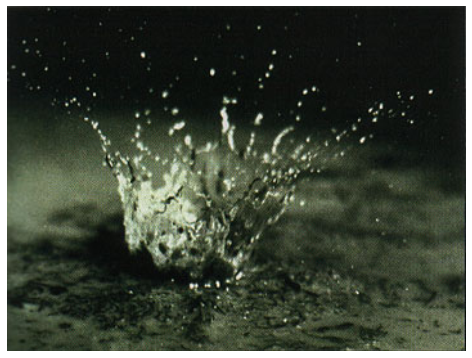
Splash erosion is the first stage of the erosion process. It occurs when raindrops hit bare soil. The explosive impact breaks up soil aggregates so that individual soil particles are ‘splashed’ onto the soil surface. The splashed particles can rise as high 60 cm above the ground and move up to 1.5 metres from the point of impact. The particles block the spaces between soil aggregates, so that the soil forms a crust that reduces infiltration and increases runoff.
Sheet erosion
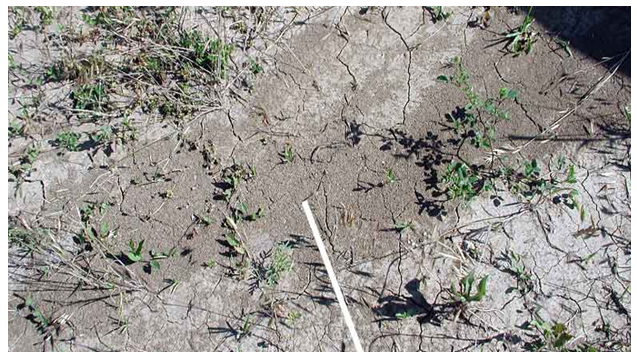
Sheet erosion is the uniform removal of soil in thin layers by raindrop impact and shallow surface flow. It results in loss of the finest soil particles that contain most of the available nutrients and organic matter in the soil. Soil loss is so gradual that the erosion usually goes unnoticed, but the cumulative impact accounts for large soil losses.
Soils most vulnerable to sheet erosion are overgrazed and cultivated soils where there is little vegetation to protect and hold the soil. Early signs of sheet erosion include bare areas, muddy water as soon as rain falls, visible grass roots, exposed tree roots, and exposed subsoil or stony soils. Soil deposits on the high side of obstructions such as fences may indicate active sheet erosion.
Vegetation cover is vital to prevent sheet erosion because it protects the soil, impedes water flow and encourages water to infiltrate into the soil. The surface water flows that cause sheet erosion rarely flow for more than a few metres before concentrating into rills.
Rill erosion
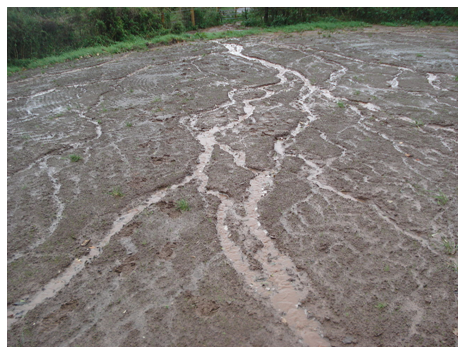
Rill erosion is a type of erosion that results in small, yet well defined streams. It happens when water from rainfall does not soak into the soil, but runs across it instead. The rills or small channels are caused when water running across the surface of the ground gathers in a natural depression in the soil, and erosion is concentrated as the water flows through the depression.
Rill erosion is common in bare agricultural land, particularly overgrazed land, and in freshly cultivated soil where the soil structure has been loosened. Rill erosion is often described as the intermediate stage between sheet erosion and gully erosion. These rills can be up to 30 cm deep. If they become any deeper than 30 cm they are referred to as gullies.
Gully erosion
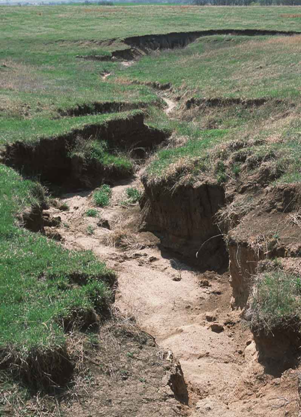
Gully erosion is defined as the removal of the top soil along drainage channels by surface water runoff. It is the type of soil erosion that consists of an open, incised and unstable channel generally more than 30 cm deep. Most gullies extend upslope as a result of the head of the gully being continually undercut and collapsing. However, collapse and slumping of sidewalls usually contribute a greater proportion of soil loss.
This is the most destructive type of erosion as it involves the removal of large amounts of soil, both from the top soil and the sub-surface layers. When too many gullies form on land, they produce badlands.
Types and Effects of Erosion to Social and Economic Activities
Describe types and effects of erosion to social and economic activities
Types of soil erosion
There are two main types of soil erosion, namely normal erosion and accelerated erosion.
1. Normal erosion
Normal erosion,also called geologic erosion, occurs when the top soilis gradually removed under normal conditions of physical, biotic and hydrological processes.It is very slow process in which complete equilibrium is maintained between soil removing and soil forming processes. The normal erosion tends to produce wavy or undulating land surface with alternating ridges and depressions. This is accomplished chiefly by means of slow migration of soil particles from soil surface in successive rains. In arid region, wind during the long dry season is an important factor for normal erosion.
2. Accelerated erosion
This is a type of soil erosion which occurs when the removal of top soilis much faster than soil formation.In other words, this type of erosionoccurs on a soil wheresoil erosion agents work at a faster rate than soil-forming factors.
Effects of soil erosion
The consequences of soil erosion are primarily centred on reduced agricultural productivity as well as soil quality. Waterways may also be blocked, and it may affect water quality. This means most of the environmental problems the world face today arises from soil erosion. Some effects of soil erosion are described below:
Loss of arable land
Lands used for crop production have been substantially affected by soil erosion. Soil erosion takes away the top soil which is the fertile layer of the land and also the component that supports the soil’s essential microorganisms and contains organic matter. In this view, soil erosion has severely threatened the productivity of fertile cropping areas as they are continually degraded.
Because of soil erosion, most of the soil characteristics that support agriculture have been lost, causing low crop production and mass starvation. It is likely that most of the cultivated areas around the world are exposed to soil erosion.
Water pollution
Soils eroded from agricultural lands carry pesticides, heavy metals, and fertilizers which are washed into streams and major waterways. This leads to water pollution and damage to marine and freshwater habitats. Accumulated sediments can also cause clogging of waterways and raise the water level, leading to flooding.
The water quality of various streams, rivers, and coastal areas has also been deteriorated as a result of soil erosion, eventually affecting the health of the local communities.
Sedimentation
Apart from polluting the water systems, high soil sedimentation can be catastrophic to the survival of aquatic life forms. Silt can block the breeding grounds of fish and equally lessens their food supply since siltation reduces the biodiversity of algal life and beneficial aquatic plants. Sediments may also enter the fish gills, affecting their respiratory functions.
Air pollution
Wind erosion picks up dust particles of the soil and throws them into the air, causing air pollution. Some of the dust particles may contain harmful and toxic particles such as petroleum and pesticides that can pose a severe health hazard when inhaled or ingested.
Dust clouds from the deserts or dry areas can cause large and widespread air pollution as the winds move. Such a case is evident in regions like Dodoma, Singida and Tabora where dust winds can create a serious problem.
Destruction of infrastructure
Soil erosion can affect infrastructures such as dams, bridges, railways, electric and telephone posts, drainages, and embankments. The accumulation of soil sediments in dams/drainages and along embankments can reduce their operational lifetime and efficiency. Also, the silt up can support plant life that can, in turn, cause cracks and weaken the structures. Soil erosion from surface water runoff often causes serious damages to roads and tracks, especially if stabilizing techniques are not used.
Often roadways and railways lines in various parts of Tanzania are destroyed due to water erosion, thus hindering transport and communication sector. When this occurs, the government spends a lot of money to rehabilitate or re-establish the damaged infrastructure.
Desertification
Soil erosion is a major driver of desertification. It gradually transforms a habitable land and the arid and semi-arid lands into deserts. The transformations are worsened by the destructive use of the land and deforestation that leaves the soil naked and open to erosion. This usually leads to loss of biodiversity, alteration of ecosystems, land degradation, and huge economic losses.
Weathering
Soil erosion can lead to and accelerate rock weathering by exposing the underlying rock to the weathering agents and temperature. Rocks under the soil are shielded from the agents of weathering. But when the top soil is removed, they are exposed to weathering agents such as temperature and chemicals. This accelerates the weathering and disintegration of rocks.
Loss of life and property
Erosion due to heavy rains on slopes can cause landslide or mudslide, which has been reported to cause great loss of life and property in various parts of the world. The mass of soil from landslide or mud flowing downhill can cover settlements or cause floods, hence killing people and destroying diverse properties and infrastructures.
Flooding
Deforestation removes vegetation from the land surface thus depriving the soil of its cover. Trees help hold soil in place and reduce the impact of erosion, and transportation of eroded soil. When trees are cleared, winds and rains push the exposed soil and rocks to streams and rivers, resulting in unwanted sedimentation. The heavy layers of sediment keep streams and rivers from flowing smoothly, eventually leading to flooding. Excess water, especially during rainy seasons and when the snow melts, gets trapped by the sediment and has nowhere to go except back on land. This is known as flooding, which has many detrimental effects to man and the environment.
Population Growth and Rate of Soil Erosion on the Quality of Life
Relate population growth and rate of soil erosion on the quality of life
There is a strong correlation between population growth and soil erosion, hence the quality of life. Due to ever-increasing human population, people are searching for more space for agriculture, settlement and building cities. As a result, the land is constantly being cleared to get enough room for undertaking these human activities.
Upon eroding an agricultural land, its fertility is lost. This causes low crop production and hence famine in the area. This means, and because of famine, the population will be affected by malnutrition and other opportunistic diseases. As a result, child mortality goes up and population growth is hampered.
When the land is badly eroded, it is not only unsuitable for agriculture but also for settlement or establishment of other development projects. Following loss of agricultural land due to erosion, the farmers and other people depending on agriculture for their livelihood may move to other areas. This causes depopulation in the original area and population pressure in the area of destination.
Soil erosion eats away the top soil which is transported and deposited elsewhere. As erosion takes lace, water table may be exposed, making it easy to be contaminated by chemicals from agriculture, industries and homes. On the other hand, deforestation in water catchments areas causes pollution of water by sediments and agrochemicals. Eventually, the water sources will dry up. Consequently, women and girls will be obliged to spend much time looking for water and having to walk long distances to fetch it. This means girl children will not attend schools as required and the general health of women and girls will become poor. In this way, the quality of life is affected.
Sometimes erosion and deposition of the top soil provides an alluvial soil suitable for agriculture. The alluvium deposited on agricultural lands and plains along rivers following flooding is a very rich soil for crop production. Areas of deposition attract a large population that engages in agriculture. Improved crop production from these fertile lands means sufficient food and cash crops and hence improvement in the standard of life.
The ways of Controlling Soil Erosion through the Application of Various Conservation Techniques
Demonstrate ways of controlling soil erosion through the application of various conservation techniques
Soil erosion has been a major problem in the past and will become an even greater problem in the future as population growth continues to expand and land resources are more intensively used, often to a point of destruction. It is thus a great social-economic problem. This being the case, soil erosion problem should be solved by using any possible method and technique. Methods of controlling soil erosion include the following:
Afforestation and reforestation
Afforestation is the planting of new trees in areas where trees never existed before. Arid and semi arid regions should be planted with trees to control soil erosion. Countries like Israel have managed to make the desert land productive by planting trees.
Reforestation refers to planting of trees in an area previously occupied by a forest but which has been cleared off. This will help to replace the trees that have been cut so as to conserve the soil and the environment in general.
Controlling bush fires
Like clearing of forests for different reasons, bush fires clear the vegetation off the soil, making it bare. A bare soil is easy to erode by erosion agents such as animals, wind and running water.
Apart from removing the soil cover, bush fires also destroy soil organic matter and kill soil microorganisms. This act removes the binding agents of the soil particles hence making it loose and easily eroded.
Controlling bush fires ensures that the soil cover is not removed, hence preventing exposure of the soil to erosion agents. For this reason, farmers are encouraged to refrain from using fires to clear their farms in order to avoid making the soil vulnerable to erosion.
Should need arise to use fire for clearing land, measures should be taken to ensure the fire does not spread to other areas not intended for cultivation.
Controlled grazing
Overgrazing, mainly as result of overstocking, should be avoided by any means. When too many animals are kept in a relatively small area, they will eat up all the vegetation and make it bare. Also, as the animals move, they break up the soil with their hooves, making it loose. To avoid this, the number of animals kept in an area should match the carrying capacity of the land. The land may be paddocked and grazing be done rotationally.
Zero or reduced tillage (minimum cultivation)
Each time the soil is dug or ploughed, it is loosened. In some soils it may be possible to sow crops without ploughing or digging, ideally among the crop residue from the previous crop. This is most likely to be possible in a loose soil with plenty of organic matter.
Constructing gabions
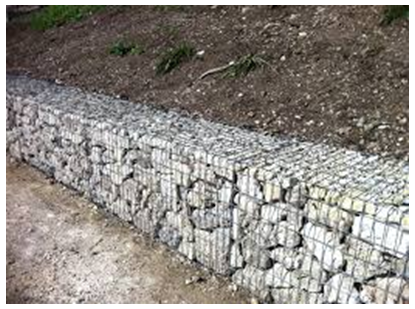
Gabions are rectangular wire mesh baskets filled with rock that can be placed on slopes and channels for erosion protection or stacked to create retaining walls. They control soil erosion by slowing the flow of water and dropping sediment and organic material behind the rock wall as water slowly leaks through it. They have been used for decades to solve the problem of soil erosion in steep lands. Gabions are especially useful in streams and channels where high amounts of water flow are expected.
Adhering to appropriate cultural practices
Bad farming is one of the many causes of soil erosion. Soil erosion can be controlled by adhering to proper farming methods which include the following:
(i) Contour ploughing
This refers to ploughing across the slope rather than up and down the slope. Farming in slopes should not only follow contours but it must include formation of mounds or terraces across the slope which helps to trap the running water and prevent formation of rills and finally gullies along the slope.
(ii) Terracing
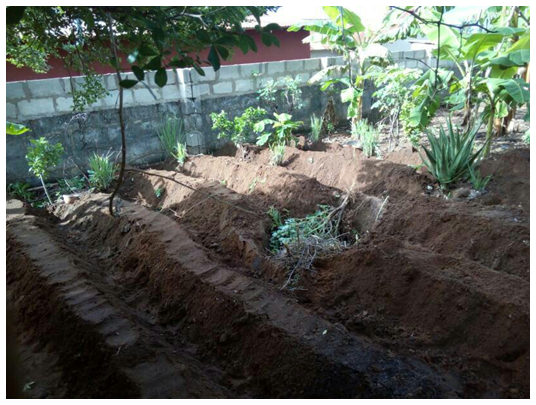
Terracing means making mounds (across the slope) which act as “dykes” to check running water. Terraces help reduce the slope and hence the speed at which water runs down the slope. Well-built terraces are one of the most effective methods of controlling soil erosion, especially on steep slopes. However, terraces require skill and very hard work to build.
(iii) Strip cropping
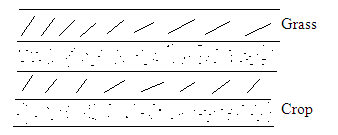
Strip cropping is a crop cultivation technique in which different crops are sown in alternate strips to prevent soil erosion. In strip cropping, when one strip is under crop the adjacent strip is under grass, and vice versa. To make effective use of soil nutrients, the grass and crops are often planted rotationally. Grass is later harvested and used for feeding livestock. For this reason, it is advisable to grow fodder crops or legumes in place of grass.
(iv) Crop rotation
Crop rotation means planting different kinds of crops alternatively on a piece of land (normally alternating legumes with cereal crops) in successive growing seasons. Crop rotation helps to increase erosion due to increased soil organic matter. The act of rotating crops helps to improve soil stability by alternating between crops with deep roots and those with shallow roots. Improvement in soil tilth (tillage) and microbial communities will help bring down soil erosion due to more stable soil structure. Also, soil erosion tends to enhance water infiltration and hence minimize surface runoff.
(v) Planting cover crops
A cover crop is a crop planted primarily to manage soil erosion, soil fertility, soil quality, water, weeds, pests, diseases, etc. Crops such as sweet potatoes and legumes provide a good cover for the soil. These are often intercropped with other crops which do not cover the soil properly. A cover crop slows the velocity of runoff from rainfall. It also protects the soil from the impact of rain drops. By so doing, it reduces soil loss due to splash, sheet and rill erosion. Apart from covering the soil, their roots bind the soil particles firmly.
Over time, a cover crop will increase soil organic matter, leading to improvements in soil structure and stability, and increased moisture and nutrient holding capacity for plant growth.
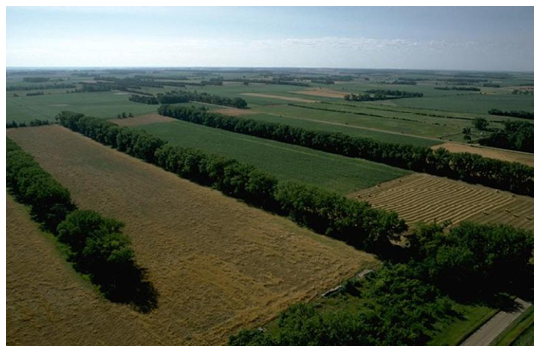
(vi) Planting shelterbelts
A shelterbelt is a line of trees or shrubs planted to protect a farm field from strong winds and the erosion caused by the winds. Large fields can be divided into small plots and trees planted around each plot. Trees help to slow down the velocity of wind and hence reduce wind erosion. They reduce soil erosion caused by running water as they help trap the soil carried by running water.
(vii) Mulching
Mulching is the practice of covering a bare soil between growing plants with a layer of organic matter such as straw, grasses, leaves and rice husks or anything readily available. The mulch acts as a cover which protects the soil against the impacts of direct raindrops as well as running water. This protects the soil from erosion. Mulching also keeps the soil moist, kills weeds, keeps cools the soil and adds organic matter.
TOPIC SUMMARY
- Soil is formed through the process of weathering, which breaks up rocks into small fragments.
- The factors affecting soil formation are climate, organisms, relief, parent material, and time.
- The importance of soil includes the following;
- Medium for plant growth
- Animal life support
- Habitat for organisms
- Source of building materials
- Source of minerals
- Supports agriculture and settlement
- Provides materials for pottery and ceramics
- Filtration system for surface water
- Carbon store and maintenance of atmospheric gases
- Soil is a complex body composed of five major components namely mineral matter (inorganic particles), organic matter, water (moisture), air or gases, and living organisms
- The physical properties of soil are soil texture, soil structure, soil colour, soil temperature, soil density, porosity, soil consistency, pore size, soil permeability, and soil depth
- The types of soil structure are granular, platy, blocky, prismatic, columnar, and crumby structures
- The factors that influence soil colour include the type of the parent material, chemical composition of the soil, the organic matter content of the soil, and the drainage of the area where the soil is found
- Soil density is expressed in bulk density and particle density

- The factors that influence the bulk density are organic matter content, granulation, pore spaces, texture, and cultural practices
- The soil's chemical properties are Cation exchange capacity, soil reaction (pH), salinity, soil fertility, soil organic matter, and carbon-to-nitrogen (C:N) ratio.
- Biological properties of the soil are influenced by soil organisms, including plant roots, bacteria, actinomycetes, fungi, algae, protozoa, nematodes, worms, insects, rodents, and even mammals such as porcupine and aardvark (earth pig).
- A soil profile is the vertical arrangement of the different layers of the soil from the surface to the bedrock.
- Soil classification is the separation of soil into classes or groups with similar characteristics and potentially similar behaviour.
- The main agents of soil erosion are humans, animals, wind, and water.
- Erosion by water occurs in four main ways, namely splash erosion, sheet erosion, rill erosion, and gully erosion
- The effects of soil erosion include loss of arable land, water pollution, sedimentation, air pollution, destruction of infrastructure, desertification, weathering, loss of life and property, and flooding
- The ways of controlling soil erosion include afforestation and reforestation, controlling bush fires, controlled grazing, zero or reduced tillage (minimum cultivation), constructing gabions, and adhering to appropriate cultural practices
- Good farming practices include contour ploughing, terracing, strip cropping, crop rotation, planting cover crops, planting shelterbelts, and mulching
REVIEW QUESTIONS
Question Time 1
A. 1. Which of the following statements best explains the meaning of weathering?
- the alternate heating and cooling of rocks
- the removal of minerals from surface rocks by soil water
- the excavation of cracks by plants and burrowing animals
- the slow break-up of rocks exposed at ground level
2. Which one of the following does NOT facilitate the formation of the soil?
- Organic matter
- Soil water
- Uniformly low temperatures
- Bacteria
3. In humid tropical regions weathering often produces reddish-brown soil which is called___.
- Podsol
- Loess
- Alluvium
- Latosol
4. The characteristics of any soil are NOT influenced by
- Climate
- Weathering processes
- Parent rock
- Ocean currents
5. Soil erosion is caused in several ways. Which one of the following is NOT a major cause of soil erosion?
- Mulching
- Weathering
- Overgrazing
- Deforestation
6. Soil erosion in steep slopes can be checked and corrected by ___.
- Removing the forests
- Burning the grassland
- Rearing goats
- Terracing
7. Of the following, which one is NOT a type of soil erosion?
- Splash erosion
- Sheet erosion
- Gulley erosion
- Lateral erosion
8. Factors that influence soil formation include___.
- Organisms, humus and time
- Living organisms, topography and time
- Time, parent material and water
- Living organisms, parent material and temperature
9. The largest proportion, by volume, of a sample of any soil, is usually___.
- Water
- Air
- Inorganic Material
- Organic Material
10. Which is NOT a method of controlling soil erosion?
- Control of bush fires
- Overstocking
- Terracing
- Planting of shelterbelts
11. Define soil erosion.
12.Explain any four ways in which man contributes to soil erosion
13. Describe any five effects of soil erosion.
14. With specific examples, relate population growth withthe rate of soil erosion on the quality of life
15. State the factors responsible for soil formation.
16. Define soil profile.
17. Differentiate between leaching and eluviations
B. Below are matching items. Match an item in column A with the corresponding item from column B by writing the letter of the item that matches
| Column A | Column B | ||
| 1 | Weathering | A | Inorganic matter |
| 2 | An example of soil organisms | B | pH 6.0-6.8 |
| 3 | Medium for plant growth | C | Coarse sand |
| 4 | Obtained by the disintegration and decomposition of rocks | D | Wasps |
| 5 | Made of particles 0.02–0.2 mm in diameter | E | C:N =1:2 |
| 6 | Weight of Soil divide by the Volume of Soil | F | Particle density |
| 7 | pH ideal for growth of most plants | G | O - horizon |
| 8 | Wide C:N ratio | H | Soil genesis process |
| 9 | Made up of partially decayed plant and animal debris | I | Sandy soil |
| 10 | Heavy Soil | J | C:N =2:1 |
| K | Organic matter | ||
| L | E horizon | ||
| M | Soil analysis process | ||
| N | Bulk density | ||
| O | pH 8.0-14.0 | ||
| P | Importance of soil | ||
| Q | Clayey soil | ||
| R | Fine sand | ||
| S | Termites | ||
| T | Disadvantage of soil |
REFERENCES
- Bunnet, R.B. (2005). Physical Geography in Diagrams for Africa (28th edition). Pearson Education Ltd. Essex
- Msanya B.M. (2001). Introductory Geology and Soil Genesis: A Compendium of Undergraduate Lecture Notes. Morogoro.
- Mzezele, S. and Kibuuka, P. (2014). Geography In Focus Form Three. Oxford University Press Ltd. Dar es Salaam.
- Sibuga, K.K and Isegwa, I.P. (1986). Outlines of Soil Science. Press and Publicity Centre. Dar es Salaam.
- Urio, A.P (1979). Introduction to Soil Science. Tanzania Publishing House (TPH). Dar es Salaam.
Listening to this topic