Mathematics
OPERATIONS OF NUMBERS
Reading settings
Text size
Line spacing
Colours
OPERATIONS OF NUMBERS
In this topic, learners will study the operations of numbers, which are the basic processes used to work with numbers. These operations include addition, subtraction, multiplication, and division.
Addition of numbers (Sum should not exceed 100,000)
Addition is a basic operation in mathematics used to combine two or more numbers to get a total.
Learn how to add numbers quickly and correctly with simple, easy-to-follow steps
Add numbers in expanded form
Activity 1
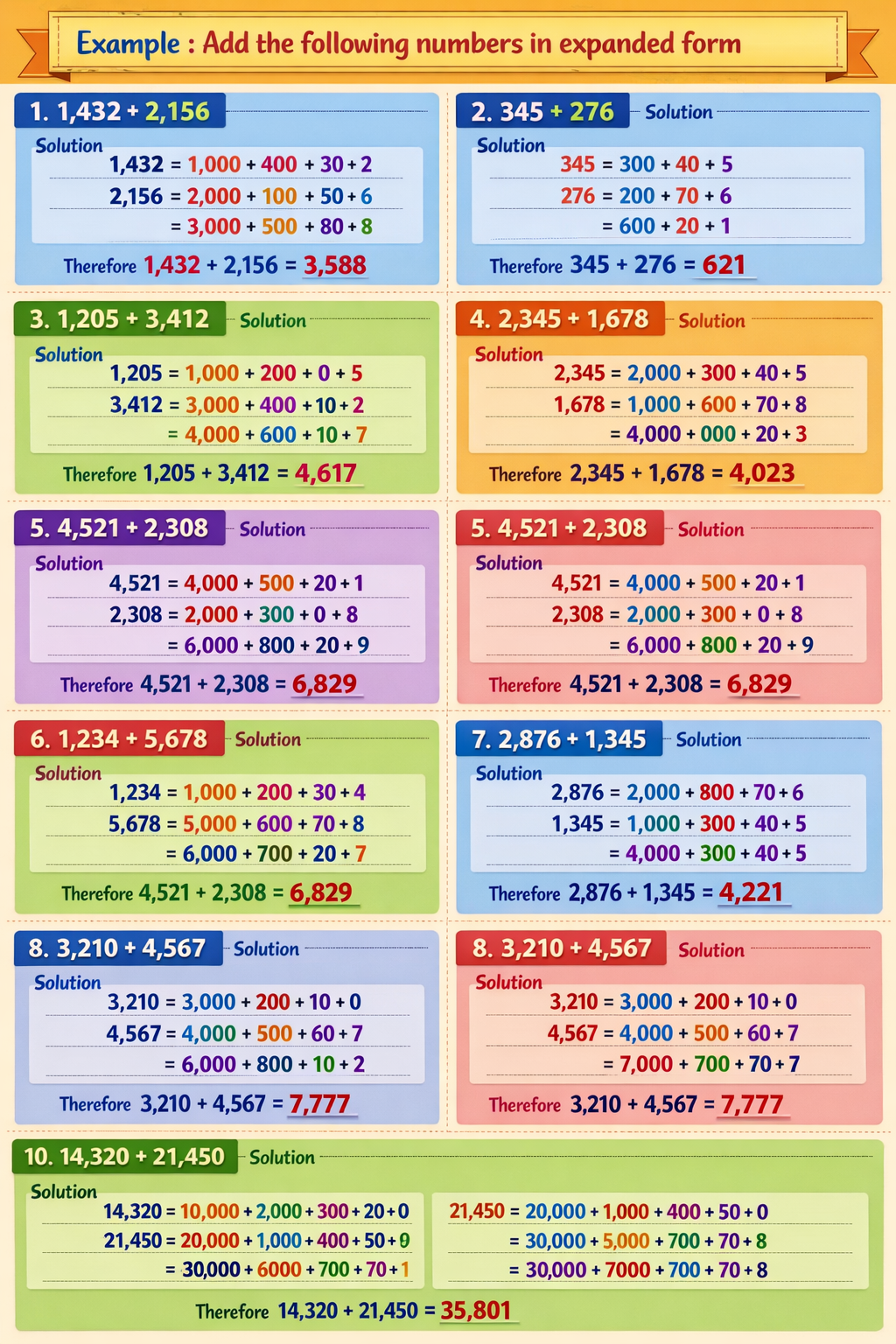
Addition by expanded form means breaking numbers into their place values (hundreds, tens, ones, etc.) and then adding each part separately.Study the following examples
Add numbers in short form
Solve word problems in addition
Subtraction of numbers (Between 1 and 100,000)
Subtract numbers in expanded form.
Subtract numbers in expanded form
Subtract numbers in short form
Solve word problems in subtraction
Activity 2
Study the following examples
Exercise 1
Find the solution of the following problems.
- A warehouse stored 78,450 bags of rice. It sold 29,875 bags. How many bags remained?
- A town had 96,320 residents. 47,685 residents moved away. How many residents stayed?
- A farmer harvested 85,760 eggs. He sold 39,845 eggs. How many eggs were left?
- A school enrolled 100,000 pupils at the beginning of the year. 62,489 pupils transferred to other schools. How many pupils remained?
- A company produced 91,680 bottles of juice. It distributed 58,295 bottles. How many bottles were not distributed?
- A shopkeeper bought 74,950 packets of sugar. He sold 36,875 packets. How many packets remained unsold?
- A district received 89,430 textbooks. It distributed 54,768 textbooks to schools. How many textbooks remained?
- A farmer planted 67,800 seedlings. 28,965 seedlings did not survive. How many seedlings survived?
- A factory manufactured 95,250 pairs of shoes. It sold 49,835 pairs. How many pairs were left?
- A village collected 82,640 litres of water in a tank. 37,985 litres were used. How many litres remained in the tank?
Multiplication of numbers (Product should not exceed 100,000)
Multiply numbers in expanded form
Activity 3
Study the following examples
Exercise 2
Multiply the following numbers by expanded forms
- 23 × 14
- 45 × 12
- 36 × 15
- 27 × 13
- 58 × 16
- 142 × 13
- 356 × 12
- 413 × 11
- 275 × 16
- 389 × 14
Multiply numbers in short form
Activity 4
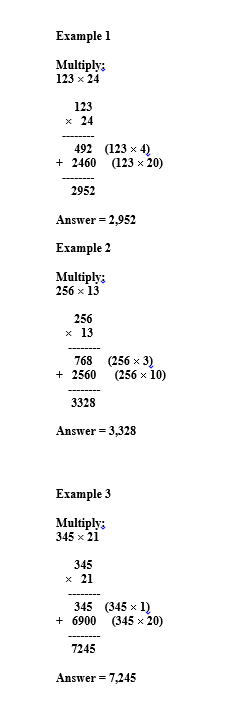
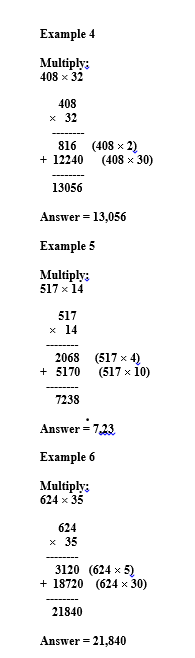
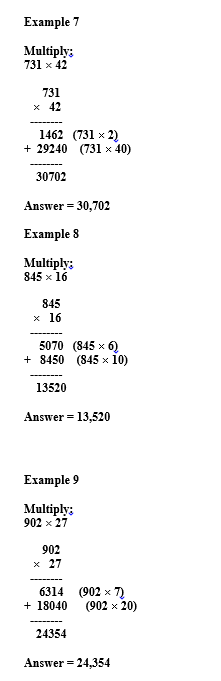
Study the following examples of multiplying numbers in short form
Exercise 3
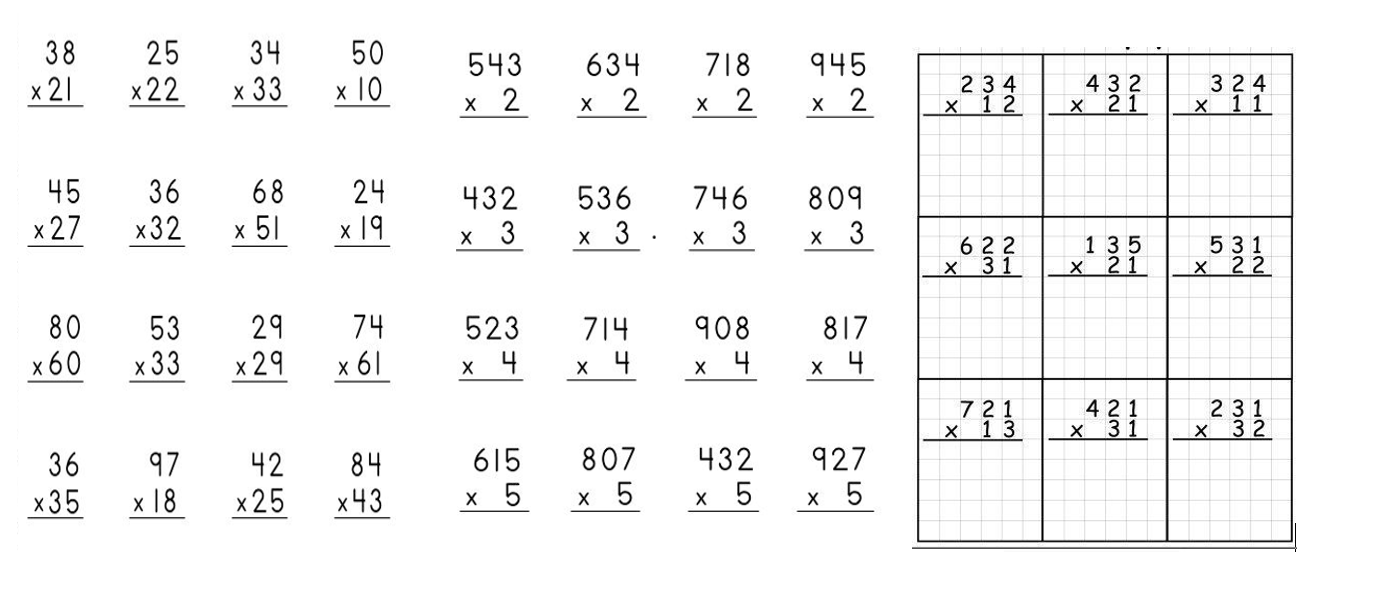
Perform the following by short method
Solve word problems in multiplication
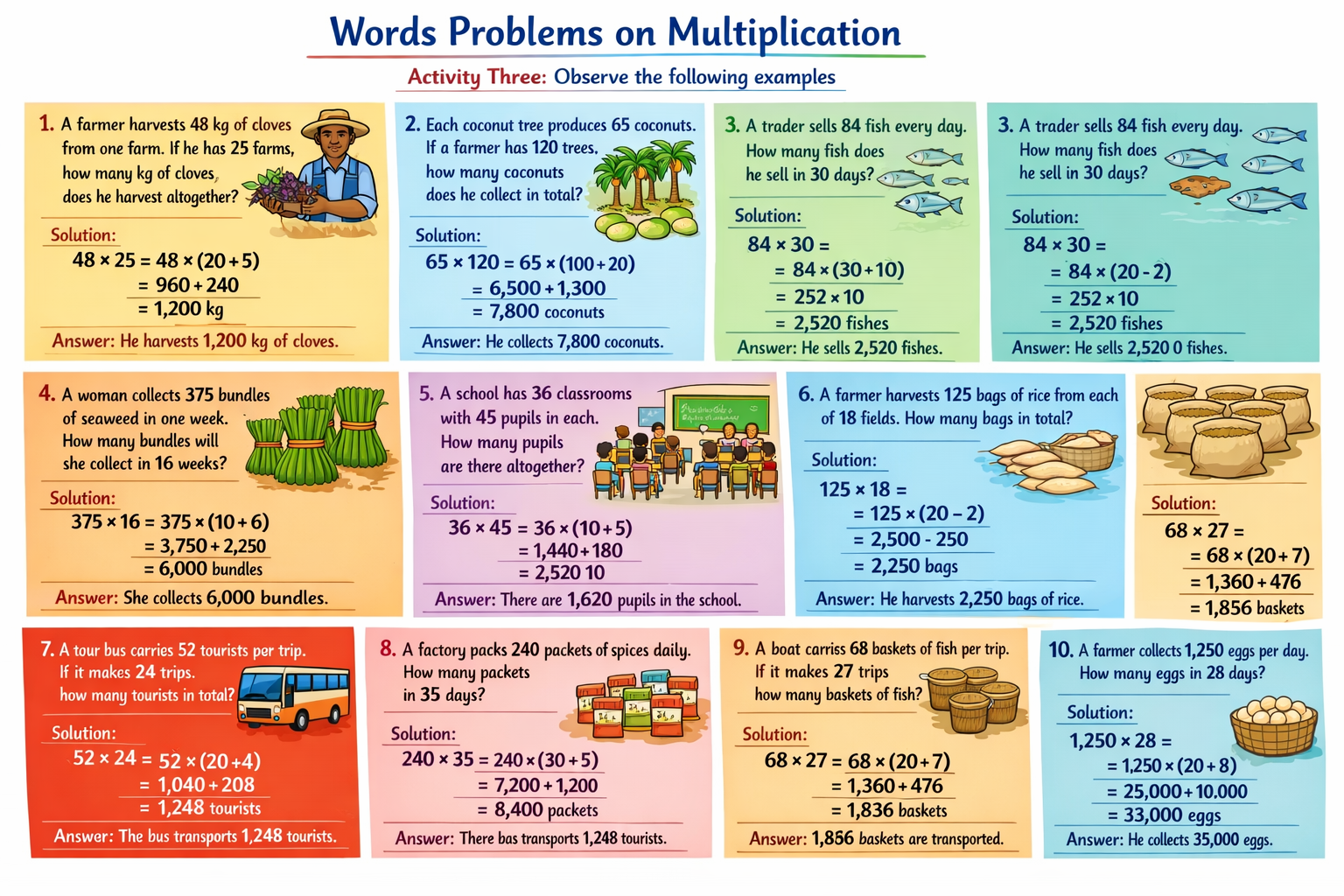
Activity 5
Study the following examples
Exercise 4
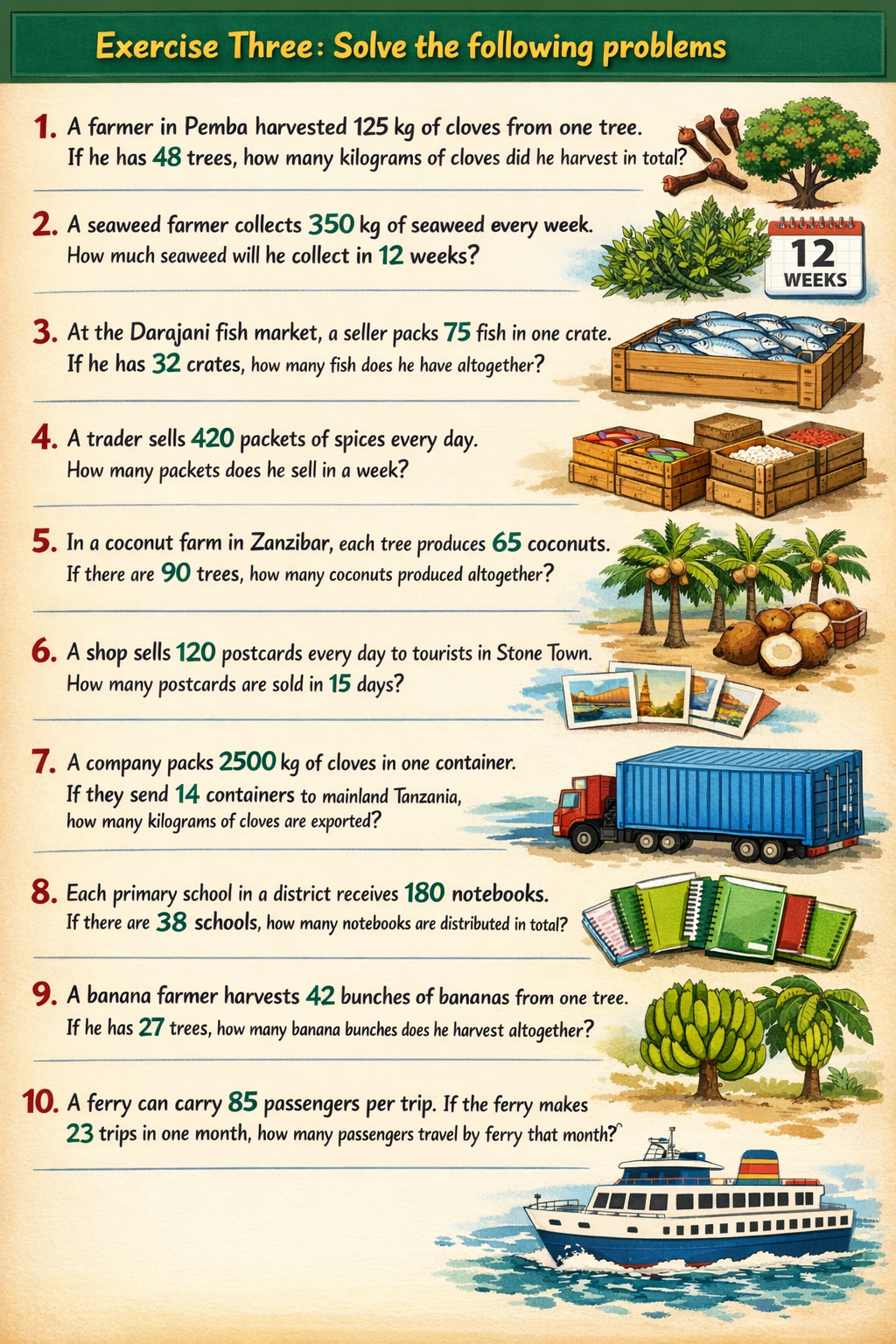
Solve the following problems
Division of numbers (Between 1 and 10,000) without reminder
Division is the process of splitting a quantity into equal parts or determining how many equal groups can be made from a quantity.
Learn how to divide numbers easily with clear step-by-step methods for quick and accurate results.
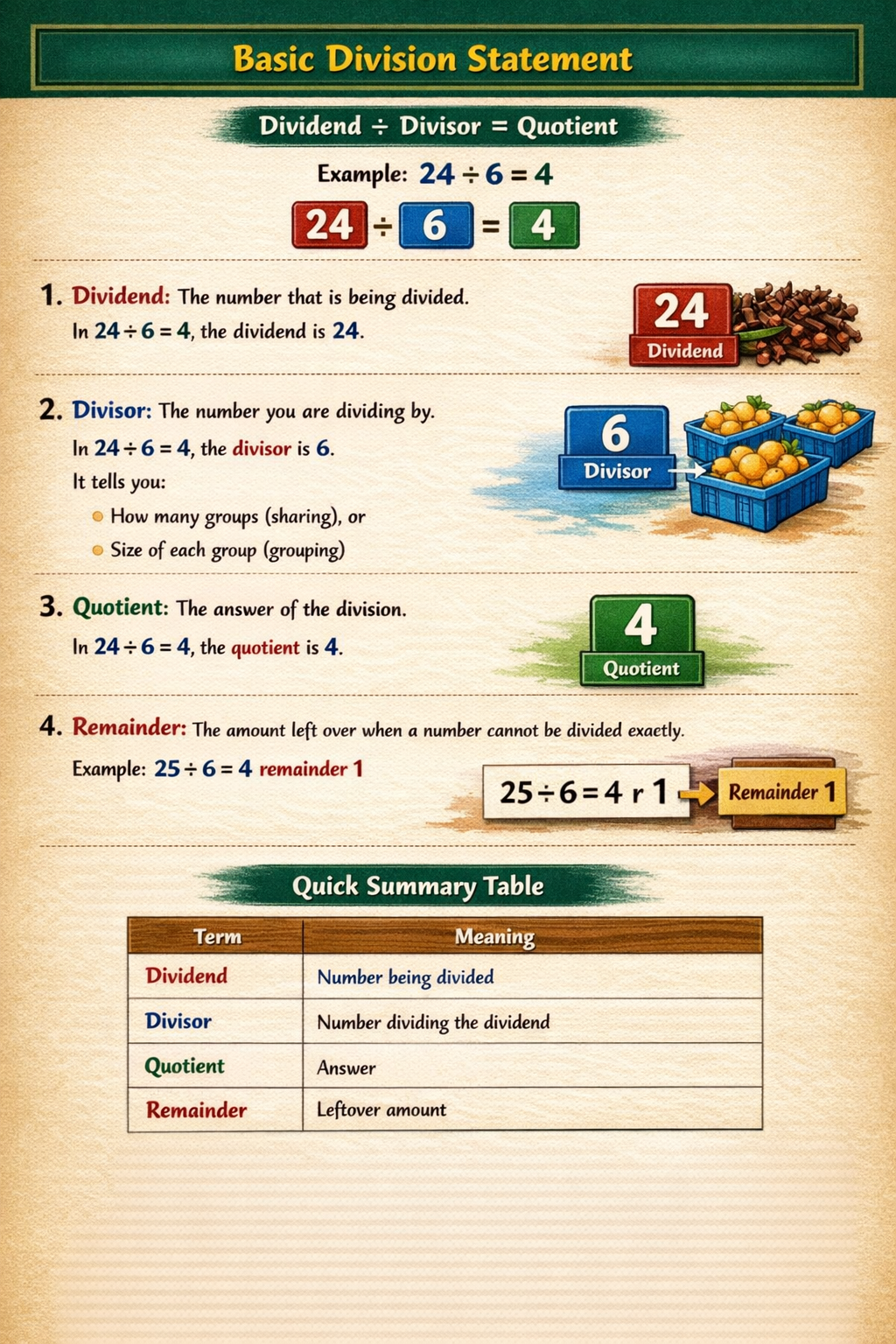
Identify key terminologies of division
Activity 6
Study the following descprition
Exercise 5
For each division, write the dividend, divisor, and quotient
- 18 ÷ 3 = 6
- 24 ÷ 4 = 6
- 35 ÷ 5 = 7
- 42 ÷ 7 = 6
- 56 ÷ 8 = 7
Perform division of numbers
Activity 7
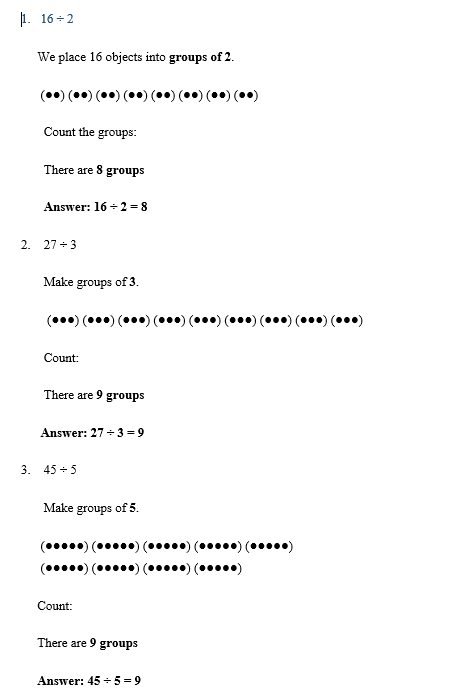
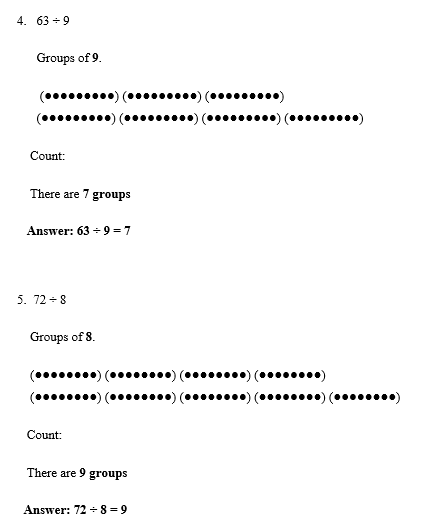
Observe the following examples clearly by visual grouping method. Idea: Division means making equal groups. How many groups can we make? Or how many items in each group?
Activity 8
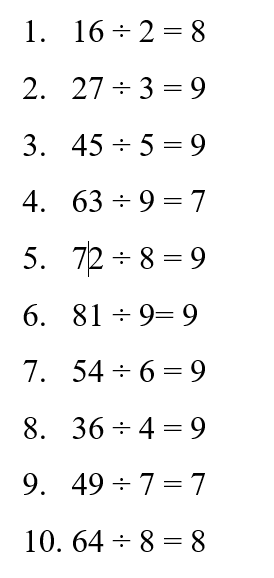
Go through the following examples and learn from them
Exercise 6
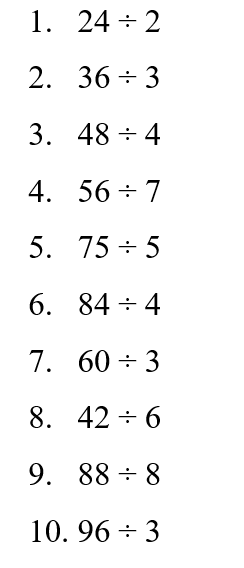
Perform the following division
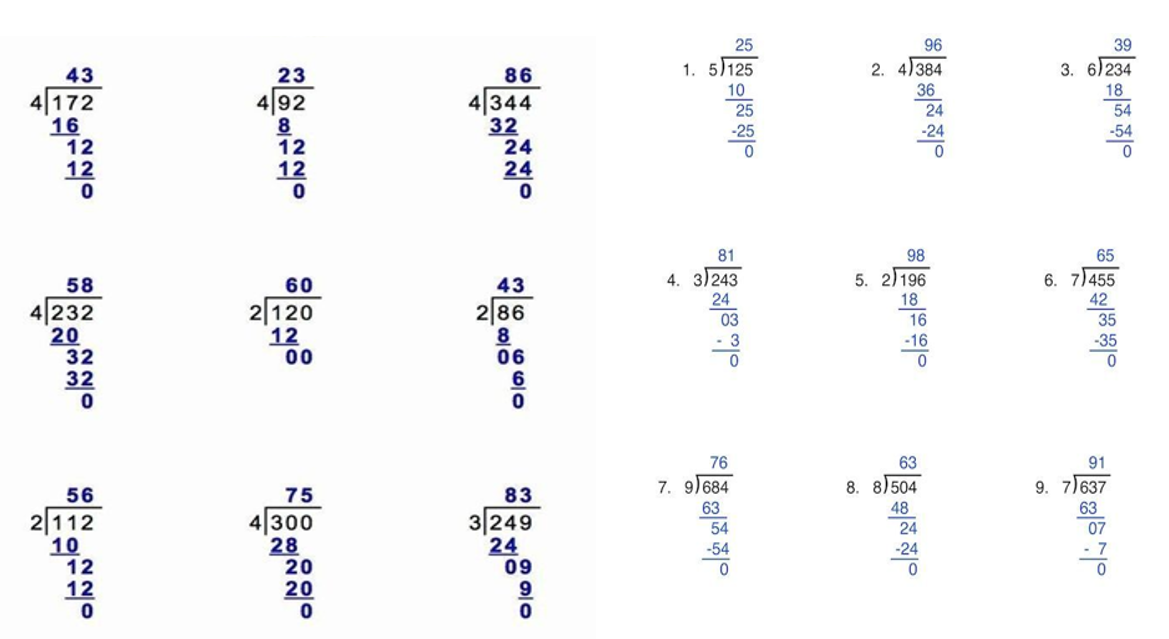
Activity 9
Observe the following examples
Exercise 7
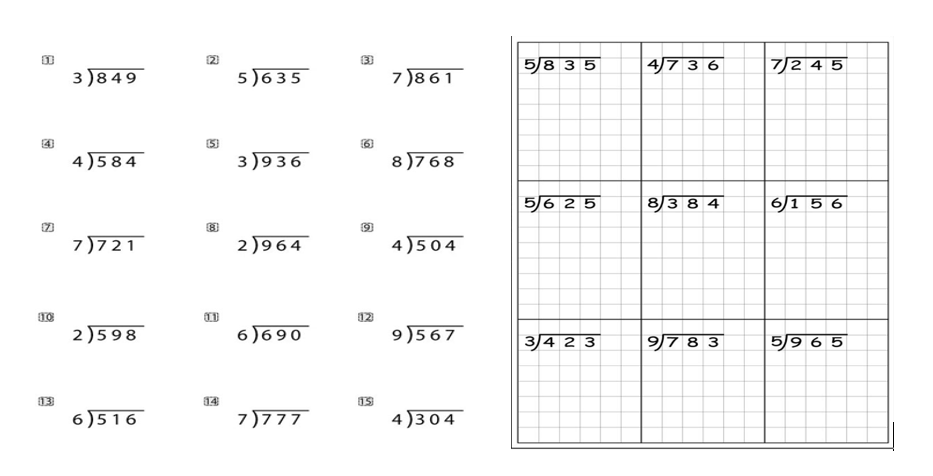
Solve word problems of division
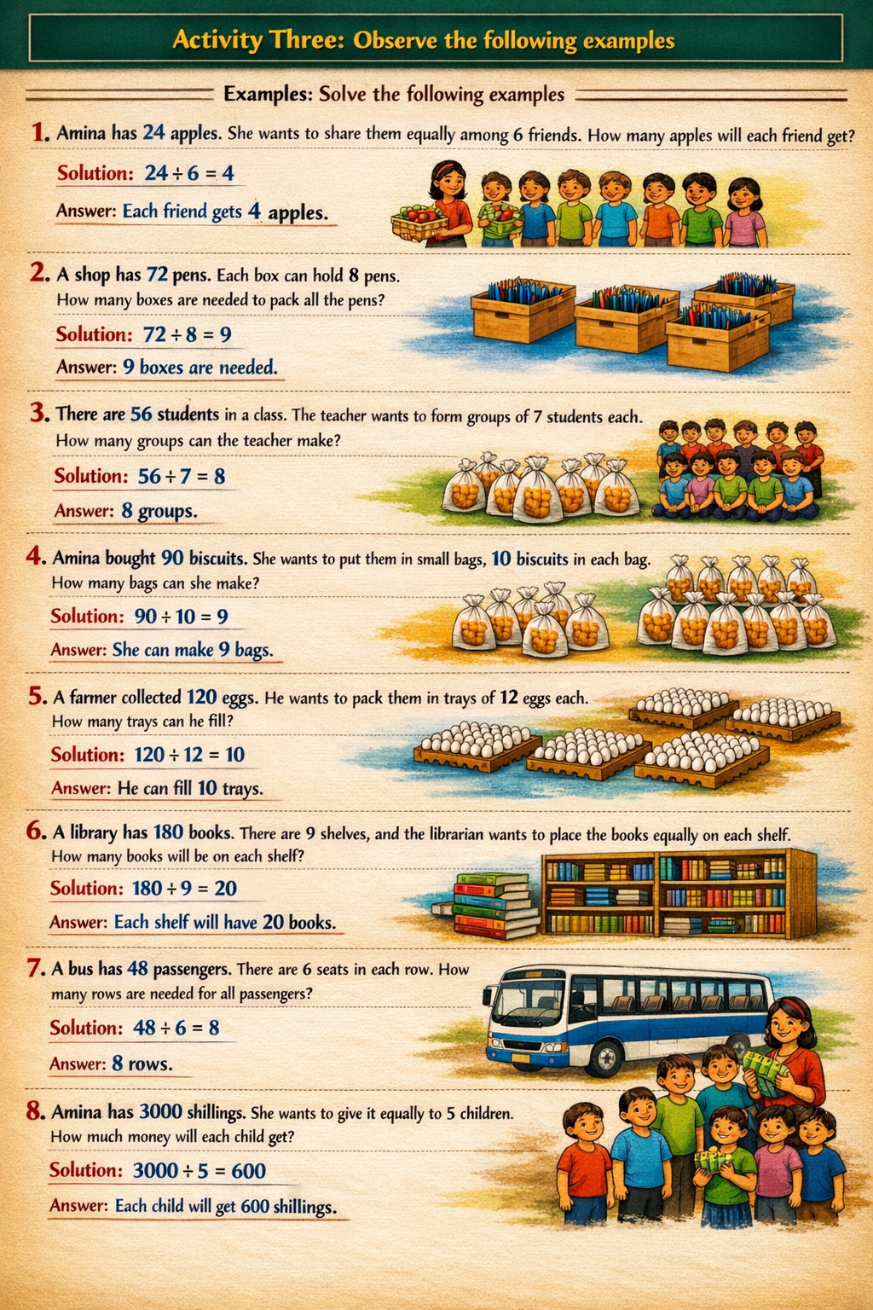
Activity 10
Go through the following examples and learn from them
Exercise 8
Solve the following problems
- A farmer harvested 60 oranges. He wants to share them equally among 5 friends. How many oranges will each friend get?
- A teacher has 45 crayons. She wants to put them into boxes with 9 crayons each. How many boxes can she make?
- There are 120 passengers waiting at the bus stop. Each bus can carry 40 passengers. How many buses are needed?
- A shopkeeper has 96 bottles of soda. He wants to arrange them equally on 12 tables. How many bottles will be on each table?
- A library received 72 new books. They want to place them equally on 6 shelves. How many books will go on each shelf?
- A mother bought 36 apples. She wants to divide them equally among her 4 children. How many apples will each child get?
- 90 students are going on a trip. Each bus can carry 30 students. How many buses are needed?
- A shop has 120 toy cars. If each packet contains 10 cars, how many packets can be made?
- A school has 72 chairs. They want to arrange them equally into 9 classrooms. How many chairs will each classroom get?
- A sports team has 56 water bottles. If each player gets 7 bottles, how many players are there?
- A baker made 96 cookies. He wants to pack them into boxes of 12 cookies each. How many boxes will he fill?
- A library has 150 books to give away. If each member gets 25 books, how many members will receive books?
- A farmer has 84 bananas. He wants to arrange them equally into 7 baskets. How many bananas will be in each basket?
Listening to this topic